


What Eye Condition Did Ray Charles Have?
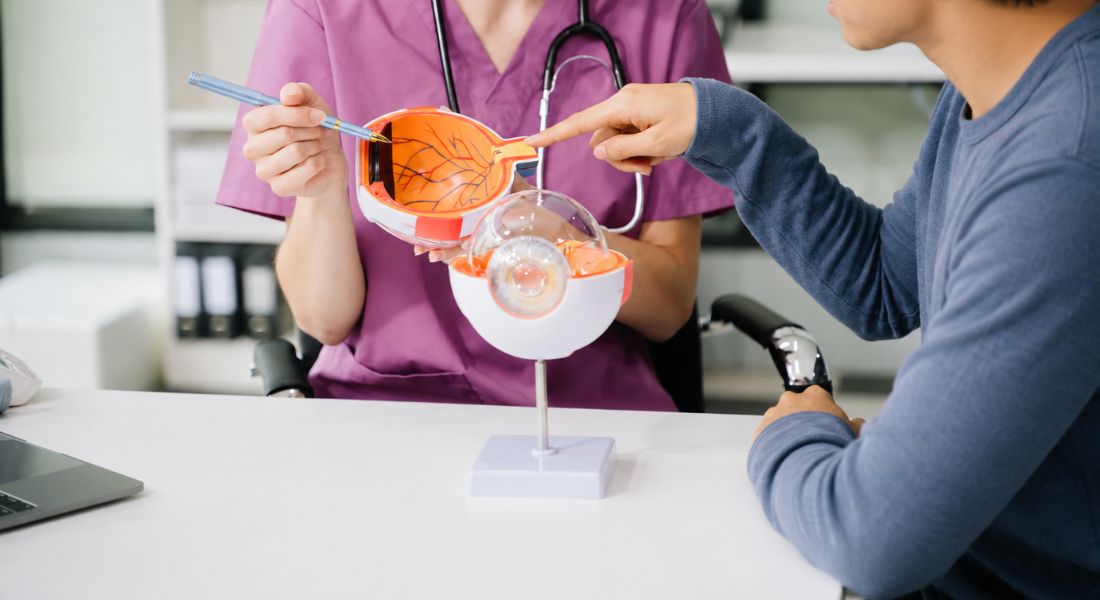
Ray Charles gradually lost his eyesight during early childhood and was blind by around the age of seven. Glaucoma is widely documented as the cause of his vision loss, although the exact type of childhood glaucoma he had is not publicly known. If you are learning about his story, it is important to remember that childhood glaucoma can be different from the glaucoma seen in adults.
When you think about glaucoma, you may picture an adult condition, but it can also affect babies and young children. If your child develops glaucoma, raised eye pressure can damage the optic nerve and lead to irreversible sight loss. Knowing the warning signs can help you seek specialist care early if you are concerned about your child’s vision.
What Happened to Ray Charles’s Eyesight?
Ray Charles was not blind from birth. He had useful sight as a young child, but his vision gradually deteriorated, and he was blind by around the age of seven. If you are wondering what caused his blindness, glaucoma is widely reported as the cause of his sight loss.
The exact type of glaucoma Charles had is not publicly known. When you learn about childhood glaucoma, it is important to remember that it includes several different conditions, so you should not assume a specific subtype without detailed medical records.
What Is Childhood Glaucoma?
Childhood glaucoma is a group of rare eye conditions that can damage the optic nerve, often because pressure inside the eye becomes too high. The optic nerve carries visual information from the eye to the brain, so damage can lead to irreversible vision loss.
Glaucoma can affect babies and children for different reasons, including problems with the eye’s drainage system or another eye condition. If your child develops glaucoma, you may notice that their eyes look unusual or that they have vision difficulties, so early specialist care is important.
Why Does Pressure Build Up Inside the Eye?
The eye constantly produces a clear fluid called aqueous humour, which normally drains through tiny channels. If these drainage pathways have not developed properly, fluid can build up and increase the pressure inside your eye.
In a child with glaucoma, raised eye pressure can damage the optic nerve and may also affect the developing eye. Specialists assess more than the pressure reading alone. They also check the optic nerve, cornea and how the eye is growing over time to decide on the right treatment.
How Is Childhood Glaucoma Different From Adult Glaucoma?
Many common forms of adult glaucoma, particularly open-angle glaucoma, develop quietly with few noticeable symptoms in the early stages. In young children, raised eye pressure can stretch the developing eye, so you may notice unusually large or cloudy eyes, light sensitivity or watering.
Treatment can also be different. If your child has glaucoma, surgery may be needed to improve fluid drainage and protect their developing vision. You should also know that children can develop amblyopia if one eye does not provide a clear image during early visual development.
Childhood Glaucoma vs Common Adult Open-Angle Glaucoma
| Feature | Childhood Glaucoma | Adult Glaucoma |
| When it develops | Can affect babies, young children or older children | Most commonly develops in adulthood |
| Effect of raised eye pressure | Can damage the optic nerve and may also stretch the developing eye | Mainly damages the optic nerve over time |
| Early symptoms | May include excessive watering, light sensitivity or cloudy eyes | Often causes few or no noticeable symptoms initially |
| Eye appearance | Some forms can cause an enlarged eye or cloudy cornea | The eye usually looks normal in the early stages |
| Effect on visual development | Can interfere with normal visual development and contribute to amblyopia | Does not usually affect early visual development |
| Treatment approach | Surgery is often important, particularly in primary congenital glaucoma | Eye drops, laser treatment or surgery may be used depending on the type and severity |
| Follow-up | Long-term monitoring is important as the eye grows and vision develops | Ongoing monitoring is needed to assess pressure and optic-nerve health |
What Symptoms Can Childhood Glaucoma Cause?
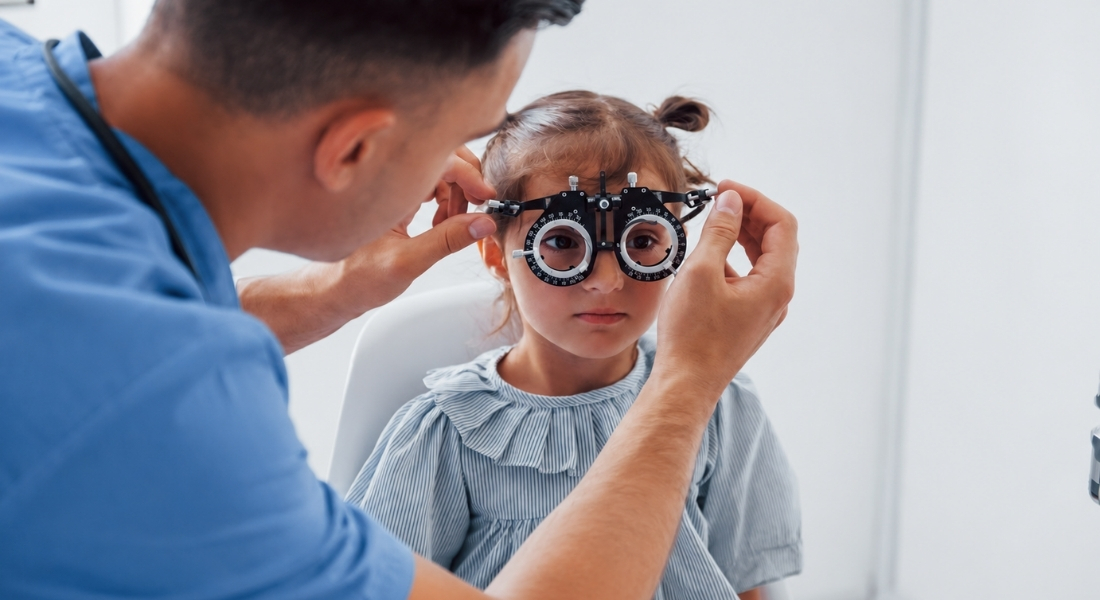
Childhood glaucoma can cause symptoms that are different from adult glaucoma. You may notice that your baby’s eye looks unusually large or cloudy, or that they become very sensitive to light and have excessive watering.
Your child may also develop poor vision, unusual eye movements or a squint. If you notice an enlarged or cloudy cornea with strong light sensitivity, you should seek urgent specialist eye care, although these symptoms can also have other causes.
Why Can a Child’s Eye Become Larger?
A baby’s eye is more flexible than an adult’s eye, so high pressure can stretch the developing tissues. You may notice that your child’s eye looks unusually large, especially if you compare it with the other eye. You may also notice that the cornea looks cloudy or swollen.
This enlargement is called buphthalmos and can affect how the eye develops. If your child has raised eye pressure, you should seek specialist advice so treatment can reduce the pressure. You can then follow your eye specialist’s advice to help protect your child’s developing vision.
Why Can Childhood Glaucoma Make the Cornea Look Cloudy?
Your cornea is normally clear, but raised pressure can cause fluid to build up inside it, making it look cloudy, grey or slightly blue. You may also notice that your child becomes more sensitive to bright light because the cloudy cornea can affect how light enters the eye.
Corneal cloudiness may improve after eye pressure is brought under control, although this depends on its cause and severity and improvement may take time. If you notice a cloudy cornea, unusually large eyes or strong light sensitivity, you should seek urgent specialist advice rather than trying to identify the cause yourself.
How Can Glaucoma Cause Irreversible Sight Loss?
Glaucoma can permanently damage your optic nerve when high eye pressure continues for too long. Once nerve fibres are lost, the resulting vision loss usually cannot be reversed, although treatment can help protect the remaining nerve tissue.
In children, you may also see vision problems caused by corneal clouding, changes in eye shape or amblyopia. If your child has glaucoma, you should follow their specialist’s treatment plan, which may include glasses, patching or other support alongside pressure-lowering treatment.
How Can Childhood Glaucoma Affect Visual Development?
Even when your child’s eye pressure is brought under control, they may still need treatment to support normal visual development. Childhood glaucoma can be associated with refractive errors such as short-sightedness or astigmatism, while corneal clouding or unequal vision between the eyes can contribute to amblyopia. This means controlling eye pressure is only one part of protecting your child’s sight.
Your child may therefore need glasses, patching or other amblyopia treatment alongside their glaucoma care. These treatments cannot reverse optic-nerve damage, but they can help the brain use the clearest image available while vision is still developing. Regular eye checks allow treatment to be adjusted as your child grows.
How Is Childhood Glaucoma Diagnosed Today?
Diagnosing childhood glaucoma involves several checks rather than relying on eye pressure alone. Your child’s ophthalmologist will assess how the eyes and optic nerves are developing.
- Eye pressure: Your specialist will measure the pressure inside your child’s eyes.
- Cornea: The cornea is checked for clouding, swelling or other changes.
- Optic nerve: Your ophthalmologist will look for signs of glaucoma-related nerve damage.
- Eye development: The size and shape of the eye may be monitored over time.
If your child is too young to cooperate, an examination under general anaesthetic may sometimes be needed. Regular follow-up helps your specialist monitor how well the condition is controlled.
Why Might a Young Child Need an Examination Under Anaesthetic?
Babies and very young children may not be able to keep still long enough for reliable eye-pressure measurements and a detailed examination. An examination under general anaesthetic can allow the ophthalmologist to assess the eye pressure, cornea, optic nerve and eye size more carefully when a standard clinic examination does not provide enough information.
Not every child with suspected glaucoma needs an examination under anaesthetic. The decision depends on their age, how well they can cooperate and what measurements the specialist needs. Repeated examinations can also help show whether the eye is growing normally and whether treatment is controlling the glaucoma.
Is Childhood Glaucoma Inherited?
Some forms of childhood glaucoma can have a genetic link, but not every child inherits the condition from a parent. If your child is diagnosed with glaucoma, your specialist may ask about your family’s eye health to understand whether genetics could be involved.
Childhood glaucoma can also develop alongside certain developmental conditions, after eye surgery or because of inflammation. You may be offered genetic counselling or testing if your child’s symptoms suggest an inherited form, helping you understand whether other family members may need assessment.
How Is Childhood Glaucoma Treated?
The main aim of treatment is to lower your child’s eye pressure and protect the optic nerve from further damage. Eye drops may help control pressure, but surgery is often important when glaucoma is caused by problems with the eye’s drainage system.
Your child’s specialist may recommend procedures such as goniotomy or trabeculotomy to improve fluid drainage. If these are not enough, you may be advised about other options, such as a drainage tube or trabeculectomy. The most appropriate treatment depends on your child’s age, the type of glaucoma and how their eyes respond.
Why Is Surgery Often Important in Primary Congenital Glaucoma?
Surgery is often central to the treatment of primary congenital glaucoma because the condition usually involves abnormal development of the eye’s drainage pathways. If your child’s eye pressure stays high, it can stretch the eye and damage the optic nerve, so early, reliable pressure control is important.
Your child may still need eye drops alongside surgery, depending on their condition. If you are caring for a child with glaucoma, regular follow-up is essential because glaucoma can remain active or eye pressure can rise again over time, and further treatment may sometimes be needed.
Can Sight Lost From Childhood Glaucoma Be Restored?
Vision lost from glaucoma-related optic nerve damage is usually permanent. However, if your child receives treatment early, lowering eye pressure can protect the remaining nerve fibres and help prevent further sight loss.
Some aspects of reduced vision may improve when treatable problems such as corneal swelling, refractive error or amblyopia are addressed. If your child has childhood glaucoma, you should follow their specialist’s treatment plan closely, as early care may help preserve as much useful vision as possible.
How Has Childhood Glaucoma Care Changed Since Ray Charles Was Young?
Childhood glaucoma care has changed significantly since Ray Charles was young. Today, your child can have detailed eye pressure checks, optic nerve assessments and monitoring of how the eye develops, helping specialists identify problems much earlier.
Treatment and long-term care have also advanced through refinements in glaucoma surgery, improved examination techniques, safer anaesthesia and closer monitoring of vision and eye development. If your child needs treatment, you also have access to specialist follow-up for eye pressure, glasses, amblyopia and visual development. These options were far more limited during Charles’s childhood.
What Happens After a Child Has Glaucoma Surgery?
Glaucoma surgery is usually the start of long-term follow-up rather than the end of treatment. Your child will need regular checks of their eye pressure, optic nerve and eye development to make sure the surgery is working well.
Your child may need eye drops, glasses or further treatment depending on how their eyes respond. If you are caring for a child after glaucoma surgery, keeping follow-up appointments is important because eye pressure may rise again over time or further treatment may become necessary.
Evidence Note
Primary congenital glaucoma is rare. A 2025 review estimates a prevalence of around 1 in 10,000–68,000 people in Western countries and cites estimates that it accounts for approximately 5–18% of childhood blindness. These figures apply specifically to primary congenital glaucoma and published populations rather than every childhood glaucoma subtype, but they show why recognising concerning signs early remains important.
Long-term control also cannot be assumed after one successful operation. The same review cites stationary disease in 90.3% of cases at one year, 70.8% at 10 years and 58.3% at 34 years. A Cochrane review of 16 trials involving 446 children also found limitations in the evidence comparing different surgical techniques, supporting an individualised approach and long-term monitoring after treatment. The same review cites angle-surgery success of 90% in children presenting between two and 12 months, compared with 50% in late-onset or late-recognised cases, although outcomes vary by patient and procedure.
When Should a Child’s Eyes Be Assessed Urgently?
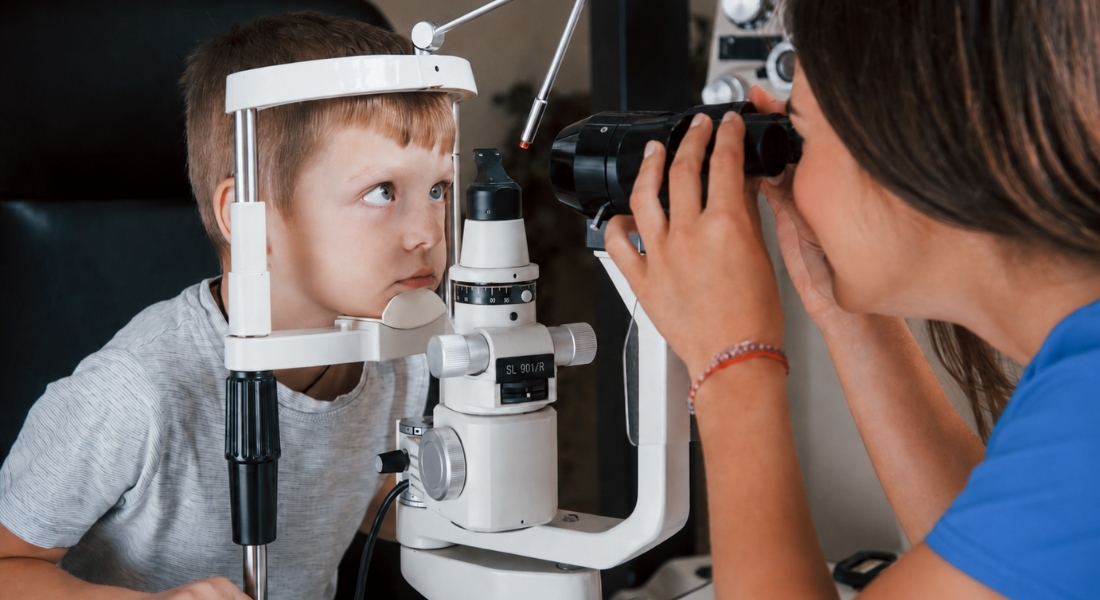
Most childhood eye symptoms are not caused by glaucoma, but some signs need prompt attention. If your baby’s eyes look unusually large or the cornea appears cloudy or grey, especially with strong sensitivity to light or persistent watering, you should seek urgent specialist eye care.
If you are concerned about your child’s vision, do not wait for obvious sight loss to appear. Babies cannot tell you that their vision is blurred, so early assessment by a paediatric ophthalmologist can help identify glaucoma and other eye conditions as soon as possible.
UK Guidance Note
Suspected childhood glaucoma requires specialist paediatric ophthalmology assessment rather than routine monitoring alone. Babies and young children may need examinations and measurements that cannot reliably be completed during a standard community eye test.
If your baby has an unusually large or cloudy eye, persistent watering, marked light sensitivity or other concerning changes, arrange prompt medical or specialist eye assessment. If childhood glaucoma is diagnosed, ongoing follow-up is important because treatment and visual development may need monitoring throughout childhood and beyond.
Myth vs Fact
| Myth | Fact |
| Ray Charles was born blind. | No. He had useful vision in early childhood and gradually lost his sight, becoming blind by around age seven. |
| We know exactly which subtype of glaucoma Ray Charles had. | No. Glaucoma is well documented, and some accounts call it juvenile glaucoma, but detailed clinical records confirming a specific subtype are not publicly available. |
| All childhood glaucoma causes enlarged or cloudy eyes. | No. These signs are particularly typical of primary congenital glaucoma; other childhood glaucomas can present differently. |
| A normal-looking eye rules out glaucoma in a child. | No. Some forms can be less visually obvious and require specialist examination. |
| Successful surgery means glaucoma no longer needs follow-up. | No. Childhood glaucoma generally requires long-term monitoring because pressure and visual development can change as the child grows. |
Key Takeaways
- Ray Charles gradually lost his sight during childhood, and glaucoma is widely documented as the cause, although his exact glaucoma subtype is uncertain.
- Childhood glaucoma includes several different conditions and should not be treated as identical to primary congenital glaucoma.
- Primary congenital glaucoma can cause excessive watering, light sensitivity, corneal clouding and unusually large eyes.
- Surgery is usually the main treatment for primary congenital glaucoma, while treatment for other childhood glaucomas depends on the underlying cause.
- Optic-nerve damage from glaucoma is usually permanent, so early diagnosis, appropriate treatment and long-term follow-up are important.
Frequently Asked Questions
- What eye condition did Ray Charles have?
Ray Charles’s childhood vision loss is widely documented as being caused by glaucoma. The exact type of childhood glaucoma he had is not publicly known. - Was Ray Charles blind from birth?
No, Ray Charles was not blind from birth. His eyesight gradually deteriorated during childhood, and he became completely blind by around the age of seven. - What is childhood glaucoma?
Childhood glaucoma is a group of rare eye conditions that can damage your optic nerve, often because pressure inside the eye becomes too high. Without appropriate treatment, it can lead to permanent sight loss. - What are the symptoms of childhood glaucoma?
You may notice that your child has unusually large or cloudy eyes, excessive watering or strong sensitivity to light. Other signs can include poor vision, unusual eye movements or a squint. - Why can childhood glaucoma make a child’s eyes look larger?
A young child’s eye is more flexible than an adult’s, so increased eye pressure can stretch the developing tissues. This can make the eye appear unusually large, a change known as buphthalmos. - Can childhood glaucoma cause permanent sight loss?
Yes. Raised eye pressure associated with childhood glaucoma can damage the optic nerve and cause irreversible vision loss. - How is childhood glaucoma diagnosed?
Your child’s ophthalmologist may check their eye pressure, cornea, optic nerve and overall eye development. If your child is too young to cooperate, an examination under general anaesthetic may sometimes be needed. - Is childhood glaucoma inherited?
Some forms of childhood glaucoma can have a genetic link, but not every case is inherited. If your child is diagnosed, genetic counselling or testing may be considered depending on the suspected cause. - How is childhood glaucoma treated?
Treatment focuses on lowering eye pressure and protecting the optic nerve from further damage. Your child may need eye drops, while procedures such as goniotomy or trabeculotomy may be used to improve fluid drainage. - Can sight lost from childhood glaucoma be restored?
Vision lost from optic nerve damage caused by glaucoma is usually permanent. However, early treatment can help prevent further damage and protect the vision your child still has.
Final Thoughts: Understanding Childhood Glaucoma and Vision Loss
Ray Charles’s story highlights how childhood glaucoma can cause severe and irreversible vision loss when the optic nerve is damaged. Although glaucoma-related sight loss cannot usually be reversed, early diagnosis and treatment can help protect the vision your child still has. If you notice unusual eye enlargement, cloudy corneas, excessive watering or sensitivity to light, seeking specialist assessment promptly is important.
If you’re exploring whether glaucoma treatment in London may be suitable for you, you can contact our team at Eye Clinic London to discuss your concerns and arrange a consultation.
References:
- Coviltir, V. et al. (2025) ‘Primary congenital and childhood glaucoma: a complex clinical picture and surgical management’, Diagnostics, 15(3), 308. Available at: https://www.mdpi.com/2075-4418/15/3/308
- Pan, Y. and Iwata, T. (2024) ‘Exploring the genetic landscape of childhood glaucoma’, Children, 11(4), 454. Available at: https://www.mdpi.com/2227-9067/11/4/454
- Gagrani, M., Garg, I. and Ghate, D. (2020) ‘Surgical interventions for primary congenital glaucoma’, Cochrane Database of Systematic Reviews, 2020(8), CD008213. Available at: https://pmc.ncbi.nlm.nih.gov/articles/PMC8094178/
- Karaconji, T., Zagora, S. and Grigg, J.R. (2022) ‘Approach to childhood glaucoma: a review’, Clinical & Experimental Ophthalmology, 50(2), pp. 232–246. Available at: https://pubmed.ncbi.nlm.nih.gov/35023613/
- Brandt, J.D., Blieden, L.S. and Grajewski, A.L. (2025) ‘Childhood glaucoma’, Ophthalmology Glaucoma, 8(5S), pp. S58–S63. Available at: https://pubmed.ncbi.nlm.nih.gov/40767792/