


Glaucoma in Asian Patients: Are There Differences in Risk and Presentation?

Glaucoma is a group of eye conditions that damage the optic nerve and can lead to irreversible vision loss if it is not diagnosed and managed in time. You may often hear it described as a “silent disease” because it can progress slowly without noticeable symptoms in the early stages. This means that by the time you begin to notice changes in your vision, some damage may already have occurred.
Research over the past few decades suggests that glaucoma does not affect all populations in exactly the same way. If you are from an Asian background, certain types of glaucoma may be more common, and the way the condition presents or progresses can sometimes differ compared with other groups. These variations are important because they can influence how the condition is detected and managed in clinical practice.
Understanding these differences helps eye care specialists tailor their approach to your assessment and treatment. While glaucoma can affect anyone, recognising patterns across different populations supports earlier detection and more appropriate monitoring strategies. For you, this means that your risk profile may be considered more carefully during routine eye examinations.
Ongoing research continues to explore why these differences exist and how care can be further improved for all patients. Scientists are still working to understand the underlying genetic, biological, and environmental factors involved. Ultimately, the goal is to ensure that you receive earlier diagnosis, better monitoring, and more effective long-term management regardless of your background.
Understanding Glaucoma
Glaucoma refers to a group of conditions that damage the optic nerve, which is essential for your vision. This nerve carries visual information from your eye to your brain, so any damage to it can affect how you see. In many cases, glaucoma is associated with increased intraocular pressure, although this is not always present.
The condition usually develops slowly over time, and you may not notice any symptoms in the early stages. Because of this gradual progression, it can often go undetected until some degree of vision loss has already occurred. Without appropriate treatment, glaucoma can lead to permanent and irreversible loss of sight.
Early detection is therefore very important in preventing progression. Regular eye examinations allow changes to be identified before significant damage occurs. For you, timely diagnosis can make a major difference in preserving your long-term vision.
Why Ethnic Differences Are Studied
Researchers study ethnic differences in glaucoma to better understand how risk factors and disease patterns vary between different groups of people. This helps improve screening recommendations so that you can be identified earlier if you are at higher risk. It also supports more effective and tailored treatment strategies based on individual needs.
You may find that different populations can vary in the type of glaucoma they develop, the age at which it begins, and how quickly it progresses. These differences are thought to be influenced by a mix of genetic factors, anatomical variations, and environmental influences. Understanding these patterns helps clinicians build a clearer picture of how the disease affects different people.
This research ultimately supports more personalised eye care for you. It means your risk factors can be taken into account more carefully during eye examinations. As a result, screening and management can be better tailored to help protect your vision.
Higher Prevalence of Certain Glaucoma Types in Asian Populations
If you are from an Asian background, it’s important to know that certain types of glaucoma may be more common in your population. Research has shown that angle-closure glaucoma, in particular, is seen more frequently compared with some other ethnic groups. This form of glaucoma can sometimes develop quickly and lead to a sudden increase in eye pressure. Because of this, understanding your risk can play an important role in protecting your vision.
- Angle-Closure Glaucoma Is More Common: Studies suggest that you may have a higher likelihood of developing angle-closure glaucoma. This type occurs when the drainage angle in your eye becomes blocked, leading to a rapid rise in eye pressure.
- It Can Progress More Rapidly: Unlike some other forms of glaucoma, angle-closure glaucoma can develop suddenly and progress quickly. This means symptoms may appear quickly and require prompt attention.
- Early Detection Is Especially Important: Because this condition can worsen rapidly, early diagnosis is key. Regular eye checks can help identify warning signs before serious vision damage occurs.
- Population Studies Support These Findings: Large-scale research across different regions continues to show higher rates of angle-closure glaucoma in Asian populations. These findings help guide screening and prevention strategies.
Overall, the higher prevalence of certain glaucoma types highlights the importance of regular eye examinations if you are at risk. Early awareness can make a significant difference in detecting changes before they affect your vision. With timely diagnosis and treatment, the progression of glaucoma can often be managed more effectively. Ongoing research continues to improve understanding of these population-based differences.
Primary Open-Angle Glaucoma Still Occurs Frequently
Although angle-closure glaucoma is often highlighted in Asian populations, primary open-angle glaucoma is still commonly seen. You should not assume that one type replaces the other, as both forms can occur and require attention. Each type has different risk patterns and clinical features.
This form of glaucoma usually develops gradually and often without noticeable symptoms in the early stages. You may not realise anything is wrong until vision changes begin to affect your daily life. Because of this silent progression, it remains one of the leading causes of irreversible vision loss worldwide.
Regular eye examinations are essential for detecting it early. For you, routine screening gives the best chance of identifying changes before significant damage occurs. Early detection allows timely treatment and helps protect your long-term vision.
Angle-Closure Glaucoma and Anatomical Factors
Angle-closure glaucoma occurs when the drainage angle in your eye becomes too narrow, which can lead to a rapid rise in intraocular pressure. This happens because fluid inside the eye cannot drain properly, causing pressure to build up. If not treated promptly, it can result in serious damage to your vision.
Certain anatomical features of the eye can influence your likelihood of developing this condition. Some studies suggest that people of Asian descent may be more likely to have features such as shallower anterior chambers. These structural differences can increase the risk of the drainage angle becoming blocked.
Understanding the anatomy of your eye is an important part of assessing your individual risk. Eye care professionals often evaluate these features during routine examinations to identify people who may be more susceptible. For you, this helps ensure that any potential risk is recognised early and managed appropriately.
Acute vs Chronic Presentation
Angle-closure glaucoma can present in either an acute or chronic form, and the way it develops can vary quite a lot. In acute cases, you may experience a sudden and significant rise in eye pressure, which needs urgent medical attention. This is considered an emergency because your vision can be affected quickly if it is not treated promptly.
If you develop acute angle-closure glaucoma, you may notice symptoms such as eye pain, blurred vision, headaches, and sometimes nausea or vomiting. You might also see halos around lights or experience a sudden drop in vision. These symptoms tend to come on quickly and can feel quite severe, so it is important that you seek help straight away.
In chronic cases, the condition develops more slowly, and you may not notice obvious symptoms at first. Because changes happen gradually, it can be harder for you to realise anything is wrong without regular eye checks. Both acute and chronic forms need careful monitoring and appropriate treatment to help protect your vision in the long term.
Importance of Early Detection
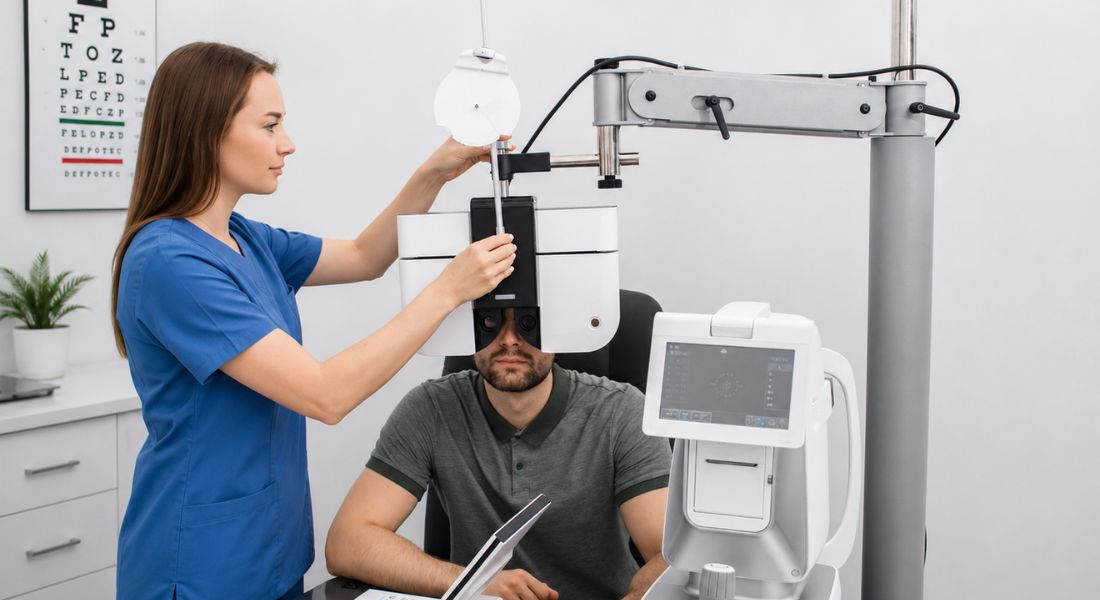
Early detection is especially important if you are at higher risk of angle-closure glaucoma. If narrow drainage angles are identified before symptoms develop, it may be possible to prevent sudden and serious increases in eye pressure. This can significantly reduce the risk of an acute attack affecting your vision.
Routine eye examinations play a key role in prevention. During your check-up, your eye care professional can look for early warning signs, including anatomical features that may increase your risk. These assessments help identify problems before they become symptomatic.
Timely intervention can make a real difference in protecting your vision. If any risk factors are detected, appropriate treatment or monitoring can be put in place. For you, early detection offers the best opportunity to prevent complications and maintain long-term eye health.
Role of Intraocular Pressure
If you’ve been told about glaucoma, you may already have heard the term intraocular pressure (IOP). This refers to the pressure inside your eye, and it plays a key role in almost all types of glaucoma. When this pressure becomes too high, it can gradually damage the optic nerve over time. However, glaucoma is a complex condition, and not everyone follows the same pattern of pressure changes.
- Intraocular Pressure Is a Key Risk Factor: High eye pressure is one of the main risk factors for glaucoma. Over time, increased pressure can place stress on the optic nerve, leading to gradual damage.
- Damage Can Occur Over Time: If your eye pressure stays elevated for a long period, it may slowly affect your vision. This is why monitoring pressure is an important part of eye health checks.
- Glaucoma Can Occur Even with Normal Pressure: Some people develop glaucoma even when their eye pressure is within the normal range. This shows that pressure is not the only factor involved in the disease.
- Regular Monitoring Is Essential: Because glaucoma can develop in different ways, regular eye examinations are important. Monitoring helps detect changes early, even if you do not notice any symptoms.
Overall, intraocular pressure plays a major role in glaucoma, but it does not tell the full story on its own. You may still be at risk even if your pressure seems normal, which is why comprehensive eye checks are important. Regular monitoring allows early detection and better long-term protection of your vision. Staying consistent with eye examinations can make a significant difference in managing the condition.
Optic Nerve Damage and Progression
Damage to the optic nerve is the defining feature of glaucoma, and once it occurs, it is typically irreversible. This means that protecting the optic nerve is central to preventing long-term vision loss. You may not notice early damage, which is why regular eye examinations are so important.
The rate of progression can vary significantly depending on the type of glaucoma you have. In some cases, changes may occur very slowly over many years, while in others, progression can be more rapid. Monitoring how your vision and eye health change over time helps your clinician understand how the condition is developing.
Because of this, ongoing assessment is essential in guiding treatment decisions. Regular tests allow your eye care professional to track any changes and adjust your management plan if needed. For you, the primary goal of treatment is always to protect your optic nerve and preserve your vision for as long as possible.
Visual Field Loss Patterns
Glaucoma usually affects your peripheral (side) vision first, often without you noticing any immediate changes. Because this happens gradually, you may not be aware of vision loss until it begins to impact your daily activities. If left untreated, this can eventually progress to central vision loss.
Different types of glaucoma can produce different patterns of visual field loss. You may experience changes in specific areas of your vision depending on the type and stage of the condition. These patterns can help eye care professionals understand how the disease is progressing.
Regular visual field testing is therefore very important. It allows your clinician to detect even small changes that you might not notice yourself. For you, routine testing plays a key role in identifying progression early and protecting your long-term vision.
Genetic and Familial Risk Factors
Genetics can play a role in your risk of developing glaucoma. If you have a family history of glaucoma, your likelihood of developing the condition may be higher than average. This is why clinicians often ask about eye health within your immediate family during routine examinations.
However, genetics alone does not determine whether you will develop glaucoma. Your risk is also influenced by other factors such as eye anatomy, age, and environmental influences. This combination of factors helps explain why the condition can vary so much between individuals, even within the same family.
Because of this, risk assessment takes multiple influences into account rather than relying on genetics alone. For you, this means your overall risk is evaluated in a broader context during eye examinations. Understanding all contributing factors helps ensure more accurate screening and earlier detection where needed.
Treatment Approaches

Treatment for glaucoma focuses on lowering intraocular pressure to help prevent further damage to the optic nerve. By controlling eye pressure, you can reduce the risk of the condition progressing and protect your remaining vision. Although existing damage cannot usually be reversed, treatment plays a key role in slowing the disease.
There are several treatment options available, including medicated eye drops, laser procedures, and surgical interventions. Eye drops are often used as the first step, while laser or surgery may be recommended if additional pressure control is needed. The most appropriate option for you will depend on the type of glaucoma you have and how advanced it is.
Individualised care is essential when managing glaucoma. Your eye care specialist will tailor your treatment plan based on your specific condition, risk factors, and response to therapy. The main aim of all treatment approaches is to preserve your remaining vision for as long as possible.
Age-Related Risk
If you’re getting older, it’s important to know that age is one of the strongest risk factors for glaucoma. The likelihood of developing the condition increases gradually as you age, even if you have no symptoms in the early stages. This is why glaucoma is more commonly diagnosed in older adults. As populations around the world continue to age, the number of people affected is expected to rise.
- Risk Increases with Age: Your chances of developing glaucoma become higher as you get older. This is seen consistently across all populations and types of glaucoma.
- Glaucoma May Develop Without Symptoms: In the early stages, you may not notice any changes in your vision. This makes regular eye examinations especially important as you age.
- Rising Global Prevalence: As life expectancy increases, more people are reaching the age where glaucoma is more common. This means the overall number of cases is expected to grow worldwide.
- Early Screening Becomes More Important: Because age is a major risk factor, routine eye checks are essential. Early screening helps detect glaucoma before it causes significant vision loss.
Overall, age remains a universal and unavoidable risk factor for glaucoma. As you get older, regular eye examinations become increasingly important for protecting your vision. Early detection can make a significant difference in managing the condition effectively. By staying proactive with eye care, you can reduce the risk of long-term vision damage.
Differences in Eye Anatomy
Differences in the structure of your eye can influence your risk of developing glaucoma. For example, if you have a shallower anterior chamber, you may be more susceptible to angle-closure glaucoma. These anatomical variations can affect how fluid drains from the eye and how pressure builds up.
These structural differences can also influence how glaucoma develops and presents in different individuals. You may notice that the condition behaves differently depending on your eye’s anatomy and how the drainage system is formed. This is why anatomical assessment is an important part of understanding your overall risk.
Because of this, eye anatomy plays a key role in clinical risk assessment and decision-making. During your eye examination, specialists evaluate these structural features to identify any increased risk early. This helps ensure that you receive appropriate monitoring and timely intervention if needed.
Challenges in Diagnosis
Glaucoma can be difficult to diagnose in its early stages because it often does not cause any noticeable symptoms. You may feel that your vision is completely normal, even while gradual changes are happening in the background. Because of this, many people only become aware of the condition once some vision loss has already occurred.
Although advanced imaging and diagnostic tools have greatly improved accuracy, early changes can still be subtle and easy to miss. These tests can detect damage earlier than in the past, but they still rely on you attending regular eye examinations. This is why routine screening remains so important.
Early diagnosis can make a significant difference to your long-term outcomes. For you, finding glaucoma early means treatment can start sooner, helping to slow progression and protect your vision for longer.
Advances in Imaging Technology
Modern imaging techniques allow your eye care specialist to see highly detailed images of the optic nerve and retinal nerve fibre layer. These advanced tools help detect early structural changes that may not be visible during a routine examination. This means that glaucoma can often be identified at an earlier stage than before.
Imaging is also especially useful for monitoring how your condition changes over time. By comparing scans taken at different visits, your clinician can track progression more accurately and make more informed decisions about your treatment. This helps ensure that any subtle changes are not missed.
As technology continues to improve, glaucoma care is becoming more precise and reliable. For you, these advancements mean earlier detection, closer monitoring, and more tailored management of your eye health.
Importance of Monitoring Progression
If you’ve been diagnosed with glaucoma, you should know that it is a long-term condition that requires regular monitoring. Because glaucoma can change slowly over time, follow-up appointments are essential for tracking any progression. These visits allow your eye care professional to check your eye pressure, optic nerve health, and vision. Ongoing care helps ensure that any changes are identified early and managed appropriately.
- Glaucoma Requires Lifelong Monitoring: Once diagnosed, you may need regular eye examinations for the rest of your life. This helps ensure that any changes in your condition are detected as early as possible.
- Eye Pressure and Vision Are Regularly Checked: During follow-up visits, your eye pressure and visual function are carefully monitored. These measurements help assess whether the condition is stable or progressing.
- Treatment May Need Adjustment Over Time: Your treatment plan may change depending on how your glaucoma responds. Adjustments to medication or other therapies may be needed to maintain control of the condition.
- Consistent Follow-Up Helps Protect Vision: Attending regular appointments can help reduce the risk of vision loss. Ongoing monitoring allows timely intervention if any progression is detected.
Overall, monitoring glaucoma progression is a key part of long-term eye care. If you stay consistent with follow-up visits, you give yourself the best chance of maintaining stable vision. Regular checks allow your clinician to respond quickly to any changes. This ongoing approach is essential for protecting your sight over time.
Patient Awareness and Education

Understanding glaucoma and its risks is essential for managing the condition effectively. When you are well-informed, you are more likely to attend regular eye check-ups and take an active role in protecting your vision. This awareness can make a real difference in how early the condition is detected and managed.
Education also helps support early diagnosis and encourages you to follow your prescribed treatment plan consistently. If you understand why regular monitoring and treatment are important, you are more likely to stay engaged with your care. Awareness campaigns further help by improving public understanding of glaucoma and its potential impact.
Knowledge is one of the most powerful tools in preventing vision loss. For you, staying informed about glaucoma can help ensure that any changes are detected early and managed appropriately. This ultimately supports better long-term eye health and helps protect your vision.
Ongoing Research in Glaucoma
Research is still ongoing to better understand why glaucoma affects different populations in different ways. Scientists are looking at a combination of factors, including genetics, eye anatomy, and environmental influences, to build a clearer picture of how the disease develops. This helps improve overall understanding of the condition and how it progresses.
These findings may support more personalised treatment approaches in the future. As research develops, your care could be tailored more closely to your individual risk factors and the specific way your glaucoma behaves. This shift towards more individualised management aims to improve long-term outcomes.
Research in this area is active and constantly evolving. New studies continue to provide useful insights that improve how glaucoma is detected and managed. For you, this means future care is likely to become more precise, with better ways to identify and treat the condition earlier.
FAQs:
- What is glaucoma?
Glaucoma is a group of eye conditions that damage the optic nerve, which is responsible for sending visual information to the brain. It often develops slowly and may not cause symptoms in the early stages. If left untreated, it can lead to irreversible vision loss. Early detection is key to preventing long-term damage. - How does glaucoma affect Asian patients differently?
Research suggests that certain types of glaucoma, particularly angle-closure glaucoma, are more common in Asian populations. This form can sometimes progress more quickly and may require urgent treatment. Anatomical differences in eye structure may also contribute to increased risk. However, glaucoma can affect anyone, regardless of background. - What is angle-closure glaucoma?
Angle-closure glaucoma occurs when the drainage angle in the eye becomes too narrow or blocked, leading to a sudden or gradual rise in eye pressure. It can appear in acute or chronic forms, with acute cases causing symptoms such as eye pain, headache, and blurred vision. It is considered a medical emergency in acute cases. Early detection can help prevent serious vision loss. - What is primary open-angle glaucoma?
Primary open-angle glaucoma is the most common type of glaucoma worldwide. It develops slowly and usually without noticeable symptoms in the early stages. Over time, it can cause gradual peripheral vision loss. Regular eye examinations are important for early detection and management. - Why is early detection so important in glaucoma?
Glaucoma often progresses without obvious warning signs, especially in its early stages. Once vision is lost, it cannot usually be restored. Early detection allows treatment to begin sooner, helping to slow or prevent further damage. This is why routine eye checks are essential. - Can glaucoma be prevented?
Glaucoma cannot always be prevented, but the risk of vision loss can be significantly reduced with early diagnosis and treatment. Regular eye examinations help identify changes before symptoms appear. Managing risk factors such as eye pressure also plays an important role. Early monitoring is the most effective protective strategy. - What symptoms should you watch for?
In many cases, glaucoma has no early symptoms, which is why it is often called a “silent disease.” In advanced or acute cases, you may notice blurred vision, eye pain, headaches, or halos around lights. Peripheral vision loss may also occur gradually. Any sudden changes in vision should be checked urgently. - How is glaucoma diagnosed?
Glaucoma is diagnosed using a combination of tests rather than a single examination. These may include eye pressure measurement, optic nerve assessment, visual field testing, and imaging scans. These tests help detect both early and advanced changes. Regular screening is essential for accurate diagnosis. - Does family history increase glaucoma risk?
Yes, having a close family member with glaucoma increases your risk of developing the condition. Genetics can play a role, although they are not the only factor. Eye structure, age, and other influences also contribute. It is important to inform your eye specialist about your family history. - What treatments are available for glaucoma?
Treatment aims to lower eye pressure and prevent further damage to the optic nerve. This may include eye drops, laser treatment, or surgery depending on the severity and type of glaucoma. Treatment is usually long-term and requires regular monitoring. The goal is to preserve remaining vision and slow progression.
Final Thoughts: Understanding Glaucoma Risk in Asian Patients
When you look at the research as a whole, it becomes clear that glaucoma is not a single, uniform condition. If you are of Asian background, certain types of glaucoma particularly angle-closure glaucoma may be more common, and in some cases may progress more quickly. This makes it especially important for you to stay aware of your eye health and attend regular eye examinations, even if you are not experiencing any symptoms.
Because glaucoma often develops silently, you might not notice any changes until the condition has already caused damage. That is why early detection is so important, regardless of your background. Routine screening helps identify early signs such as changes in eye pressure or drainage angles, giving you the best chance of protecting your vision before irreversible loss occurs. If you’d like to find out whether glaucoma treatment in London is suitable for you, feel free to contact us at Eye Clinic London to arrange a consultation.
References:
- Lee, D.A. and Higginbotham, E.J. (2005) ‘Glaucoma and its treatment: a review’, American Journal of Health-System Pharmacy, 62(7), pp. 691-699. https://pubmed.ncbi.nlm.nih.gov/15790795/
- Wu, K.Y., Tabari, A., Mazerolle, É. and Tran, S.D. (2023) Towards precision ophthalmology: The role of 3D printing and bioprinting in oculoplastic surgery, retinal, corneal, and glaucoma treatment. Biomimetics, 10(9), 1096. https://www.mdpi.com/2306-5354/10/9/1096
- Koziorowska, A.M., Opala, A. and Grabska-Liberek, I. (2025) Non-contact laser therapy for glaucoma: A review of direct selective laser trabeculoplasty. Journal of Clinical Medicine, 14(19), 6884. https://www.mdpi.com/2077-0383/14/19/6884
- Gedde, S.J. and Herndon, L.W. Jr. (2025) ‘Glaucoma surgery: from the tried and true to the novel and new’, Ophthalmology Glaucoma, 8(Suppl. 5), pp. S49-S57. https://www.sciencedirect.com/science/article/abs/pii/S2589419625001218
- Confalonieri, F., Casarini, B., Papapicco, A., Stiro, F., Piscopo, R., D’Andrea, L., Petrovski, G. and Verdina, T. (2025) ‘A systematic review of micropulse laser trabeculoplasty (MLT) in primary open-angle glaucoma (POAG) management: efficacy, safety, and future perspectives’, Biomedicines, 13(1), p. 211. https://pubmed.ncbi.nlm.nih.gov/39857796/