


Topography-Guided LASIK vs Standard LASIK: What’s the Difference?
If you’re researching LASIK, you’ll quickly realise that not all procedures are the same. Terms like standard LASIK, wavefront-guided, and topography-guided can feel overwhelming, especially when they’re not clearly explained. Understanding what these labels actually mean helps you make a more informed and confident decision.
At its core, LASIK reshapes your cornea to correct refractive errors such as short-sightedness, long-sightedness, and astigmatism. The key difference lies in how much personalisation is involved. More advanced technologies use detailed mapping of your eye to tailor the treatment more precisely to you.
In this article, you’ll learn how standard LASIK compares with topography-guided LASIK, who may benefit most from customised treatment, and how advanced corneal mapping improves accuracy. The aim is to cut through marketing language and focus on what really matters. When you understand how each approach works, choosing the right option becomes far clearer.
What Is Standard LASIK?
Standard LASIK corrects your vision based primarily on your glasses or contact lens prescription. It treats short-sightedness, long-sightedness, and astigmatism using measured refractive power from routine eye tests. The laser treatment pattern is calculated mainly from these refraction results. This approach targets the core optical error.
This method has delivered excellent results for millions of patients worldwide. It is reliable, well-established, and highly effective for straightforward prescriptions. Most people achieve sharp, stable vision after treatment. Satisfaction rates remain very high.
Standard LASIK does not assess every microscopic irregularity of the corneal surface. Instead, it focuses on correcting lower-order aberrations that most affect clarity. For many patients, this level of correction is entirely sufficient. It provides dependable visual improvement with proven safety.
What Is Topography-Guided LASIK?
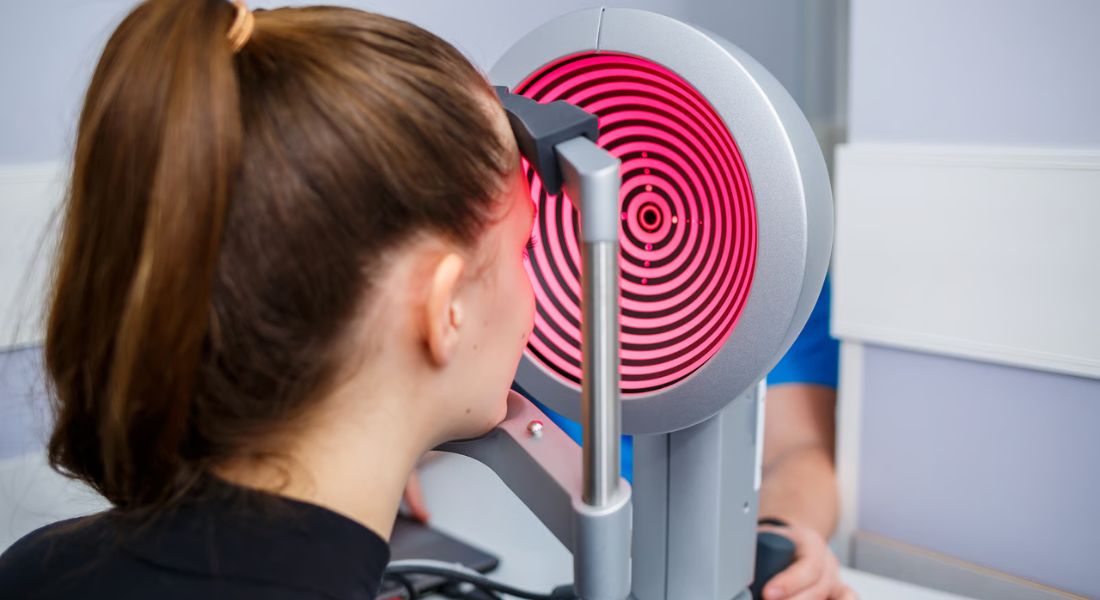
Topography-guided LASIK uses detailed corneal mapping to customise your treatment. Rather than relying only on glasses prescription values, it analyses the exact shape of your corneal surface. This allows the laser pattern to be tailored specifically to your eyes. The result is a highly personalised approach.
Corneal topography creates a colour-coded map showing variations in curvature across the cornea. Even very subtle irregularities can be detected with this technology. These fine details are then used to guide the laser treatment. This level of analysis goes beyond standard refraction alone.
The goal of topography-guided LASIK is to produce a smoother, more uniform optical surface. Greater precision can improve visual quality, particularly in challenging cases. It is especially useful for selected patients with corneal irregularities. When appropriate, it can enhance overall visual performance.
How Corneal Topography Works
Corneal topography scans thousands of points across the surface of your eye. It measures tiny variations in curvature with high accuracy. The result is a detailed three-dimensional map of the cornea. This provides far more information than standard refraction tests alone.
Irregular areas, steeper zones, and subtle distortions become clearly visible on the map. Many of these features are not detected during routine prescription testing. Topography captures structural details that influence visual quality. This added insight is clinically valuable.
Using this information, the laser treatment can be customised. Correction targets both refractive error and surface irregularities. This precision helps create a smoother optical surface. Improved regularity can enhance overall visual performance.
Key Differences in Treatment Planning

Standard LASIK focuses mainly on correcting sphere and cylinder values. Treatment planning is based on manifest and cycloplegic refraction results. The laser profile is programmed to address these measured optical errors. This approach works very well for many patients.
Topography-guided LASIK goes a step further by incorporating detailed corneal surface data. It adjusts the treatment pattern to address localised irregularities and distortions. This allows for a more individualised correction. Planning is tailored to the unique shape of your cornea.
Both techniques are designed to improve visual clarity and reduce dependence on glasses. The key difference lies in the depth of analysis used for planning. Topography-guided treatment offers greater personalisation. This distinction can be important in selected cases.
Who May Benefit Most From Topography-Guided LASIK?
Patients with irregular corneal shapes often benefit most from topography-guided LASIK. Subtle asymmetry, minor scarring, or uneven curvature can affect visual quality even when prescription values look normal. Custom corneal mapping allows these variations to be addressed. This can lead to smoother optical outcomes.
People who have previously undergone eye surgery may also be good candidates. Enhancements after earlier refractive procedures sometimes use topography guidance to refine the corneal surface. This approach can help improve regularity and visual comfort. It is particularly useful when standard measurements are less predictable.
Some patients with straightforward prescriptions also choose topography-guided treatment. The goal in these cases is to enhance visual quality beyond basic correction. Not everyone requires this level of customisation. Suitability is determined through detailed clinical assessment.
Visual Quality vs Visual Acuity
When you think about vision after LASIK, it’s easy to focus only on how well you can read the eye chart. However, seeing clearly and seeing comfortably are not always the same thing. Understanding the difference between visual acuity and visual quality helps set more realistic expectations.
- Visual acuity measures sharpness on a chart: Visual acuity refers to how clearly you can read letters at a set distance, such as achieving 20/20 vision. Standard LASIK is very effective at improving this type of measured sharpness for most people.
- Visual quality describes how your vision feels: Visual quality includes contrast, clarity, and comfort, particularly in low light or at night. It reflects how crisp and natural your vision feels in real-world situations, not just during testing.
- Customised treatment may improve subtle details: Topography-guided LASIK can enhance contrast sensitivity and reduce minor distortions caused by tiny corneal irregularities. Some patients notice clearer night vision or fewer visual disturbances, especially in challenging lighting.
Standard LASIK often delivers excellent results, and many patients are perfectly satisfied. Customised treatment may offer added refinement rather than a dramatic change. Not everyone will notice a clear difference between the two approaches. Keeping expectations realistic helps you judge success more accurately.
Night Vision and Halos
Night-time vision is a common concern when you’re considering LASIK, particularly if you drive at night or spend time in low-light environments. Halos and glare can be more noticeable in the dark, which is why the type of treatment you choose often comes up in discussion. Understanding where the real differences lie helps you make a balanced decision.
- Topography-guided LASIK may reduce light scatter: By smoothing tiny surface irregularities on your cornea, topography-guided treatment can reduce how light scatters as it enters your eye. In selected patients, this may lead to fewer halos and less glare at night.
- Standard LASIK performs very well with modern technology: Advances in laser systems and surgical planning have significantly reduced night vision disturbances with standard LASIK. For many people, outcomes are excellent regardless of the method used.
- Your individual eye characteristics matter most: Factors such as pupil size in low light and overall corneal health often play a bigger role in night vision outcomes than the technique alone. Careful pre-operative screening is essential to assess your personal risk.
No LASIK method can eliminate night vision disturbances entirely. For most patients, any early halos or glare improve as healing and adaptation occur. Choosing the right treatment starts with understanding your individual eye measurements. A thorough assessment helps ensure the safest and most appropriate approach for you.
Accuracy and Predictability
Both standard and topography-guided LASIK are highly predictable when performed by experienced surgeons. Standard LASIK delivers excellent results for the majority of patients. Most people achieve stable, clear vision with a single procedure. Enhancement rates remain low.
Topography-guided LASIK may offer an added level of refinement in selected cases. By optimising corneal surface smoothness, it aims to improve visual quality beyond basic refractive correction. This additional precision can enhance predictability for certain eyes. It is particularly helpful where subtle irregularities exist.
It is important to remember that individual healing responses still vary. No laser system can fully override natural biological differences. Careful monitoring after surgery helps confirm stability. Follow-up ensures outcomes remain consistent over time.
Is Topography-Guided LASIK Always Better?
Topography-guided LASIK is not automatically better for every patient. If your cornea is regular and symmetrical, standard LASIK can deliver equally excellent results. In these cases, additional customisation may not provide meaningful benefit. Effectiveness depends on individual eye characteristics.
More advanced technology does not mean added complexity is always necessary. The best treatment is the one that matches your corneal shape and visual needs. Personalisation also involves recognising when a simpler approach is sufficient. Precision includes choosing the right level of correction.
A thorough consultation helps determine which option is most suitable for you. Your anatomy, prescription, and visual goals are all considered. There is no one-size-fits-all solution. Individual assessment remains key to optimal outcomes.
The Role of Surgeon Expertise
Advanced technology plays an important role in modern LASIK, but surgeon expertise remains essential. Interpreting corneal topography data requires experience and clinical insight. The laser can only act on the information provided to it. Judgement guides how that data is used.
An experienced surgeon will select the most appropriate treatment approach for your eyes. Not every patient benefits from the same level of customisation. True personalisation includes knowing when standard LASIK is sufficient and when advanced guidance adds value. Decision-making is a key part of care.
Choosing a reputable clinic with skilled surgeons improves both safety and outcomes. Technology and expertise work together rather than independently. Experience ensures treatment is applied appropriately. This combination supports the best possible visual results.
Recovery Differences

Recovery timelines are very similar for standard and topography-guided LASIK. Vision often begins to improve within the first 24 hours. You may notice mild dryness, glare, or irritation initially. These symptoms are usually temporary.
Healing patterns are largely comparable between the two approaches. Both procedures involve flap creation and corneal reshaping. As a result, aftercare instructions and eye drop regimens are much the same. Follow-up schedules are also similar.
Most patients return to normal daily activities quickly. Follow-up appointments confirm that healing is stable and progressing as expected. Recovery is generally smooth and predictable. Visual clarity continues to improve as the eyes settle.
Enhancement Considerations
When you’re thinking about LASIK, it’s natural to wonder whether you might need an enhancement later on. The good news is that enhancement rates are low with both standard and topography-guided techniques. Any refinement is only considered once your vision has fully stabilised.
- Enhancements are uncommon with modern LASIK: Most patients achieve their desired outcome with a single procedure. Today’s technology delivers highly accurate results, reducing the need for retreatment.
- Stability must be confirmed before any enhancement: Your surgeon will wait until your cornea has healed completely and your prescription is stable. Acting too early can lead to unpredictable results.
- Topography data can support precise refinements: If an enhancement is needed, corneal mapping may help identify and smooth remaining surface irregularities. Precision remains the central focus throughout planning.
Most people never require an enhancement at all. When refinements are necessary, they are carefully planned and conservative. Keeping expectations realistic helps you feel more confident about the process. Overall, modern LASIK outcomes are highly predictable and reliable.
Cost Differences
Topography-guided LASIK may involve a higher cost because of the advanced corneal mapping technology used. Additional diagnostics and customised planning add to the overall complexity of the procedure. This increased precision is reflected in the pricing. Costs vary between clinics.
Price alone should not determine which option you choose. Suitability, safety, and expected visual outcome are far more important considerations. The goal is to select the treatment that best matches your eyes and visual needs. Value matters more than cost alone.
A transparent consultation helps clarify what is included in each option. Understanding the differences allows you to make an informed decision. For selected patients, investing in added precision may be worthwhile. Clear discussion supports confidence in your choice.
Long-Term Stability
Long-term visual stability depends more on your corneal health than on the type of LASIK performed. Both standard and topography-guided methods are designed to preserve corneal strength. Proper screening before surgery is key to protecting long-term outcomes. Technique choice alone does not determine stability.
Regression rates are similar in suitable candidates for both approaches. Age-related vision changes can still occur regardless of the method used. Presbyopia develops naturally over time and is unrelated to LASIK technique. These changes are part of normal ageing.
Regular eye examinations remain important after surgery. Long-term follow-up helps monitor eye health and visual stability. LASIK does not remove the need for routine care. Ongoing attention supports lasting visual comfort.
Addressing Common Misconceptions
Some people assume topography-guided LASIK guarantees perfect vision. No laser procedure can promise perfection, as individual healing responses still play a role. Outcomes are influenced by biology as well as technology. Realistic expectations are important.
Others believe standard LASIK is outdated or inferior. In reality, it remains a highly effective and safe option for many patients. Both standard and topography-guided approaches are modern and evidence based. Each has a clear role in current practice.
Understanding these nuances helps prevent unrealistic expectations. Technology can enhance precision, but it cannot eliminate natural variation. Clear communication supports informed decisions. Confidence grows when you understand what each option can realistically achieve.
Is Customisation Worth It?
For patients with subtle corneal irregularities, customisation can improve visual quality. By refining how light focuses on the retina, it may enhance crispness, particularly in low-light or high-contrast situations. These benefits are most noticeable when small surface variations affect vision. In such cases, added precision can be valuable.
For patients with smooth corneas and straightforward prescriptions, the difference may be minimal. Standard LASIK often already achieves excellent clarity. Personalisation also means recognising when additional customisation is unlikely to add benefit. Simplicity can be appropriate.
A detailed discussion with your surgeon helps clarify whether customisation is worthwhile for you. Objective testing provides the evidence needed to guide this choice. Decisions are based on anatomy, visual goals, and clinical findings. Tailored care supports the best outcome.
Future Directions in LASIK
LASIK technology continues to evolve with ongoing advances in laser design. Artificial intelligence and more sophisticated mapping tools may further enhance treatment precision. These developments aim to improve personalisation and consistency. Customisation is becoming increasingly refined.
As imaging technology improves, treatment planning becomes more individualised. Better surface modelling allows surgeons to account for subtle anatomical differences. This trend supports greater accuracy and smoother optical outcomes. Precision continues to advance.
Modern LASIK results are already excellent. Continued innovation builds on this strong foundation. Improvements in technology strengthen both safety and predictability. Patients benefit directly from this progress.
Frequently Asked Questions:
- What are the main differences between topography‑guided LASIK and standard LASIK?
Topography‑guided LASIK uses detailed corneal surface mapping to customise the laser treatment, addressing subtle irregularities in curvature as well as refractive error. Standard LASIK focuses mainly on correcting sphere and cylinder values from your glasses prescription. The result is that topography‑guided LASIK may offer more personalised reshaping for certain corneas, while standard LASIK continues to be highly effective in straightforward cases. - Who is most likely to benefit from topography‑guided LASIK?
People with irregular corneas, uneven curvature, minor scarring, or subtle asymmetry often see the greatest potential advantage from topography‑guided treatment. Those with standard, smooth corneas and no unusual surface variation may achieve excellent results with standard LASIK alone. Prior eye surgery or slight surface irregularities may also make mapping guidance more useful. - Does topography‑guided LASIK improve night vision compared to standard LASIK?
In some cases, yes. Because topography‑guided treatment addresses surface irregularities, it can reduce light scatter and potentially decrease phenomena like glare and halos at night. However, modern standard LASIK has also improved visual quality across lighting conditions, so the difference is not always dramatic and depends on individual corneal characteristics. - Do both methods have similar recovery experiences?
Typically, yes. Both topography‑guided and standard LASIK involve similar recovery timelines, with most patients noticing clearer vision within 24 hours. Mild dryness or irritation may occur briefly after either procedure, but routine follow‑up and aftercare protocols are generally the same. - Is topography‑guided LASIK better at preventing the need for enhancements?
Topography‑guided LASIK may reduce the likelihood of enhancements in specific cases by addressing subtle surface irregularities that standard LASIK might not fully treat. That said, healing variation and individual eye responses still play a role, and neither method eliminates the possibility of refinement completely. - Does one technique carry more risk than the other?
No. When performed by an experienced surgeon with appropriate screening, both topography‑guided and standard LASIK have excellent safety profiles. The customisation aspect of topography‑guided treatment does not inherently increase risk, but ensuring suitability remains key to any safe outcome. - Will topography‑guided LASIK always achieve better visual quality?
Not necessarily for everyone. When the cornea is regular and symmetrical, standard LASIK may achieve visual clarity that is indistinguishable from a topography‑guided result. The personalised advantage of topography guidance is most apparent when there are subtle irregularities that can be specifically targeted. - Does topography‑guided LASIK cost more than standard LASIK?
Yes, it often does. The additional cost reflects the advanced diagnostic equipment and detailed corneal mapping required for the personalised treatment profile. However, cost should be viewed alongside suitability and expected benefit, not as the sole deciding factor. - How can you decide which type of LASIK is right for you?
A thorough consultation and diagnostic assessment are essential. Corneal topography, refraction tests, and eye health evaluation help your surgeon determine whether custom mapping will provide meaningful benefit beyond standard treatment. Suitability depends on your individual anatomy and visual goals. - Does laser technology continue to improve both procedures?
Absolutely. Advances in imaging, artificial intelligence, and laser precision continue to enhance both standard and topography‑guided LASIK. These innovations improve predictability, safety, and visual quality across the board, making modern outcomes strong regardless of the specific technique chosen.
Final Thoughts: Choosing the Right LASIK Approach
Understanding the differences between topography‑guided and standard LASIK helps you make an informed decision about your vision correction. While standard LASIK remains highly effective for most patients, topography‑guided LASIK offers extra customisation for those with subtle corneal irregularities or prior eye procedures. Both procedures have excellent safety profiles, especially when performed by an experienced surgeon using modern technology.
If you’d like to find out whether lasik surgery in London is suitable for you, feel free to contact us at Eye Clinic London to arrange a consultation. Our team can guide you through a personalised assessment, discuss which LASIK method best suits your eyes, and help ensure the safest, most predictable outcomes.
References:
- Moshirfar, M., Waqas, M., Thomson, A.C. and Ronquillo, Y. (2022) Laser-Assisted In Situ Keratomileusis (LASIK), Journal of Clinical Medicine, 11(16), 4832. Available at: https://www.mdpi.com/2077-0383/11/16/4832
- Mai, E.L.-C., Chang, C.-K., Lee, C.-Y., Lian, I.-B. and Chao, C.-C. (2023) Higher-Order Aberrations of Topography-Guided LASIK and Wavefront-Optimized LASIK in High- and Low-Myopic Eyes, Journal of Personalized Medicine, 13(3), 399. Available at: https://www.mdpi.com/2075-4426/13/3/399
- Laser In Situ Keratomileusis (LASIK) (2023) StatPearls – NCBI Bookshelf, National Center for Biotechnology Information, U.S. National Library of Medicine. Available at: https://www.ncbi.nlm.nih.gov/books/NBK555970/
- Clinical outcomes after topography-guided FS-LASIK for myopia with nonastigmatic eyes (2025) PMC free article, PMCID: PMC11299380. Available at: https://pmc.ncbi.nlm.nih.gov/articles/PMC11299380/
- Knorz, M.C., Jendritza, B. (2000) Topographically-guided laser in situ keratomileusis to treat corneal irregularities, Ophthalmology, 107(6), pp. 1138–1143. Available at: https://pubmed.ncbi.nlm.nih.gov/10857834/