


LASIK Enhancement: Why and When Touch-Ups Are Needed

Some patients are often surprised when a LASIK enhancement is suggested years after their initial surgery. You might feel puzzled if your vision was excellent at first but has slowly changed over time. Understanding why enhancements exist can help ease any unnecessary worry.
It’s important to know that a LASIK enhancement doesn’t mean your original surgery failed. Eyes heal, age, and respond to treatment in different ways, so changes over time are completely natural. Even though modern laser vision correction is highly precise, your biology still plays a role in how your vision evolves.
In this article, we’ll explain why LASIK enhancements are sometimes needed and how they differ from your primary procedure. You’ll get a clear sense of the science behind touch-ups and what factors can influence when they might be required.
We’ll also look at how surgeons plan these enhancements safely to give you the best possible results. Having this context helps you make informed decisions if an enhancement is ever suggested, keeping you confident about your vision care.
What a LASIK Enhancement Actually Is
A LASIK enhancement is a follow-up laser procedure designed to fine-tune your vision after your original surgery. Over time, small changes in your eyesight may occur, and the enhancement targets any residual refractive error. The goal is to refine your vision, not to correct a mistake.
These enhancements usually involve very minimal tissue removal and are carefully planned using up-to-date measurements of your eyes. Because your treatment is personalised, precise adjustments can be made to suit the current shape and health of your cornea.
For most people, LASIK enhancements are straightforward and uncomplicated. They build on the changes from your initial surgery, helping to optimise your vision with minimal intervention. This allows you to enjoy sharper, more comfortable sight without repeating the full procedure.
Why LASIK Results Can Change Over Time
Your eyes naturally change as you age, so even after a successful LASIK procedure, your vision can be influenced over time. These changes are gradual and become more noticeable over many years, reflecting the normal ageing process of your eyes.
Sometimes, subtle regression can occur as your cornea heals and stabilises, leading to small shifts in your prescription. Age-related changes in the lens inside your eye can also affect clarity, but enhancements only address corneal factors, helping to fine-tune your vision when needed.
Common Reasons an Enhancement Is Recommended
Even after a successful LASIK procedure, some patients may need a small enhancement to fine-tune their vision. For you, this doesn’t mean the initial surgery failed it’s simply a way to ensure your eyesight is as clear and comfortable as possible.
- Enhancements Are Usually for Small Residual Refractive Errors– Sometimes, you might notice mild blur at distance or slightly reduced clarity in certain lighting conditions. For you, these subtle changes can gradually appear even after an otherwise successful LASIK procedure.
- Higher Original Prescriptions May Increase Likelihood– If your pre-LASIK prescription was stronger, there’s a slightly higher chance you might need an enhancement. For you, this reflects natural healing variability rather than a complication.
- Healing Variability Means No Two Eyes Respond Identically– Everyone’s eyes heal a little differently, which can affect the final outcome. For you, this explains why minor touch-ups are occasionally needed to achieve optimal vision.
- Enhancements Are Planned Conservatively– Your surgeon carefully evaluates whether an enhancement is necessary and how to perform it safely. For you, this ensures that the procedure restores the clarity you previously enjoyed without overcorrection.
- Careful Assessment is Essential– Deciding on an enhancement requires precise measurements and evaluation of your current visual quality. For you, this careful planning maximises the likelihood of the best possible outcome.
Enhancements after LASIK are a normal part of optimising your vision, especially for minor residual errors or higher prescriptions. For you, these procedures are designed to fine-tune your eyesight, ensuring long-lasting clarity, comfort, and satisfaction.
The Role of Healing Response in Enhancement Need
Everyone’s eyes heal a little differently, so your cornea may stabilise quickly or take longer to settle after LASIK. This natural variation can influence how your vision holds up over time and whether small adjustments might be needed later.
Even tiny, microscopic changes in the structure of your corneal collagen can affect its curvature. These shifts are subtle but measurable, and modern diagnostic tools allow your surgeon to detect them with great accuracy.
Because healing varies from person to person, it’s not something that can be predicted with complete certainty beforehand. Pre-operative screening helps reduce risk, but biological differences remain. LASIK enhancements exist to safely manage these variations and fine-tune your vision when necessary.
How Age Influences LASIK Enhancement Decisions
Age is an important factor when it comes to deciding whether a LASIK enhancement is needed. If you are younger, you might experience small shifts in your prescription over time as your eyes continue to change naturally. Older patients, on the other hand, may notice changes related to presbyopia, which affects near vision.
Presbyopia isn’t something that standard LASIK enhancements can correct. It’s the natural loss of near focus that happens as the lens inside your eye stiffens with age, regardless of any previous surgery. Understanding this helps you avoid confusion if near vision becomes more challenging over time.
When considering an enhancement, surgeons take both corneal and lens factors into account. They assess whether a touch-up will actually improve your vision or if the changes are due to ageing of the lens rather than the cornea.
This personalised evaluation is essential because it ensures that any enhancement is truly beneficial for you. By considering your age and individual eye characteristics, your surgeon can make informed decisions to optimise your long-term visual quality.
How Enhancements Differ From Primary LASIK
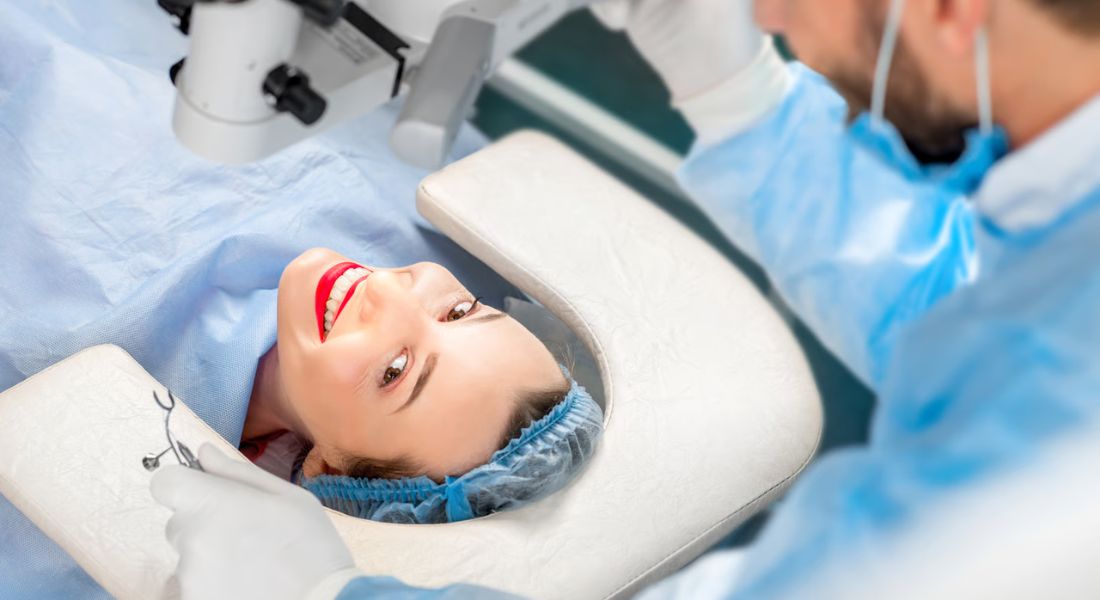
Primary LASIK reshapes your cornea to correct your full prescription, while enhancements involve much smaller, more targeted adjustments. This means the procedure is focused on fine-tuning your vision rather than making major changes.
Planning for an enhancement is more conservative, with tissue preservation and safety margins carefully considered. Recovery is often quicker too, and many people notice improvement within just a few days, making the experience smoother than the initial surgery.
How Surgeons Assess the Need for Enhancement
If you’re considering a LASIK enhancement, your surgeon doesn’t make the decision lightly. For you, the process is thorough, combining detailed measurements with your personal experience to determine whether a touch-up is really necessary.
- Detailed Eye Measurements Form the Starting Point– Corneal thickness, shape, and stability are carefully evaluated before any enhancement. For you, this ensures that your eyes are suitable for the procedure and that it can be done safely.
- Vision Stability Over Time Is Critical– Surgeons usually wait until your prescription has stabilised before considering an enhancement. For you, this means any improvement is likely to be long-lasting and avoids unnecessary repeat procedures.
- Your Visual Symptoms Guide Decisions– Enhancements aren’t based on numbers alone they’re about how your vision affects your daily life. For you, this means your experience of blur, glare, or other visual issues is central to the decision-making process.
- Functional Impact Matters Most– The focus is on restoring clear, comfortable vision that supports your lifestyle. For you, this personalised approach ensures the enhancement truly addresses the issues that matter.
- Patient Experience Complements Clinical Data– Your feedback is just as important as measurements and imaging. For you, this collaborative process helps your surgeon tailor the treatment to your needs and expectations.
Deciding on a LASIK enhancement is a careful, personalised process. For you, it combines precise clinical measurements with your real-world visual experience, ensuring any touch-up delivers the safest, most effective improvement in clarity and comfort.
Timing: When an Enhancement Is Usually Considered
Enhancements aren’t done immediately after LASIK because your eyes need time to heal and stabilise. Trying to rush the procedure can increase the risk of overcorrection and other complications.
Most enhancements are considered months or even years after the original surgery, depending on how your eyes heal. The key factor is ensuring your vision and cornea have stabilised before making any adjustments.
Waiting may feel frustrating, but it ensures greater accuracy. A stable eye allows your surgeon to achieve more predictable results, making the procedure safer and more effective for you.
Safety Considerations With LASIK Enhancements
Safety is always the top priority when planning a LASIK enhancement. Your surgeon needs to ensure that enough corneal thickness remains for the procedure to be safe, and modern imaging tools allow this to be assessed with great precision.
If any structural risk is identified, enhancements are usually avoided. In these cases, your surgeon may discuss alternative options to improve your vision. Safety always comes before cosmetic or convenience goals.
When you are a suitable candidate and the procedure is carefully planned, the risks associated with enhancements are very low. Most patients experience smooth, predictable outcomes.
Conservative planning not only optimises your visual results but also protects your long-term eye health. By prioritising safety at every step, enhancements can be performed confidently and effectively.
The Role of Technology in Modern Enhancements
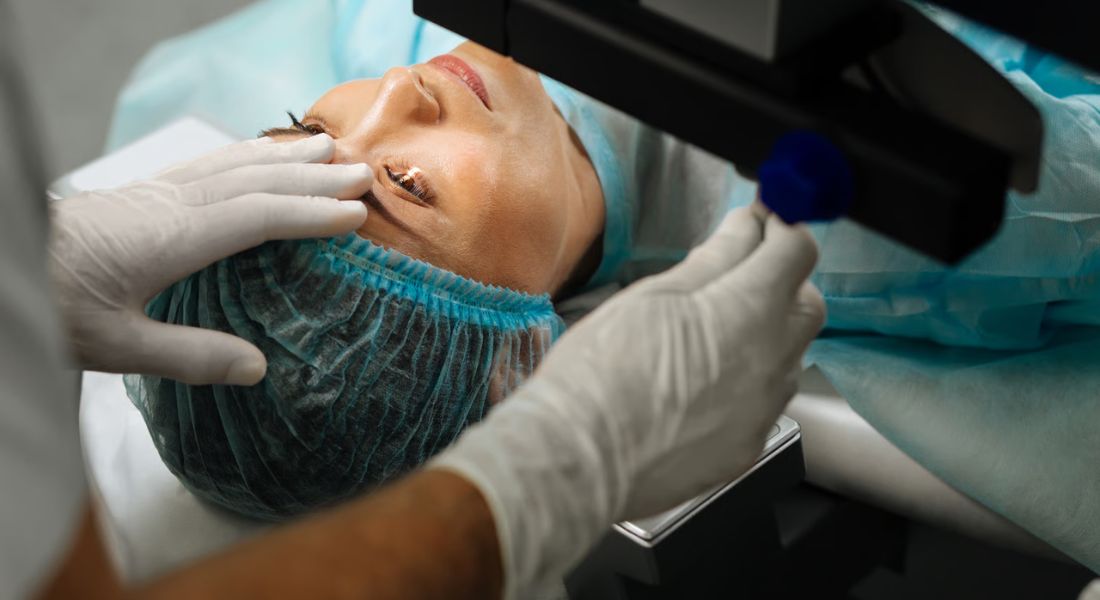
Modern laser technology gives your surgeon exceptional precision when performing enhancements. Features like real-time eye tracking and customised treatment profiles help improve accuracy, reducing the risk of unwanted side effects and giving you better visual outcomes.
Advanced diagnostics also allow for more detailed planning than ever before. Subtle changes in your cornea can be mapped accurately, guiding safer and more effective treatment. Thanks to these technological advances, today’s LASIK touch-ups are far safer and more predictable than older techniques.
Recovery After a LASIK Enhancement
Recovery after a LASIK enhancement is usually quick, and most people experience only minimal discomfort. You’ll often notice an improvement in your vision within a very short time.
You might experience some temporary dryness or mild irritation, but these symptoms generally settle quickly. Using supportive care, like lubricating eye drops, can help your eyes heal comfortably.
For most patients, returning to normal activities happens rapidly. Follow-up appointments ensure that your vision remains stable, and overall, the recovery process is often smoother than many expect.
How Often Enhancements Are Needed Overall
You might be wondering how common LASIK enhancements really are. The reassuring news is that most patients never need one. Understanding the likelihood and purpose of enhancements can help you feel confident about your initial procedure and its results.
- Most Patients Never Require an Enhancement– Large studies show that the vast majority of LASIK patients achieve their desired vision with a single procedure. For you, this means the odds are very high that your eyesight will stabilise without additional treatment.
- Enhancements, When Needed, Are Usually Minor– If a touch-up is required, it’s generally small, aimed at fine-tuning vision rather than correcting a major error. For you, this distinction highlights that enhancements are about optimisation, not fixing a problem.
- Modern Screening Reduces the Need for Enhancements– Careful pre-operative assessments and advanced technology have lowered enhancement rates even further. For you, this means your initial LASIK procedure is more likely to deliver precise, long-lasting results.
- Enhancement Availability Adds Reassurance– Knowing that a refinement is possible if needed can help you feel at ease. For you, this safety net supports confidence in your decision to undergo LASIK.
- Part of Comprehensive Care– LASIK isn’t just about the surgery itself it’s about ongoing care and monitoring to ensure optimal outcomes. For you, this holistic approach means your vision is supported every step of the way.
Enhancements after LASIK are relatively uncommon and usually minor, focusing on fine-tuning rather than correcting major errors. For you, this means most patients enjoy excellent vision from the initial procedure, with the reassurance that refinements are available if needed to maximise comfort and clarity.
Enhancements vs Other Vision Correction Options
Sometimes, a LASIK enhancement might not be the most suitable option for you. Depending on your eye health and vision needs, lens-based procedures or even glasses could be a better choice. Every decision is personalised to your situation.
Whether an enhancement is right for you depends on several factors, including the condition of your eyes and your visual goals. Your surgeon will consider all available options before recommending any treatment.
A thorough consultation helps you understand the choices and what each involves. This is your chance to ask questions and get clarity about what will work best for you.
Personalised advice is far more valuable than general statistics or averages. Careful individual planning ensures that any vision correction approach, whether an enhancement or an alternative, delivers the best possible outcome for your eyes.
Emotional Concerns Around Needing an Enhancement

Being told you might need a LASIK enhancement can feel worrying or even disappointing. It’s natural to wonder whether your original surgery has “failed,” and many people feel the same way.
Knowing the biology behind enhancements can help put your mind at ease. These touch-ups are simply part of optimising your vision over the long term, rather than a sign that anything went wrong with your initial procedure.
Clear communication with your surgeon can reduce anxiety and help you understand what to expect. Being informed about the process and outcomes builds confidence and gives you peace of mind about your vision care.
Long-Term Vision Stability After Enhancement
When enhancements are carefully planned and performed, they can provide lasting benefits. Most people enjoy excellent vision stability, thanks to precise timing and meticulous attention to detail during the procedure.
It’s important to remember that age-related changes in your eyes will still occur over time. Enhancements cannot prevent presbyopia or changes in the lens, so near vision may still be affected as you get older.
Regular long-term follow-up is essential to maintain your visual health. These check-ups allow your surgeon to monitor clarity, detect any issues early, and ensure your eyes remain healthy. The ultimate goal of a LASIK enhancement is stable, comfortable vision. With careful planning, modern techniques, and ongoing care, you can enjoy sharp and reliable eyesight for many years.
FAQs:
- What exactly is a LASIK enhancement?
A LASIK enhancement is a follow-up procedure designed to fine-tune your vision after your initial surgery. It targets any small residual refractive errors that may have developed over time, helping you achieve sharper, more comfortable eyesight. Unlike your primary LASIK procedure, enhancements involve minimal tissue removal and are carefully personalised to your current eye measurements, ensuring a safe and precise adjustment without repeating the full surgery. - Does needing a LASIK enhancement mean my first surgery failed?
Not at all. Requiring an enhancement doesn’t indicate that your original LASIK didn’t work. Your eyesnaturally heal and change over time, and small shifts in your vision can happen years after surgery due to biological factors or ageing. Enhancements simply refine the results of your initial procedure, optimising your visual clarity rather than correcting a mistake. - Why might my vision change after LASIK?
Even after a successful LASIK procedure, your eyes continue to evolve. Subtle regression can occur as your cornea stabilises, and age-related changes in the lens inside your eye may affect near or distance vision. These shifts are normal and don’t reflect a problem with your original surgery. LASIK enhancements specifically address corneal factors to fine-tune your vision when these small changes affect your visual comfort or sharpness. - Who is more likely to need a LASIK enhancement?
You may be slightly more likely to require an enhancement if you had a higher prescription before your initial surgery, or if your eyes heal in a way that produces minor variations over time. Everyone’s eyes respond differently to LASIK, which is why personalised planning and thorough pre-operative assessment are so important. These steps help ensure that if a touch-up is needed, it can be done safely and effectively. - How do surgeons decide if I need an enhancement?
The decision is based on a combination of clinical measurements and your real-life visual experience. Your corneal thickness, shape, and stability are evaluated alongside your vision symptoms, such as blur, glare, or reduced clarity in certain lighting. Your feedback about how your eyes feel in daily life is just as important as numerical data, allowing your surgeon to recommend an enhancement only when it will truly benefit your vision. - How soon after LASIK can an enhancement be performed?
Enhancements aren’t carried out immediately after your initial surgery because your eyes need time to heal and stabilise. Most are considered months or even years later, once your vision has settled and your cornea is stable. Waiting ensures that the touch-up can be performed accurately and safely, minimising the risk of overcorrection and helping achieve predictable, long-lasting results. - Are LASIK enhancements safe?
Yes, when carefully planned, LASIK enhancements are very safe. Modern diagnostic tools allow surgeons to measure your cornea precisely, ensuring there’s enough tissue for a safe adjustment. Any potential risks are evaluated beforehand, and if your eyes aren’t suitable for enhancement, alternative options can be considered. With thorough planning and advanced technology, enhancements have predictable outcomes and low complication rates. - How does technology improve LASIK enhancements?
Modern lasers and diagnostic tools make enhancements highly precise. Real-time eye tracking ensures the laser follows even the smallest eye movements, while customised treatment profiles allow subtle corrections tailored to your eye’s current shape. Detailed mapping of the cornea guides your surgeon, reducing the likelihood of side effects like glare or overcorrection and helping you achieve the best possible visual outcome. - What is recovery like after an enhancement?
Recovery from a LASIK enhancement is usually quick and comfortable. Most people notice improvement in their vision within a few days, and any mild dryness or irritation generally settlesrapidly. With proper care, such as using lubricating drops, you can resume normal activities soon. Overall, the experience tends to be smoother and less involved than the initial surgery, giving you fast and noticeable visual benefits. - Will my vision remain stable after an enhancement?
Enhancements can provide long-lasting visual benefits when carefully timed and performed. Your eyesight generally remains stable, though age-related changes in your lens may still occur, affecting near vision over time. Regular follow-up appointments are important to monitor your eyes and ensure ongoing visual health. For you, this means that a well-planned LASIK enhancement can deliver clear, comfortable, and reliable vision for many years.
Final Thoughts: Understanding LASIK Enhancements
It’s completely normal to wonder why a LASIK enhancement might be suggested years after your initial surgery. Remember, needing a touch-up doesn’t mean your first procedure failed your eyes change naturally over time, and enhancements are simply a way to fine-tune your vision and keep it at its best. Modern LASIK techniques allow surgeons to make these adjustments safely and precisely, so you can enjoy clear, comfortable eyesight with minimal intervention.
If you’re exploring whether lasik surgery in London could benefit you, get in touch with us at Eye Clinic London to schedule your consultation. By understanding the role of enhancements and the careful planning involved, you can feel confident that your vision care is personalised, safe, and effective.
References:
- LASIK Enhancement Outcomes After Primary LASIKa clinical study showing that LASIK enhancements can successfully address residual refractive errors. https://www.mdpi.com/2077-0383/11/16/4832
- Understanding the Real Effect of HOAs After LASIKalthough focused on aberrations, this MDPI paper supports the idea that visual outcomes. https://www.mdpi.com/2673-3269/3/4/33
- Enhancement Reflects Residual Refractive Errors and Treatment Optionsreview article summarizing why enhancements are performed. https://pubmed.ncbi.nlm.nih.gov/28192591/
- Predicting the Necessity of LASIK Enhancement After Cataract Surgerydemonstrates that some patients require LASIK enhancements even with otherwise successful refractive outcomes. https://pmc.ncbi.nlm.nih.gov/articles/PMC3180499/
- Retreatment and Enhancement Strategy After LASIK(older ScienceDirect study) compares techniques for LASIK enhancement. https://www.sciencedirect.com/science/article/abs/pii/S0886335003008204