


Higher-Order Aberrations After LASIK Surgery: Causes and Clinical Impact
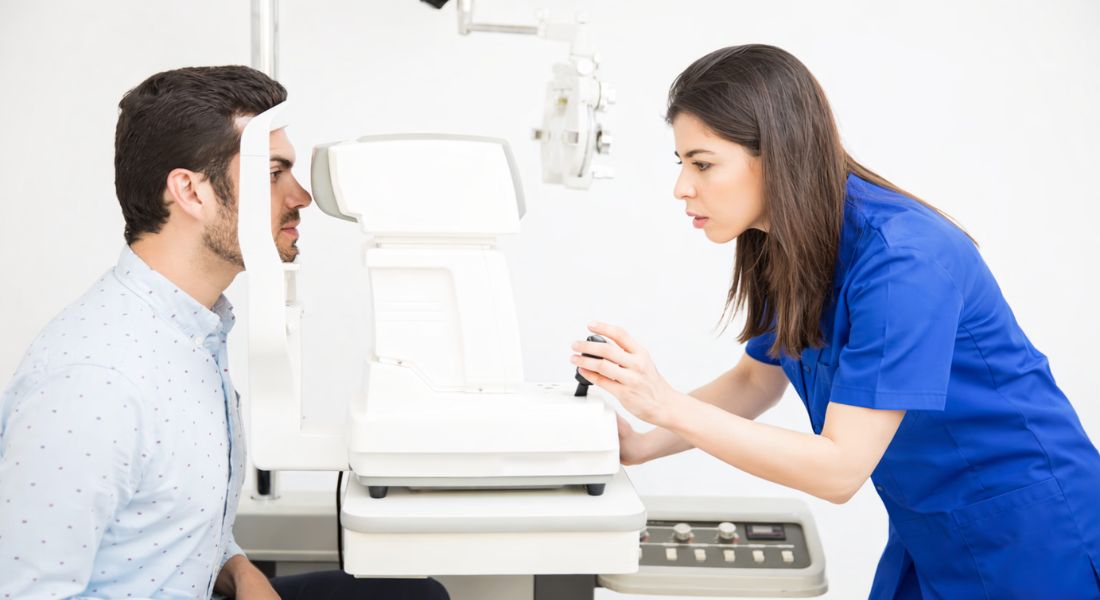
If you’re researching LASIK surgery, you’ll often see discussions about visual quality, not just sharpness. Many people are surprised to learn that seeing clearly isn’t only about reading letters on an eye chart it’s about how your vision feels in real life.
At Eye Clinic London, we explain that higher-order aberrations play an important role in this experience. These subtle optical imperfections can affect how your eyes handle contrast, glare, and low-light situations. LASIK is very effective at correcting refractive errors such as short-sightedness, long-sightedness, and astigmatism. For most people, this dramatically improves day-to-day vision.
However, changes in higher-order aberrations can still influence overall clarity, night vision, and contrast. In this article, we’ll explain what these aberrations are, why they can increase after LASIK, and how modern laser profiles are designed to minimise their impact.
Understanding What Higher-Order Aberrations Are
Higher-order aberrations are subtle imperfections in how your eye focuses light. Unlike common refractive errors, which glasses or contact lenses can easily correct, these aberrations affect the overall quality of your vision rather than simple sharpness.
Examples include coma, spherical aberration, and trefoil. Most people have some degree of these imperfections without ever noticing them in daily life.
They become more important when your eye’s optical system changes, such as after LASIK surgery. Even small shifts can make higher-order aberrations more noticeable, influencing how comfortable and clear your vision feels.
How Higher-Order Aberrations Affect Vision
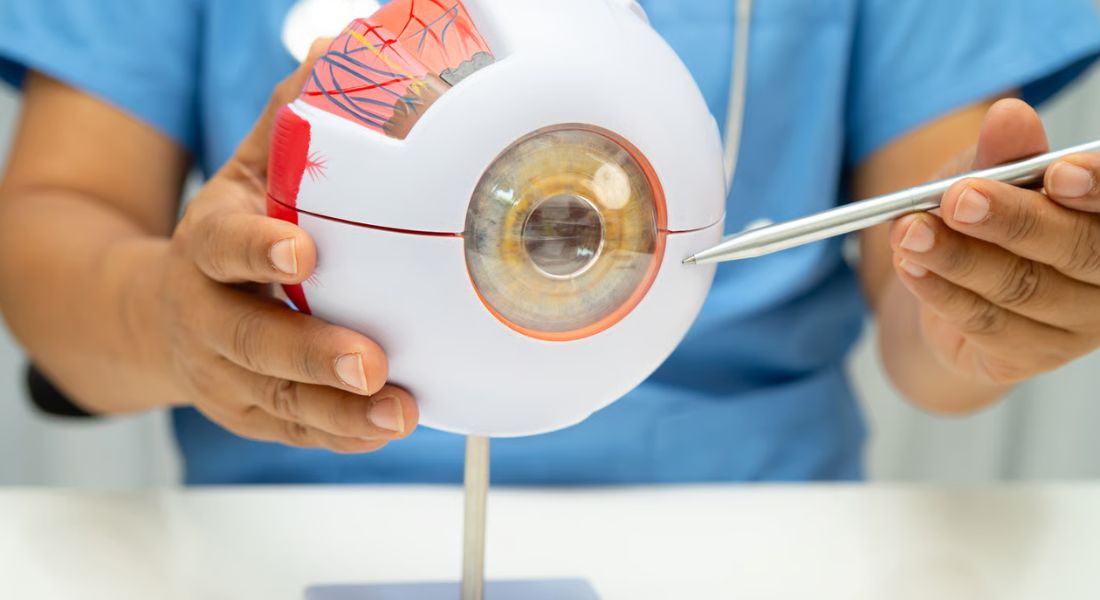
Higher-order aberrations can subtly reduce the clarity and contrast of your vision, even if you can see well on an eye chart. You may notice this as glare, halos, or starbursts around lights, particularly in low-light conditions. These effects often feel more noticeable at night, when your pupils naturally dilate.
Because of this, your vision might feel less comfortable rather than simply less sharp. You may find that bright lights are more distracting or that details don’t look as crisp as you expect. This is how higher-order aberrations affect the quality of what you see in everyday situations.
Unlike standard refractive errors, these aberrations can’t be corrected with glasses or contact lenses. That’s why managing them is so important in laser eye surgery. Modern LASIK is designed to minimise their impact as much as possible, helping your vision feel clearer and more natural.
Why LASIK Can Change Higher-Order Aberrations
If you’re considering LASIK, it’s helpful to know that it does more than just correct your prescription. By reshaping your cornea, it changes the way light travels through your eye. For you, this means while your vision gets sharper, there can also be subtle effects on your visual quality that you might notice, especially in low-light conditions.
- LASIK Reshapes the Cornea to Correct Refractive Error – LASIK works by reshaping your cornea so light focuses correctly on the retina. For you, this means clearer vision without relying on glasses or contact lenses. But because your cornea’s shape changes, the way your eye handles light changes too.
- It Alters the Way Light Passes Through the Eye – When your cornea is reshaped, light moves through your eye differently than before. You might notice this subtly, particularly when it’s dark or dim, as your eyes adjust to the new light pattern.
- Structural Changes Can Influence Higher-Order Aberrations – These structural changes can affect higher-order aberrations, like glare, halos, or reduced contrast. For you, this explains why vision isn’t just about sharpness it’s also about clarity and comfort.
- Older Laser Techniques Sometimes Increased Aberrations – Earlier LASIK lasers weren’t as precise, which sometimes led to unwanted visual effects. You may have heard of spherical aberration this was one of the common issues with older methods.
- Modern Technology Has Significantly Reduced This Issue – Today’s LASIK uses advanced, personalised technology. For you, this means the risk of inducing higher-order aberrations is much lower, giving you sharper, more comfortable vision overall.
In short, LASIK does more than just correct your prescription it changes how your eye processes light. With modern technology, you can enjoy clearer, more natural vision with fewer side effects than ever before. Understanding this helps you feel confident about what to expect from the procedure.
The Role of Corneal Shape in Aberration Changes
Your cornea naturally has an aspheric shape, which helps focus light efficiently. Traditional laser treatments often flattened the central cornea more than the edges, which could create spherical aberrations and affect how clearly you see.
Today, maintaining your cornea’s natural profile is a key goal in LASIK planning. Preserving this shape helps protect your visual quality, especially in low-light or challenging conditions.
Modern laser algorithms are designed around this principle. By keeping your corneal contour as natural as possible, the surgery supports sharper, more comfortable vision for you after treatment.
Pupil Size and Its Relationship to Aberrations
You might not realise it, but the size of your pupils plays a big role in how you experience aberrations. When your pupils are larger, more peripheral light rays enter your eye, and these rays are more affected by higher-order aberrations. This is why you may notice certain visual issues in different lighting conditions.
For example, night-time symptoms like glare, halos, or starbursts are more noticeable because your pupils dilate in low light. It’s not that your vision has suddenly worsened your eye is just letting in more light that’s influenced by subtle imperfections.
This is why your pre-operative assessment includes checking how your pupils behave under different lighting conditions. Understanding your pupil size helps your surgeon predict potential visual effects and plan the treatment to give you the clearest, most comfortable vision possible.
Individual Eye Optics and Baseline Aberrations
You should know that every eye has its own unique optical fingerprint. Some people naturally have higher baseline aberrations even before surgery, while others have very regular optics. These differences are perfectly normal, but they do affect how your vision responds to treatment.
Your baseline measurements are important because they guide how LASIK is planned for you. They also help explain why experiences and results can differ from person to person. A personalised assessment ensures that your treatment is tailored to your eyes, giving you the best possible outcome.
Why Not All Patients Experience Visual Quality Issues
You might be surprised to know that many patients never notice any symptoms from higher-order aberrations. Often, the changes in their vision remain below a level that would cause noticeable problems. Careful patient selection also plays a big role in ensuring this.
Modern LASIK techniques are specifically designed to avoid creating new aberrations in your eye. By preserving your natural optics as much as possible, the procedure protects the quality of your vision.
When this is done successfully, your visual quality stays excellent, which is why so many patients report high satisfaction. Understanding this helps you see why results can be so reliably positive with today’s advanced treatments.
The Clinical Importance of Contrast Sensitivity
When it comes to your vision, it’s not just about seeing clearly it’s also about how well you can detect subtle differences in shades and contrasts. This is where contrast sensitivity comes in. For you, this matters most in situations like driving at night or spotting objects in dim lighting. Understanding how LASIK can affect this aspect of vision helps you know what to expect from the procedure.
- Contrast Sensitivity Reflects How Well You See Subtle Differences – Contrast sensitivity is your ability to notice slight changes in light and dark. For you, this means seeing objects clearly even when the lighting isn’t perfect. It’s what allows you to distinguish shapes and details that might otherwise blend into the background.
- Higher-Order Aberrations Can Reduce This Ability – Irregularities in your eye, like higher-order aberrations, can make contrast sensitivity worse. For you, this could mean more difficulty seeing clearly at night or in dim conditions, affecting activities like night driving or reading in low light.
- Modern Studies Show Contrast Sensitivity is Generally Preserved After LASIK – Thankfully, research shows that most people maintain their contrast sensitivity after LASIK. For you, this means the procedure can improve your vision without compromising your ability to see subtle differences in shading.
- In Some Cases, It Even Improves – In certain patients, contrast sensitivity actually improves post-LASIK. For you, this is a sign of how modern laser techniques are designed to enhance not just sharpness, but overall visual quality.
- This Reflects Advances in Laser Design and Planning – Modern lasers are highly precise and personalised, taking your unique eye shape into account. For you, this means better outcomes and a lower risk of night-time visual issues, so your vision feels both sharper and more comfortable.
In the end, contrast sensitivity is an important part of your overall visual experience. Thanks to advances in LASIK technology, you can enjoy clearer vision while still seeing subtle contrasts effectively. This means you can feel confident that your night-time and low-light vision is well-protected.
Wavefront Technology and Aberration Management
You might be interested to know that wavefront analysis allows your surgeon to measure optical imperfections in your eye in incredible detail. This information gives them a precise understanding of your unique visual profile, which is essential for planning your treatment effectively.
Different laser profiles use this data in slightly different ways. Some are designed to correct existing aberrations in your eye, improving visual quality beyond standard correction.
Other approaches focus on preventing new aberrations from being introduced during surgery. By maintaining the natural shape and optics of your cornea, these techniques aim to protect your vision as much as possible.
Both strategies are supported by clinical evidence, showing that using wavefront technology can enhance outcomes. For you, this means a higher likelihood of clearer, more comfortable vision after your procedure.
Wavefront-Guided Approaches and Their Purpose
Wavefront-guided LASIK uses detailed measurements of your unique eye optics. The aim is not only to correct your refractive error but also to reduce existing higher-order aberrations. This approach can be especially helpful if you have subtle visual imperfections that matter to you.
The accuracy of these measurements is essential for good results. If the data quality isn’t precise, the outcome may be less predictable and your visual quality could be affected.
That’s why careful pre-operative screening is so important. By thoroughly assessing your eyes, your surgeon ensures the treatment is tailored to you, giving the best chance of clear, comfortable vision.
Wavefront-Optimised Profiles and Aberration Prevention
Wavefront-optimised LASIK is designed to preserve the natural shape of your cornea. Unlike wavefront-guided approaches, it doesn’t aim to actively correct existing aberrations. Instead, its main goal is to reduce the risk of introducing new ones during surgery.
This approach is highly consistent and reliable. By maintaining your cornea’s natural optics, it helps protect the quality of your vision across different lighting conditions.
For many patients, wavefront-optimised LASIK provides excellent visual outcomes. It’s a dependable choice for those who want safe, high-quality results without the need for highly customised correction.
What Clinical Studies Show About Aberrations After LASIK
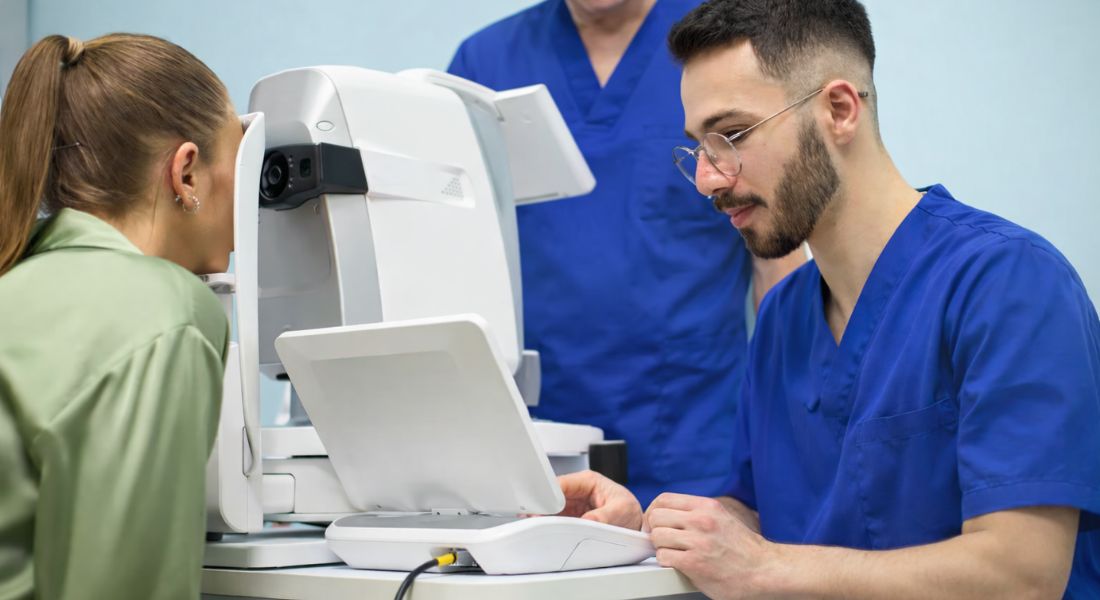
Modern studies show that LASIK induces very low levels of higher-order aberrations. When changes do occur, they’re usually minor and not significant in your day-to-day vision. This is a major improvement compared with earlier generations of LASIK.
Long-term follow-up studies show that visual quality remains stable over time. For you, this means that the small changes in aberrations observed initially tend not to worsen.
Aberration levels generally stay consistent once healing is complete. This helps explain why most patients continue to enjoy clear, comfortable vision months and years after surgery.
Overall, the evidence supports the durability of modern LASIK outcomes. The combination of advanced laser technology and careful planning ensures your results are both predictable and reliable.
Night Vision Symptoms and Real-World Experience
If you’re thinking about LASIK, night vision is probably on your mind. You might worry about glare, halos, or difficulty seeing in the dark. The good news is that most people experience only minor issues, and your brain plays a big role in helping your vision adjust over time.
- Night Vision Symptoms Are a Common Concern – Many people ask about glare, halos, or difficulty seeing at night before undergoing LASIK. For you, it’s completely normal to have these concerns. Understanding what’s typical can help you feel more prepared for your visual experience after surgery.
- Clinical Data Show Low Rates of Persistent Issues – Studies indicate that persistent night vision problems are uncommon. For you, this means the likelihood of long-term glare or halos is quite low. Most people find that any initial symptoms gradually improve within a few weeks or months.
- Most Symptoms Improve Over Time – Even if you notice glare or halos initially, these effects usually diminish as your eyes heal. For you, this is reassuring because it shows that temporary visual disturbances are part of the normal recovery process.
- Neural Adaptation Also Plays a Role – Your brain helps your eyes adjust to the changes in how light passes through them. For you, this means that even subtle distortions become less noticeable over time as your visual system adapts.
- Gradual Adjustment Improves Perceived Visual Quality – As your brain adapts, the way you perceive light and contrast improves naturally. For you, this means your night vision can feel sharper and more comfortable than in the initial weeks after surgery.
In short, night vision concerns are common, but they’re usually temporary. With both healing and neural adaptation, your visual quality improves over time. For you, this means that LASIK can give you clearer, more comfortable vision both during the day and at night.
The Role of Healing in Aberration Changes
You might notice that your vision can fluctuate during the early stages of healing after LASIK. Surface irregularities on your cornea can temporarily increase higher-order aberrations, making your vision feel slightly less crisp. Fortunately, this is usually only short-term.
As your eyes continue to heal and stabilise, your visual quality gradually improves. The cornea smooths out, and the temporary aberrations tend to diminish naturally.
Final outcomes are typically assessed several months after the procedure. During this period, patience is key, because your body needs time to complete the healing process and reveal the full benefits of your treatment.
Why Modern LASIK Is Different From Early Techniques
You should know that early LASIK procedures used less refined laser profiles. Back then, higher-order aberrations weren’t fully understood, and the technology wasn’t capable of addressing them effectively. As a result, some patients experienced subtle visual quality issues after surgery.
Since then, technology has evolved significantly. Modern lasers are equipped with advanced algorithms and sophisticated eye-tracking systems. This allows your surgeon to perform the procedure with much greater precision.
Better precision means that the laser can be centred more accurately on your eye, which is critical for optimising your visual outcomes. It also helps reduce the risk of introducing new aberrations during treatment.
For you, the end result is clearer, more consistent vision. Modern LASIK is designed not just to correct your refractive error but also to protect and enhance the overall quality of your vision, giving you more reliable long-term results.
How Surgeons Assess Aberration Risk Before Surgery
Before your LASIK procedure, your surgeon will perform detailed imaging to evaluate your corneal shape and overall optical quality. Wavefront measurements add even more insight into subtle imperfections in your vision. Together, this information helps your surgeon decide which technology and treatment approach will suit you best.
This assessment also helps identify patients who may benefit from more customised treatment and ensures that your expectations are realistic. By planning carefully based on your individual eyes, your surgeon can improve the likelihood of excellent results and high satisfaction after your procedure.
Why Patient Education Matters in Visual Quality Outcomes
When it comes to your vision, knowledge is power. Understanding what LASIK or other eye procedures can and cannot do helps you set realistic expectations. For you, this means feeling more confident, less anxious, and better prepared for the outcomes of your treatment.
- Understanding Higher-Order Aberrations Helps Reduce Anxiety – Knowing about higher-order aberrations gives you a clearer picture of what your eyes might experience. For you, this reduces uncertainty and helps you feel more at ease about the procedure and its results.
- Patients Who Know What to Expect Report Higher Satisfaction – People who are well-informed tend to be happier with their results. For you, understanding potential side effects, recovery timelines, and visual improvements means you’re less likely to be caught off guard and more likely to appreciate the benefits.
- Clear Explanations Build Trust – Honest, easy-to-understand explanations help you feel confident in your care team. For you, this builds a sense of trust, making it easier to follow advice and enjoy the full benefits of your treatment.
- Realistic, Evidence-Based Discussions Are Key – Focusing on facts rather than hype ensures you know exactly what to expect. For you, this means making decisions based on solid evidence rather than anxiety or misinformation.
- Education Is Part of Good Clinical Care – When your clinician takes the time to explain everything clearly, it’s a vital part of quality care. For you, this means you’re supported not just during the procedure, but throughout your entire visual journey.
Ultimately, patient education plays a huge role in how satisfied you feel with your vision outcomes. By understanding your eyes and the procedure, you can approach your treatment with confidence, trust, and realistic expectations, ensuring the best possible results for you.
Choosing the Right Approach for Your Eyes

You should know that there isn’t a single laser profile that’s best for everyone. The right approach really depends on your unique eye optics and what you want to prioritise in your vision. Personalised care is far more important than the latest technology labels or marketing claims.
If you’re considering LASIK surgery in London, it’s essential to choose a clinic that takes the time to explain these nuances to you. Understanding why a particular approach is recommended helps you make an informed decision about your eyes and your vision.
At Eye Clinic London, we base our recommendations on scientific evidence rather than marketing hype. This careful, personalised approach helps protect your long-term visual quality, giving you results that are not just impressive on the day, but reliable for years to come.
FAQs:
1. What are higher-order aberrations, and why should I care about them after LASIK?
Higher-order aberrations are tiny imperfections in how your eye focuses light. Unlike standard vision problems that glasses or contacts can fix, these affect the overall quality of your vision rather than just clarity. After LASIK, your cornea’s shape changes, and this can make these subtle imperfections more noticeable.
2. How can higher-order aberrations affect my vision in real life?
You might notice glare, halos, or starbursts around lights, particularly in dim lighting or at night. Even if your vision is technically “sharp,” higher-order aberrations can make it feel less crisp or less comfortable.
3. Why does LASIK sometimes change higher-order aberrations?
LASIK works by reshaping your cornea so light focuses correctly on your retina. While this makes your vision sharper, it also alters the way light travels through your eye. Depending on your cornea’s shape and how your pupils respond to different lighting, you might notice minor changes in visual quality.
4. Does pupil size affect my risk of visual issues after LASIK?
Absolutely. Your pupils control how much light enters your eye, and larger pupils let in more peripheral light rays, which are more susceptible to higher-order aberrations. That’s why symptoms like glare or halos are more noticeable at night, when your pupils naturally dilate.
5. Will LASIK affect my contrast sensitivity?
Contrast sensitivity is your ability to detect subtle differences in shades of light and dark. Higher-order aberrations can sometimes reduce this, making objects less distinct in dim lighting. The good news is that most people maintain or even improve their contrast sensitivity after modern LASIK.
6. What’s the difference between wavefront-guided and wavefront-optimised LASIK?
Wavefront-guided LASIK uses detailed measurements of your eye to correct existing aberrations, improving overall visual quality. Wavefront-optimised LASIK, on the other hand, preserves your natural corneal shape to prevent new aberrations from forming.
7. Are night vision problems common after LASIK?
It’s normal to be concerned about night vision. Some people notice glare, halos, or difficulty seeing in low light initially. However, most of these symptoms are temporary. Your eyes heal, and your brain adapts to the new light patterns, so night vision usually improves over time.
8. How important is the healing period for visual quality after LASIK?
Healing plays a big role. In the first few weeks, surface irregularities on your cornea can temporarily increase higher-order aberrations, making your vision feel slightly less crisp. As your eyes stabilise, these temporary effects usually fade, revealing your full visual potential.
9. Why is modern LASIK different from early procedures?
Earlier LASIK technology was less precise, which sometimes caused subtle visual quality issues. Modern LASIK uses advanced algorithms, eye-tracking systems, and personalised treatment plans.
10. How can I make sure I get the best visual quality from LASIK?
Education and personalised care are crucial. Understanding higher-order aberrations, your corneal shape, and how your pupils behave helps you set realistic expectations. Choose a clinic that explains the science behind the procedure, uses modern laser technology, and tailors treatment to your eyes.
Final Thoughts: Why Modern LASIK Focuses on Visual Quality, Not Just Sharpness
Understanding higher-order aberrations can really change the way you think about vision after LASIK. It’s not just about reading an eye chart it’s about how comfortable and natural your sight feels in everyday life, whether you’re driving at night, reading in dim light, or simply enjoying clear, crisp vision. Modern LASIK techniques are designed with your visual quality in mind, using advanced laser technology and personalised treatment plans to minimise aberrations and protect your eyesight.
If you’d like to find out whether lasik surgery in London is suitable for you, feel free to contact us at Eye Clinic London to arrange a consultation. Our team will guide you through the process, answer your questions, and help you feel confident about your visual journey.
References:
- Miret, J.J., Rojas, E., Camps, V.J., García, C., Caballero, M.T., Martín, B. & Chipont, E. (2022). Understanding the real effect of the highorder aberrations after myopic FemtoLASIK. https://www.mdpi.com/2673-3269/3/4/33
- Kang, E.M., Ryu, I.H., Lee, I.S., Kim, J.K., Kim, S.W. & Ji, Y.W. (2022). Comparison of corneal higherorder aberrations following topographyguided LASIK. https://www.mdpi.com/2077-0383/11/20/6171
- Agarwal, S. et al. (2018). Visual outcomes and higher order aberrations following LASIK on eyes with low myopia and astigmatism. https://pmc.ncbi.nlm.nih.gov/articles/PMC5997857/
- Li, Y. et al. (2017). Effects of higherorder aberrations on contrast sensitivity in normal eyes of a large myopic population. https://pmc.ncbi.nlm.nih.gov/articles/PMC5596227/
- Keir, N.J. et al. (2009). Wavefrontguided LASIK for myopia: effect on visual acuity, contrast sensitivity. https://pubmed.ncbi.nlm.nih.gov/19603620/