


Eye Problems in Babies vs Toddlers: What’s Normal and What’s Not?
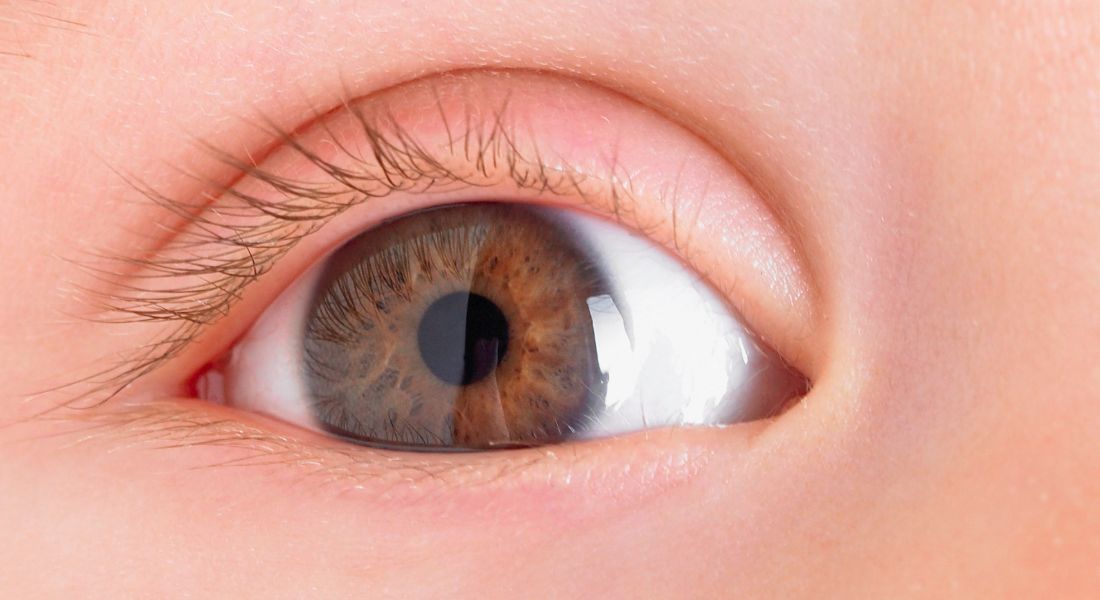
During your baby’s first few years, their eyes develop at an astonishing pace. Vision goes from blurry shapes and light perception in infancy to colour recognition, depth awareness, and coordinated tracking by toddlerhood. Because the eyes and brain are changing so quickly, it’s completely natural to have questions about what is normal and what might be a cause for concern.
You may notice your baby’s eyes wandering, crossing, tearing, or looking slightly misaligned. You might see unusual movements or feel unsure whether their gaze is developing properly. Some of these signs are completely normal, while others may indicate an underlying condition that needs attention. As toddlers become more active and visually curious, new issues can appear some harmless, others requiring specialist review.
In this guide, I’ll walk you through the differences in eye development between babies and toddlers, explain the signs that are considered normal at each age, and highlight the warning signals that suggest you should seek specialist care. By the end, you’ll feel more confident spotting the difference between harmless developmental stages and problems that need professional assessment.
How Eye Development Differs Between Babies and Toddlers
When a baby is born, their visual system is far from mature. For the first few weeks, their focus is limited to short distances. They see shapes rather than details and rely heavily on contrast. Eye movements can be uncoordinated, and it’s normal for their eyes to drift or cross occasionally.
By contrast, toddlers have much more advanced visual abilities. Their eyes are better aligned, they can track moving objects smoothly, and they develop strong hand–eye coordination. They recognise faces easily, explore their surroundings visually, and begin to judge distance and depth more accurately.
Because the speed of development is so rapid, the signs that look normal in a newborn may be concerning in a toddler. Understanding these differences helps you interpret what you see as your child grows.
Normal Vision Milestones in Babies (0–12 Months)
Understanding normal vision milestones in babies can help parents feel reassured and recognise early signs if something isn’t developing as expected. From newborns focusing on nearby objects to older infants developing depth perception and stable eye alignment, knowing what to expect at each stage allows you to track your baby’s visual progress and identify potential concerns early.
Newborn to 6 Weeks: At this stage, babies can only focus on objects around 20–30 cm away roughly the distance of your face when you hold them. Their eyes may wander or briefly cross. This is usually completely normal because their eye muscles are not yet strong or coordinated.
You may notice your baby gazing at high-contrast patterns or following bright lights. They are still learning to use both eyes together.
6–12 Weeks: By this time, babies begin to track objects more reliably. You’ll notice them following your face and responding visually to movement. Eye alignment becomes more consistent, though brief drifting may still occur occasionally.
3–6 Months: Vision improves significantly. Babies should now follow objects smoothly, connect visual cues with hand movements, and show interest in colourful toys. Their eyes should appear mostly straight.
6–12 Months: Depth perception develops, allowing babies to judge distance when reaching, crawling, or exploring. Eye alignment should be stable by this age. Persistent misalignment beyond four months is usually not normal and should be assessed.
Knowing these milestones helps you recognise when something is outside the normal pattern.
What’s Normal in Babies: Common Benign Eye Findings
Babies’ eyes go through rapid development in the first year, and it’s common to notice behaviours or features that may seem worrying but are usually harmless. Understanding these typical, benign eye findings helps parents distinguish normal variations from issues that might need specialist attention.
Occasional Eye Crossing: In the first two to three months, it’s common for a baby’s eyes to momentarily cross or drift outward. Their eye muscles are still developing the coordination needed for alignment.
Intermittent Wandering Eye: If one eye occasionally wanders when the baby is tired, this is often normal in the early months. The key is whether alignment becomes consistent over time.
Watery Eyes: Excessive tearing is common because many babies have partially blocked tear ducts. This typically resolves naturally by age one.
Eyelid Swelling After Birth: Some babies develop mild swelling due to birth pressure or blocked ducts. As long as it improves, it’s usually not concerning.
Variable Light Sensitivity: Babies often squint in bright light because their pupils and brain pathways are still developing.
These normal findings tend to improve as the baby grows, but they should be monitored to ensure they resolve on schedule.
Warning Signs in Babies That Need Specialist Assessment
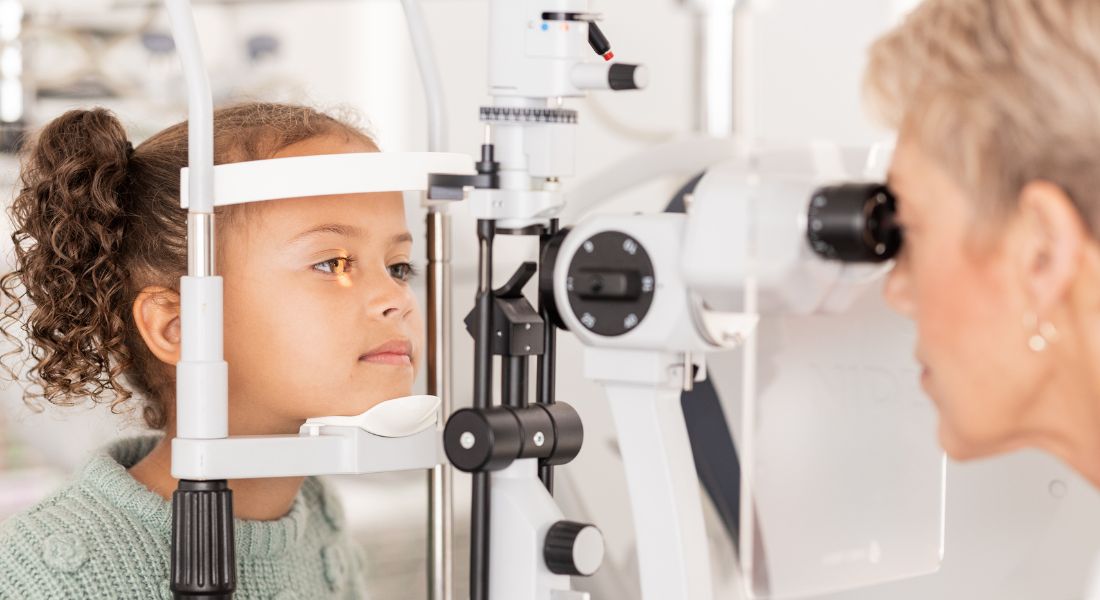
While many eye behaviours in babies are normal, some signs indicate potential problems that need prompt attention. Early detection and assessment by a specialist are crucial, as certain issues can affect visual development and long-term eye health.
Persistent Eye Misalignment: If you notice constant or frequent crossing or outward drifting beyond three to four months, this requires evaluation. Early treatment is essential for preventing amblyopia.
No Eye Contact by 6–8 Weeks: Babies should begin making eye contact by two months. Lack of engagement may indicate visual or neurological issues.
White Reflex in Photos: Instead of the usual red-eye reflection, if one or both pupils appear white, grey, or yellow in photos, this is a red flag for conditions such as cataracts or retinal problems.
Cloudy or Enlarged Eyes: Cloudiness, unusual enlargement, or excessive blinking can signal congenital glaucoma and require urgent assessment.
Lack of Visual Tracking: If a baby cannot follow a moving object by three months, this suggests a developmental delay in visual function.
Droopy Eyelids: A drooping eyelid (ptosis) can interfere with visual development and may lead to a lazy eye.
Constant Tearing With Discharge: Tear duct blockages are common, but severe discharge, redness, or swelling may indicate infection.
Identifying issues early gives babies the best chance of healthy visual development.
How Toddler Eye Development Differs (1–3 Years)
By the time children reach toddlerhood, their visual system becomes far more sophisticated. Toddlers use their vision to explore their environment, recognise objects, and coordinate complex movements such as running, climbing, and building.
At this stage, the issues you expect to see change significantly. Eye movements should be smooth and coordinated. Eye alignment should remain stable. Toddlers should recognise familiar faces even at a distance and use their vision effectively to navigate space.
Because their vision becomes a primary tool for learning and communication, problems during this period can have a bigger impact on behaviour and development.
What’s Normal in Toddlers
Toddlers’ vision continues to develop rapidly, and while most eye behaviours are normal, some may appear unusual at first glance. Recognising typical patterns helps parents distinguish harmless habits from signs that may need further assessment.
Occasional Eye Rubbing: Toddlers rub their eyes when tired, irritated, or emotional. Occasional rubbing is normal, but frequent rubbing may indicate dryness, allergies, or uncorrected vision issues.
Momentary Misalignment When Tired: A slight drift when a toddler is exhausted can be normal, as long as both eyes are otherwise straight during the day.
Short Attention Span for Visual Tasks: Toddlers have limited focus, so they may lose interest quickly during visual activities. This doesn’t necessarily indicate a problem with their eyesight.
Mild Watering in Cold or Windy Weather: Their tear film is still maturing, so environmental sensitivity is common.
Variable Responses to Eye Tests: Toddlers may not cooperate consistently, which is normal and doesn’t reflect their visual ability.
Understanding these normal behaviours helps you avoid unnecessary worry.
Warning Signs in Toddlers That Require Specialist Assessment
Toddlers rely increasingly on their vision for daily activities, so certain eye behaviours can indicate underlying problems. Recognising these warning signs early ensures timely specialist assessment and supports healthy visual development.
Persistent Eye Crossing or Wandering: Misalignment at this age almost always requires evaluation. If one eye is turning inward or outward frequently, strabismus is likely, and early treatment is essential.
Covering One Eye: If your toddler covers or closes one eye in bright light or when focusing, this may signal vision imbalance or eye muscle problems.
Sitting Very Close to Screens: Excessive closeness can indicate uncorrected refractive errors, especially short-sightedness.
Frequent Tripping or Poor Depth Perception: This may suggest issues with binocular vision or coordination between the eyes.
Delayed Visual-Motor Skills: Struggling with puzzles, stacking blocks, or catching may be linked to vision rather than motor development alone.
Squinting or Tilting the Head: This can indicate that one eye sees better than the other or that the child is compensating for misalignment.
Complaints of Headaches or Eye Pain: Toddlers may not describe discomfort well, but irritability or avoidance of visual tasks can signal underlying problems.
Light Sensitivity: Excessive squinting or discomfort in bright light may point to corneal or retinal issues.
While some signs overlap with babies, many indicate deeper functional issues that toddlers are more likely to experience as they rely more heavily on their vision.
Differences Between Eye Problems in Babies vs Toddlers
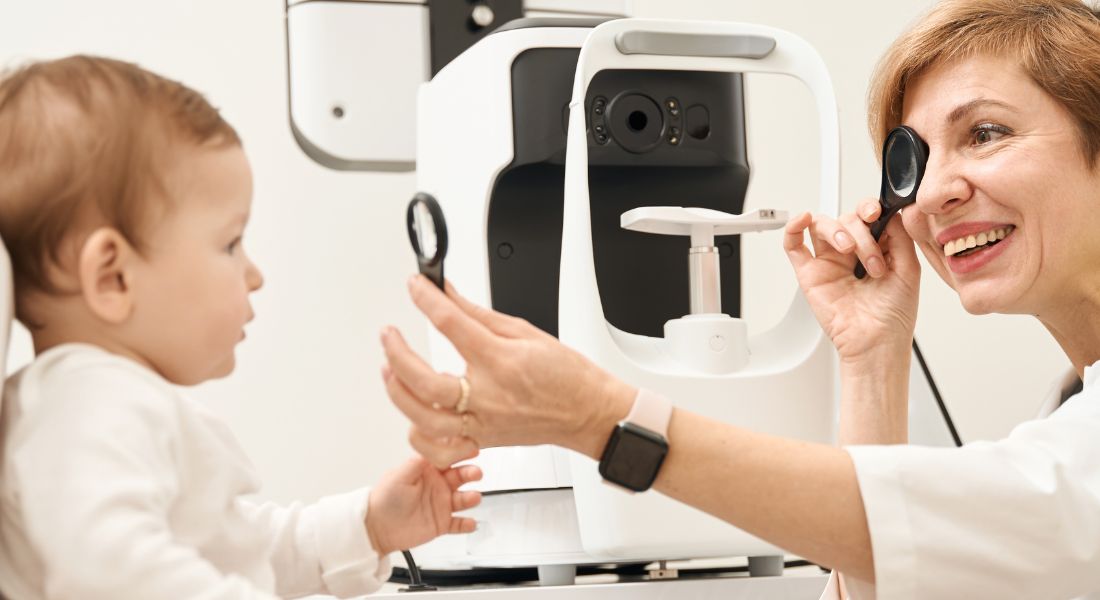
Understanding how eye issues present differently in babies and toddlers is crucial for early detection.
In babies, problems often relate to structural development, such as congenital cataracts or tear duct issues. Strabismus may appear early and requires prompt management.
In toddlers, functional issues emerge problems with focusing, eye muscle coordination, or depth perception become more obvious because these skills are now expected to be mature. A baby who briefly crosses their eyes may be normal; a toddler who does the same almost certainly needs assessment.
A baby struggling to track may still be developing; a toddler who struggles may have a visual processing or alignment problem. These differences highlight why age plays such a big role in interpreting symptoms.
Why Early Assessment Matters
The earlier a problem is identified, the easier it is to treat. During the first few years of life, the brain is still learning how to use the eyes. If one eye doesn’t provide a clear image, the brain may suppress it, leading to amblyopia. This condition becomes progressively harder to treat as the child grows older.
Strabismus, refractive errors, and congenital issues benefit significantly from early intervention. Treatment may include glasses, patching, drops, exercises, or surgery all of which have higher success rates when started early. Every month counts during visual development. Even small delays can have long-term consequences.
When Parents Should Seek Specialist Advice
Parents should seek specialist advice if they notice their baby’s eyes remain misaligned after four months. Persistent turning or drifting of one eye in a toddler is also a sign that an assessment by a paediatric ophthalmologist is needed.
Unusual signs such as white reflections in the pupil or difficulty following objects should not be ignored. A child struggling to focus or showing one eye as weaker may have an underlying vision issue.
Other symptoms like frequent tearing, redness, or discharge can indicate eye problems that require professional attention. Similarly, squinting, tilting the head, or rubbing the eyes often are signs that vision may be affected.
Even during school readiness activities, slow visual skills or difficulty with visual tasks can signal a need for evaluation. Early detection helps ensure children get the support they need for learning and development. Trust your instincts if something doesn’t seem right with your child’s eyes, it’s always better to have an early assessment than to wait.
Why Paediatric Ophthalmologists Are Essential for These Cases
Paediatric ophthalmologists have specialised training in diagnosing and treating childhood eye disorders. They understand how the developing visual system works and use child-friendly techniques that make examinations accurate and stress-free.
They can diagnose medical, structural, and functional eye conditions that go beyond what opticians or GPs can detect. Vision problems that seem simple may have deeper causes that require specialised care. From congenital disorders to complex alignment issues, paediatric ophthalmologists provide the expertise necessary to protect your child’s visual future.
The Role of Screening in Babies and Toddlers
Routine vision screening is a powerful tool. Newborns are screened shortly after birth, and toddlers often receive vision checks as part of health visits. However, screening is not a substitute for specialist evaluation. Screenings can miss subtle issues, especially those involving eye alignment or vision imbalance. If your child fails a screening or if results are borderline further evaluation is essential.
FAQs:
- At what age should a baby be able to focus on objects clearly?
Newborns have very limited focus and can only see clearly at distances of around 20–30 cm, roughly the distance to a parent’s face when holding the baby. Over the first few months, this ability improves gradually. By six weeks, babies start to track objects and faces more reliably, and by three to six months, they can follow moving toys and begin to connect visual cues with hand movements. Full depth perception and stable alignment usually develop closer to the end of the first year. - Is it normal for a baby’s eyes to cross sometimes?
Yes, occasional eye crossing is common during the first two to three months of life. This happens because the eye muscles are still developing coordination. Brief drifting outward or inward can also occur, especially when the baby is tired. These behaviours usually improve naturally as the baby grows and gains stronger eye muscle control. - What signs in a baby’s eyes suggest a problem?
Certain eye signs in babies warrant prompt specialist evaluation. Persistent misalignment beyond three to four months, lack of eye contact by six to eight weeks, unusual white or grey reflections in photos, cloudy or enlarged eyes, and failure to track moving objects are all red flags. Droopy eyelids, constant tearing with discharge, or any signs of eye discomfort may also indicate underlying conditions requiring medical attention. - How does vision development change from infancy to toddlerhood?
By toddlerhood, vision becomes more sophisticated and integrated into daily activities. Toddlers use their eyes to recognise faces, explore their environment, and coordinate movements like walking, climbing, and stacking blocks. Eye alignment should be stable, tracking should be smooth, and depth perception should allow them to navigate space confidently. Vision issues that may have been subtle in infancy become more apparent as functional demands on the eyes increase. - Are occasional eye rubs in toddlers normal?
Yes, occasional eye rubbing is typical in toddlers, especially when they are tired, irritated, or emotional. Mild watering in cold or windy conditions is also normal. However, frequent rubbing, persistent squinting, or signs of discomfort may indicate dryness, allergies, or uncorrected vision problems, and should be discussed with a specialist. - What eye behaviours in toddlers suggest a problem?
Some behaviours in toddlers may indicate underlying issues. Persistent eye crossing, covering one eye while focusing, sitting extremely close to screens, frequent tripping, poor depth perception, or tilting the head to see better are all concerning. Complaints of headaches, eye pain, or light sensitivity, even if expressed indirectly through irritability or avoidance, also signal that professional assessment may be necessary. - How do eye problems differ between babies and toddlers?
Eye problems in babies are often structural, such as congenital cataracts, tear duct blockages, or early strabismus. In toddlers, issues are more likely to be functional, affecting focusing, coordination, or depth perception. While brief eye crossing may be normal in infants, it usually indicates a problem if seen in a toddler. Similarly, difficulties in tracking or hand–eye coordination become more significant in toddlers due to the expectations of visual maturity. - Why is early assessment by a paediatric ophthalmologist important?
Early evaluation is crucial because the first few years of life are a sensitive period for visual development. If one eye does not provide a clear image, the brain may suppress it, leading to amblyopia or “lazy eye,” which becomes harder to treat over time. Early intervention improves outcomes for conditions such as strabismus, refractive errors, or congenital eye problems. Treatment is generally more effective when started promptly, whether it involves glasses, patching, exercises, or surgery. - Can routine vision screening replace a specialist assessment?
No, while routine screening is helpful, it cannot detect all subtle or complex eye issues. Newborn screenings and toddler health checks may miss alignment problems or vision imbalance. If a screening result is borderline or a parent notices concerning signs, a paediatric ophthalmologist should perform a detailed assessment to ensure nothing is overlooked. - How can parents monitor their child’s visual development at home?
Parents can observe their child’s eye alignment, tracking ability, and responses to visual stimuli. Watching for persistent crossing, unusual reflections, difficulty following objects, or reluctance to use one eye can help identify issues early. Noticing behavioural cues such as rubbing, squinting, or tilting the head can also provide important information. Keeping track of these observations and discussing them with a specialist ensures that any potential problems are addressed promptly.
Final Thought: Monitoring Your Child’s Vision: When to Seek Specialist Advice
Understanding the differences between normal eye development in babies and toddlers can help parents feel confident in monitoring their child’s vision. While many behaviours are harmless, recognising warning signs early is crucial for timely intervention and healthy visual development. If you notice persistent eye crossing, unusual reflections, or any difficulties with tracking or depth perception, seeking professional advice is essential.
If you’re thinking about paediatric ophthalmologist in London, you can contact us at the Eye Clinic London to find out if this procedure is the best option for achieving your vision goals. Our specialists can guide you on the best course of action to protect and support your child’s vision, ensuring any issues are addressed promptly.
References:
- Bowling, B. (2020) ‘Assessing strabismus in children’, Paediatrics and Child Health, 30(1), pp. 14–18. https://www.sciencedirect.com/science/article/pii/S175172221930232X
- Lam, M. and Suh, D. (2022) ‘Screening, diagnosis, and treatment of pediatric ocular diseases’, Children, 9(12), article 1939. https://www.mdpi.com/2227-9067/9/12/1939
- Ambrosino, C. et al. (2023) ‘Pediatric and school‑age vision screening in the United States: rationale, components, and future directions’, Children, 10(3), article 490. https://www.mdpi.com/2227-9067/10/3/490
- Anonymous (year unknown) Vision screening in infants, children and youth. https://pmc.ncbi.nlm.nih.gov/articles/PMC2690539/
- Earley, B. (2019) Eye conditions in infants and children: vision screening recommendations. https://pubmed.ncbi.nlm.nih.gov/31454212/