

When Should a Child Be Referred to a Paediatric Ophthalmologist?
Eye problems in children are not always obvious. Many children assume that the way they see the world is normal because they have never known anything different. This is why knowing when to seek specialist eye care is so important.
You might be wondering whether your child simply needs a routine eye test with an optician or whether something more specialised is required. Understanding when a referral to a paediatric ophthalmologist is appropriate can make a real difference to your child’s long-term vision and overall development.
What Makes a Paediatric Ophthalmologist Different?
A paediatric ophthalmologist is a medical doctor who specialises in diagnosing and treating eye conditions in infants, children, and teenagers. Their expertise goes far beyond routine eye tests, focusing on complex vision and eye movement problems that can affect a child’s development.
Children’s eyes develop rapidly, particularly during the first eight years of life. During this critical window, even small, easily missed issues can interfere with normal visual development and lead to long-term vision problems if left untreated. Paediatric ophthalmologists are specifically trained to recognise subtle signs of disease and intervene early, when treatment is most effective.
While opticians primarily assess vision and prescribe glasses for refractive errors such as long-sightedness or astigmatism, a paediatric ophthalmologist can medically and surgically diagnose and treat a wide range of childhood eye conditions, including:
- Amblyopia (lazy eye) – Reduced vision in one eye due to abnormal visual development.
- Strabismus (eye misalignment) – Eyes that do not align properly, which can affect depth perception and confidence.
- Congenital cataracts – Clouding of the eye’s lens present at birth that may require surgery.
- Eye infections and inflammation – Conditions that need medical treatment rather than optical correction.
- Genetic and inherited eye disorders – Often requiring long-term monitoring and specialist care.
- Drooping eyelids (ptosis) – Which can interfere with vision and eye development.
- Tear duct blockages – Common in infants and sometimes requiring procedural intervention.
- Eye diseases requiring medical management – Including retinal or neurological eye conditions.
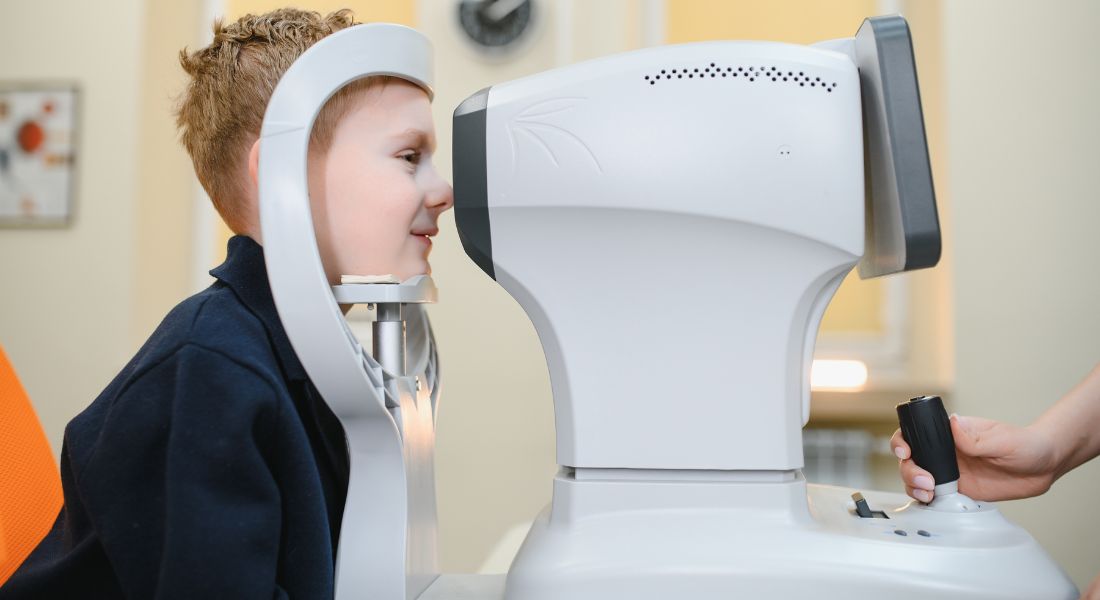
Paediatric ophthalmologists are also trained to examine children in age-appropriate ways, using specialised techniques and equipment that help keep young patients calm, engaged, and cooperative. This leads to more accurate assessments and better treatment outcomes.
Knowing when to move from an optician to a paediatric ophthalmologist is one of the most important decisions you can make for your child’s long-term eye health. Early specialist care can protect vision, support healthy development, and prevent lifelong visual impairment.
Why Early Detection Matters So Much
The timing of referral can make a dramatic difference. Many childhood eye conditions become harder and sometimes impossible to fully correct if diagnosis happens too late.
The first eight years of life are critical for visual development. During this time, the brain learns how to process images from each eye. If one eye isn’t delivering a clear image, the brain may reduce its reliance on that eye. This leads to amblyopia, a condition that becomes increasingly resistant to treatment as a child grows older.
The earlier a paediatric ophthalmologist identifies a problem, the more successful treatment tends to be. Children have remarkable visual plasticity, meaning their eyes and brain adapt quickly to treatment when it begins early.
Waiting to “see if things improve” can mean missing the most effective treatment window. That’s why recognising the signs early and acting promptly is crucial.
Common Signs That a Child Needs Specialist Eye Care
Children often can’t clearly explain vision problems, and many don’t realise their eyesight isn’t normal. Because of this, parents need to watch behaviour closely rather than relying only on what a child says. Subtle changes in daily habits are often the first sign something isn’t right. Early awareness makes a big difference in outcomes.
You may notice physical signs such as squinting, closing one eye, or holding books very close to the face. Head tilting can suggest eye muscle issues, while frequent blinking, eye rubbing, or excessive tearing may point to irritation or visual strain. These signs are easy to overlook but shouldn’t be ignored if they persist.
In school-age children, vision problems can affect learning and behaviour. Poor academic performance, avoiding reading, frequent headaches, or difficulty copying from the board may be linked to eyesight issues. Some children also become frustrated, irritable, or avoid tasks that require close focus, which can be mistaken for behavioural problems.
Changes in eye appearance are another important warning sign. An eye that consistently turns in or out, cloudy or white pupils, drooping eyelids, or frequent redness and swelling all need specialist assessment. Small signs often indicate bigger issues, and early evaluation by a paediatric ophthalmologist makes treatment simpler and more effective.
When an Optician Is Enough and When They Aren’t
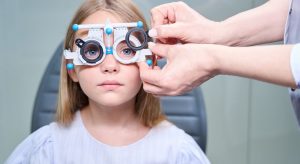
Opticians play an important role in children’s eye care. They are highly trained to assess vision, identify refractive errors, and prescribe glasses or contact lenses when needed. Many common vision problems in children, such as mild short-sightedness or long-sightedness, can be managed perfectly well by an optician.
However, there are situations where an optician isn’t the right professional to diagnose or manage the issue. Opticians do not diagnose medical eye conditions or treat complex developmental problems, particularly those that may affect how a child’s vision develops over time or require medical or surgical intervention.
You should move beyond an optician and seek a paediatric ophthalmologist if:
- The issue involves eye alignment rather than clarity, such as crossed or drifting eyes.
- You notice unusual or jerky eye movements, especially if they appear persistent.
- Your child seems to rely on one eye more than the other, which may indicate amblyopia.
- Vision appears worse in dim lighting, which can signal retinal or neurological concerns.
- There has been a sudden change in vision, including blurred vision or visual loss.
- There are concerns about eye development or genetic eye conditions, particularly with a family history.
- Your child has failed a vision screening more than once, suggesting an underlying issue that needs further investigation.
Opticians are excellent at managing refractive errors, but medical or developmental eye problems require a specialist who understands how children’s eyes grow, mature, and adapt. Knowing when to escalate care ensures your child receives the right treatment at the right time protecting their vision for the future.
Red Flags That Require Urgent Referral
While many eye issues develop gradually, some require urgent attention. These red flags should never be ignored.
If your child complains of sudden vision loss, double vision, or severe eye pain, you need immediate professional help. A white pupil in photographs, especially when one eye reflects white while the other reflects red, can be a sign of a serious condition and needs prompt assessment. If the eyes appear swollen, red, or the child cannot keep their eye open due to discomfort, urgent medical attention is essential.
In newborns, a lack of eye contact by three months may indicate visual development concerns. If your infant’s eyes constantly wander or don’t move together by six months, you should seek specialist advice.
Serious infections, trauma, or changes in appearance around the eye may also need urgent referral. Trust your instincts; if something feels wrong, it’s better to get your child assessed.
Squints (Strabismus) One of the Most Common Reasons for Referral
Strabismus is a condition where one eye turns in, out, up, or down while the other eye focuses normally. It’s one of the most frequent reasons children are referred to a paediatric ophthalmologist.
Some children are born with strabismus, while others develop it later. It may appear intermittently at first, particularly when a child is tired or unwell. Over time, the misalignment may become more noticeable.
Although some types of strabismus are mild, others can interfere with binocular vision. If the eyes don’t align properly, the brain receives two different images. To avoid confusion, the brain may begin ignoring the image from one eye, leading to amblyopia.
Treatment varies depending on the type and severity of the condition. A paediatric ophthalmologist may recommend glasses, eye patches, vision therapy, or in some cases, surgery. Early and accurate diagnosis is essential for improving outcomes.
Amblyopia (Lazy Eye) Why Early Intervention Is Critical
Amblyopia is one of the most common conditions treated by paediatric ophthalmologists. It occurs when vision in one eye doesn’t develop properly because the brain favours the other eye. Even with glasses, the weaker eye may not see clearly.
Amblyopia is most easily corrected during early childhood. The sooner treatment begins, the better the chances of restoring normal vision. If left untreated beyond a certain age, the brain may permanently lose its ability to use the weaker eye.
Treatment may include patching the stronger eye, using atropine drops, or prescribing glasses to correct refractive differences. Sometimes a combination of treatments works best.
Opticians can identify some early signs, but full diagnosis and treatment should always be handled by a paediatric ophthalmologist.
Children With High Refractive Errors
Very long-sighted, short-sighted, or astigmatic children may also need referral to a paediatric ophthalmologist. While opticians can prescribe glasses, extremely high prescriptions may signal underlying developmental issues.
Severe long-sightedness can lead to eye strain, headaches, and inward turning of the eye. High short-sightedness may indicate risks for retinal problems. Irregular astigmatism can point to structural issues such as keratoconus.
A specialist can determine whether glasses alone are sufficient or whether additional monitoring or treatment is required.
Children With Developmental Delays or Special Needs
Children with developmental delays, autism, or other special educational needs often require specialist eye care. They may find it difficult to communicate vision problems, struggle with standard eye tests, or react differently to unfamiliar clinical environments, which can make routine assessments less reliable.
Paediatric ophthalmologists are trained to use tailored, child-friendly methods to assess vision in children who cannot read eye charts or follow typical instructions. They understand how developmental and neurological conditions can affect visual development, eye movement, and coordination, allowing for more accurate diagnosis and appropriate treatment planning.
If your child has special educational needs or a known developmental condition, early and specialist eye assessment is particularly important. Identifying and addressing vision problems early can improve learning, communication, and overall quality of life, while ensuring your child receives care that is adapted to their individual needs.
Family History and Genetic Eye Conditions
Some eye conditions are known to run in families. If you or a close relative has a history of eye disease, your child may have a higher risk of developing similar issues, even if no symptoms are obvious early on.
Genetic factors play a significant role in how a child’s eyes develop and function. A paediatric ophthalmologist can assess whether closer monitoring is needed and detect early signs that routine eye tests may miss.
You should consider specialist assessment if there is a family history of:
- Strabismus (eye misalignment) – Often inherited and more likely to recur in children.
- Amblyopia (lazy eye) – Can develop silently and affect vision long term if untreated.
- Congenital cataracts – May be present at birth or develop early in life.
- Inherited retinal conditions – Such as retinitis pigmentosa or macular dystrophies.
- Retinoblastoma – A rare but serious childhood eye cancer requiring urgent monitoring.
- Congenital glaucoma – Can cause vision loss if not detected and treated early.
- Other genetic eye disorders – Especially when multiple family members are affected.
If your family has a known history of genetic eye disease, early specialist guidance is essential. Proactive assessment allows for timely monitoring, early intervention when needed, and the best possible protection for your child’s long-term vision and eye health.
Eye Injuries and Trauma
Children are naturally curious and active, which makes bumps, falls, and sports-related injuries common. Even seemingly minor eye trauma can cause underlying damage, which is why specialist assessment is often important.
If your child sustains a blow to the eye, a scratch to the cornea, or shows signs such as swelling, redness, bleeding, or persistent pain, they should be assessed promptly by a paediatric ophthalmologist. Some eye injuries may appear mild initially but can worsen over time or lead to complications if not treated correctly.
In many cases, follow-up appointments are just as important as the initial assessment. Monitoring healing ensures the eye recovers properly and helps confirm that vision, eye alignment, and development are not affected in the long term. Early specialist care plays a key role in protecting your child’s eyesight after injury.
Tearing, Discharge, or Blocked Tear Ducts
Persistent tearing in infants is commonly caused by a blocked tear duct. While many cases improve on their own over time, some require specialist assessment and treatment. A paediatric ophthalmologist can identify the underlying cause of excessive tearing and determine whether it is due to a tear duct blockage, infection, or another eye condition.
Symptoms such as ongoing discharge, redness, swelling, or crusting around the eyes may also point to infectious or inflammatory problems. These conditions often need medical treatment rather than observation alone. Early assessment helps relieve discomfort, prevents complications, and ensures your child’s eyes remain healthy as they develop.
Headaches, Eye Strain, and School Difficulties

Headaches, eye strain, and learning difficulties in children are often closely connected. When a child struggles to focus, read comfortably, or concentrate for long periods, the underlying issue isn’t always academic or behavioural it can be visual. Because children may not realise that what they’re seeing isn’t normal, these problems are sometimes overlooked until symptoms begin to affect school performance or daily comfort.
You should consider specialist eye assessment if your child:
- Frequently complains of headaches, especially after reading, screen use, or schoolwork.
- Shows signs of eye strain, such as rubbing their eyes, squinting, or avoiding close work.
- Struggles with reading or concentration, even when they seem motivated and capable.
- Appears inattentive, tired, or frustrated in class, which can sometimes be linked to uncorrected vision issues.
- Continues to have symptoms despite wearing glasses, suggesting the problem may not be simple refractive error.
- Has difficulty focusing or coordinating both eyes together, which may indicate accommodative strain or binocular vision dysfunction.
These issues often respond very well to targeted treatment once correctly diagnosed. A paediatric ophthalmologist has the specialist expertise needed to identify the underlying cause and recommend appropriate care, helping improve both comfort and school performance.
Signs in Babies and Toddlers That Should Not Be Ignored
Early signs of eye problems can appear in infancy. Babies should start making eye contact and tracking objects within the first few months. If this doesn’t happen, or if their eyes consistently look misaligned, you should seek specialist advice immediately.
Here are some early signs that warrant referral:
- No eye contact by 2–3 months
- Eyes that do not follow moving objects
- Persistent wandering or drifting of one eye
- Excessive tearing without crying
- Light sensitivity
- Repeated poking or rubbing of the eyes
- Abnormally large or cloudy-looking eyes
Early diagnosis gives your child the best chance of healthy visual development.
Children With Medical Conditions Affecting Vision
Some medical conditions can increase the risk of eye problems in children. If your child has diabetes, juvenile arthritis, congenital infections, or neurological conditions, regular assessments by a paediatric ophthalmologist are recommended.
Premature babies also have a higher risk of certain eye disorders, such as retinopathy of prematurity. Early screening is essential for these children. If your child has a systemic condition, a paediatric ophthalmologist can work alongside other healthcare professionals to manage their vision effectively.
When a GP or Optician Should Refer Your Child
GPs and opticians follow clinical referral guidelines to determine when a child needs specialist eye care. In certain situations, referral to a paediatric ophthalmologist is essential to ensure timely diagnosis and appropriate treatment.
Your GP or optician should refer your child if:
- Vision is below expected levels for their age, even after corrective lenses are considered.
- There is persistent eye misalignment, such as crossed or drifting eyes.
- One eye appears weaker than the other, which may suggest amblyopia.
- The red reflex in the pupil looks abnormal, a potential sign of serious eye disease.
- Symptoms keep returning despite treatment, indicating an underlying issue.
- A medical or developmental condition affects eye development, such as neurological or genetic disorders.
- There is suspected amblyopia, cataract, or glaucoma, all of which require specialist management.
If you feel your concerns have been dismissed or your child’s symptoms aren’t improving, it is appropriate to seek a second opinion. As a parent, you know your child best, and early specialist assessment can make a lasting difference to their eye health and development.
Why Specialist Assessment Feels Different
Paediatric ophthalmologists use specialised tests that are not available in general clinics. These include equipment designed for children, detailed retinal imaging, and assessments of eye movements and coordination.
They may also use drops to dilate your child’s pupils, allowing a deeper evaluation of the eye’s interior. This comprehensive approach helps identify conditions that may not appear in routine screenings. Paediatric assessments are gentle, child-friendly, and designed to reduce anxiety. Toys, lights, and interactive tools are often used to make the experience positive.
What Happens During a Paediatric Eye Exam?
A specialist exam usually begins with a discussion about your child’s medical and visual history. The paediatric ophthalmologist will then assess how your child’s eyes move and how well they work together.
Visual acuity tests may use pictures or symbols instead of letters, depending on your child’s age. The doctor will examine the front and back of the eye, measure refractive error, and evaluate eye alignment.
Cycloplegic drops may be used to relax the focusing muscles, providing accurate measurement of refractive errors. This test is particularly important in children, whose focusing abilities can mask underlying issues.
At the end of the assessment, the specialist will explain their findings, discuss treatment options, and provide guidance for monitoring or follow-up.
What If Your Child Is Anxious About the Appointment?
It’s completely normal for children to feel nervous about medical appointments. Paediatric ophthalmologists are trained to help children feel comfortable through gentle communication and child-friendly tools.
You can prepare your child by explaining that the doctor will use lights and pictures to check how their eyes work. Bringing a favourite toy or book can help distract them during the exam. The atmosphere in paediatric clinics is often warm and welcoming, with colourful décor to help children relax. This makes the experience easier for both the child and the parent.
Treatment Options Your Child May Need
Depending on the diagnosis, your child may need glasses, exercises, drops, patches, or surgery. Treatment plans are tailored to the child’s age, condition, and visual needs.
Glasses are commonly prescribed for refractive errors. Eye patches or atropine drops are used to treat amblyopia. Vision therapy may help with binocular vision issues. Some conditions, such as congenital cataracts or severe strabismus, may require surgery. Your paediatric ophthalmologist will explain why treatment is needed and how it helps your child’s long-term vision.
Follow-Up: Why Ongoing Monitoring Is Essential

Children’s eyes change rapidly, and conditions can evolve quickly. Follow-up appointments allow the specialist to monitor progress and adjust treatment as needed.
Regular reviews ensure glasses prescriptions remain accurate, treatments remain effective, and any new issues are detected early. Consistency in follow-up appointments is one of the biggest factors in successful outcomes for conditions like amblyopia and strabismus.
FAQs:
- At what age should a child first see a paediatric ophthalmologist?
A child can be seen by a paediatric ophthalmologist at any age, including infancy, if there are concerns about eye development. While many children have routine vision checks with an optician when they are older, specialist assessment may be needed much earlier if signs such as poor eye contact, misaligned eyes, excessive tearing, or abnormal eye appearance are present. There is no “too young” age for referral when eye development appears abnormal, and early assessment often prevents long-term vision problems. - Can my child see a paediatric ophthalmologist without a referral?
In many cases, children are referred by a GP, optician, or health visitor, especially when accessing specialist services through formal healthcare pathways. However, some private clinics allow parents to book appointments directly without a referral. Even if a referral is not strictly required, it is still helpful to share any previous eye test results or medical history to support a thorough assessment. - How is a paediatric ophthalmologist different from an optician for children?
An optician focuses on testing vision and prescribing glasses, while a paediatric ophthalmologist is a medical doctor trained to diagnose and treat eye diseases and developmental vision problems in children. Paediatric ophthalmologists can manage conditions such as lazy eye, squints, congenital cataracts, infections, and genetic eye disorders, and they can prescribe medical treatments or perform surgery when needed. Their training also allows them to assess how vision and eye movement affect a child’s overall development. - What happens if a vision problem is left untreated in childhood?
Untreated vision problems can have long-lasting effects because a child’s visual system is still developing. If one eye does not see clearly, the brain may begin to ignore it, leading to permanent vision loss in that eye. This can affect depth perception, learning, coordination, and confidence. Some conditions that are easily treated in early childhood become much harder or impossible to correct later, which is why timely referral is so important. - Will my child always need surgery if referred to a paediatric ophthalmologist?
Most children referred to a paediatric ophthalmologist do not need surgery. Many conditions are treated successfully with glasses, eye patches, drops, or monitoring alone. Surgery is only recommended when it is clearly necessary and when other treatments are unlikely to be effective. If surgery is suggested, the specialist will explain why it is needed, what it involves, and how it supports your child’s long-term vision. - How can I tell if my child’s headaches are caused by eye problems?
Headaches related to vision often occur after reading, screen use, or schoolwork and may be accompanied by eye strain, squinting, or difficulty concentrating. Children may also rub their eyes frequently or avoid close work. While headaches can have many causes, persistent headaches alongside visual or learning difficulties should always prompt an eye assessment to rule out focusing or alignment problems. - Is it normal for a baby’s eyes to look crossed sometimes?
Occasional eye drifting can be normal in very young babies, particularly in the first few weeks of life. However, by around three to four months, the eyes should start working together consistently. If one eye continues to turn in or out beyond this age, or if the misalignment is constant, a referral to a paediatric ophthalmologist is recommended to assess for strabismus or other underlying issues. - What should I do if my child fails a school vision screening?
Failing a school vision screening does not automatically mean there is a serious problem, but it does indicate that further assessment is needed. An optician can check for refractive errors, but if your child fails screening more than once, or if vision does not improve with glasses, referral to a paediatric ophthalmologist is important. Screening tests are limited and may miss developmental or medical eye conditions. - Are children with special educational needs more likely to have eye problems?
Children with developmental delays, autism, or neurological conditions are at higher risk of vision and eye movement problems. They may also find it harder to communicate visual difficulties or cooperate with standard eye tests. Paediatric ophthalmologists are trained to assess vision using adapted techniques and understand how visual issues interact with developmental conditions, making specialist assessment particularly important for these children. - How often will my child need follow-up appointments after referral?
The frequency of follow-up depends on your child’s diagnosis and treatment plan. Some children may only need monitoring once or twice a year, while others require more regular visits to adjust treatment or track visual development. Follow-up appointments are essential because children’s eyes change quickly, and ongoing monitoring helps ensure treatment remains effective and vision develops as well as possible.
Final Thought: Why Early Specialist Assessment Matters for Your Child’s Vision
Knowing when to refer a child to a specialist can feel overwhelming, especially when symptoms are subtle or develop gradually. However, early assessment plays a crucial role in protecting a child’s vision, learning ability, and overall development. Many childhood eye conditions respond extremely well to treatment when identified early, but can become far more difficult to manage if referral is delayed.
If you have concerns about your child’s eyesight, eye alignment, behaviour, or visual development, it is always better to seek specialist advice sooner rather than later. A comprehensive assessment by an experienced paediatric ophthalmologist in London can provide clarity, reassurance, and a tailored care plan that supports your child’s long-term eye health. If you’re considering seeing paediatric ophthalmologist in London, you can reach out to us at Eye Clinic London to discuss whether specialist assessment is the right next step for your child’s vision and ongoing care.
References:
- Alatawi, A. (2021) ‘Amblyopia and routine eye exam in children: Parent’s perspectives’, Children, 8(10), article 935. https://www.mdpi.com/2227-9067/8/10/935
- Ambrosino, C., Dai, X., Aguirre, B.A. and Collins, M.E. (2023) ‘Pediatric and school‑age vision screening in the United States: Rationale, components, and future directions’, Children, 10(3), article 490. https://www.mdpi.com/2227-9067/10/3/490
- Sprunger, D.T. et al. (2022) Pediatric Ophthalmology/Strabismus Preferred Practice Pattern, American Academy of Ophthalmology. https://pmc.ncbi.nlm.nih.gov/articles/PMC10680450/
- Hull, S. (2017) ‘Tests for detecting strabismus in children aged 1 to 6 years’. https://pmc.ncbi.nlm.nih.gov/articles/PMC6486041/
5.Backman, H. (2004) ‘Children at risk of developing amblyopia: When to refer for an eye examination’, Paediatrics & Child Health, 9(9), pp. 635‑637. https://academic.oup.com/pch/article-abstract/9/9/635/2648592