


Can You Have LASEK Eye Surgery in Just One Eye?
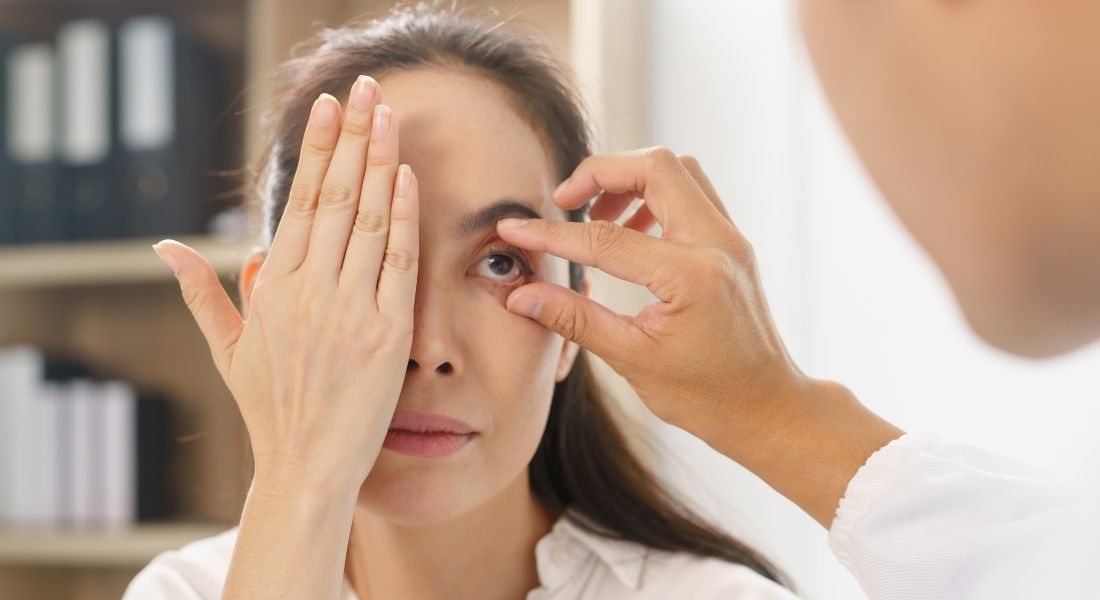
If you’re considering laser eye surgery but only one of your eyes needs correction, you might be wondering whether LASEK can be performed on just that eye. Some people have a high prescription in one eye and a mild one in the other, while others may have had previous surgery, unequal visual changes over time, or simply better natural vision in one eye. In many cases, single-eye LASEK is not only possible it is recommended.
However, you might still have questions. You may wonder whether having one eye corrected will feel strange, how your vision will balance out, what the brain does to adapt, whether depth perception will change, and whether results differ from treating both eyes. You may even worry about whether the “good eye” will need treatment later.
In this guide, I’ll walk you through everything you need to know about single-eye LASEK. You’ll learn when it’s the right option, how your brain processes visual information afterward, how long adaptation takes, what recovery is like, and how safe and successful this approach can be.
Is It Possible to Have LASEK on Just One Eye?
The simple answer is yes you absolutely can have LASEK on only one eye. Many people assume that both eyes must be treated together, but laser vision correction is fully customisable. Your surgeon recommends treatment based on the condition and needs of each individual eye.
If one eye has a stable prescription and the other has significant blur, there is no reason to treat both. Correcting the “weaker” eye often brings your vision into balance, giving you better depth perception, sharper distance sight, and more comfortable day-to-day vision.
Why Some People Need LASEK in Only One Eye
While many patients undergo LASEK in both eyes, there are several situations where a surgeon may recommend treating just one eye. Single-eye LASEK can be a strategic choice based on medical, functional, or personal factors. Treating only one eye allows the surgeon to address specific visual imbalances, correct significant differences in prescription, or accommodate prior surgeries or eye conditions. In some cases, it may also be part of a planned approach for monovision or a step-by-step treatment plan. Understanding why unilateral LASEK is recommended helps patients feel informed and confident about their personalised treatment plan.
Unequal Prescriptions (Anisometropia): Some people naturally have one eye that is more short-sighted or long-sighted than the other. This imbalance can cause eye strain, headaches, or difficulty focusing, making single-eye correction necessary.
Previous Surgery in One Eye: If you’ve previously had laser surgery or cataract surgery in one eye, the untreated eye may still require correction to achieve balanced vision.
Age-Related Changes: Over time, one eye may undergo changes in prescription more than the other. This is a normal part of aging and can lead to the need for single-eye treatment.
Trauma or Scarring in One Eye: Occasionally, one eye may develop trauma, scarring, or other conditions that affect clarity, while the other eye remains healthy, necessitating treatment for only the affected eye.
Monovision Purposes: Some patients deliberately correct only one eye for distance vision while leaving the other slightly short-sighted to aid with reading, a strategy known as monovision.
Dominant vs Non-Dominant Eye Differences: In some cases, only the dominant eye requires fine-tuning to achieve optimal visual balance.
Budget or Step-by-Step Planning: A few people choose to treat one eye first and consider correcting the second eye later, either for financial reasons or to monitor results before proceeding.
How Surgeons Decide Whether One-Eye LASEK Is Right for You
When considering LASEK, your surgeon carefully evaluates several factors to determine whether treating just one eye is the best approach. The decision is personalised, taking into account both your eye health and your visual needs, rather than simply aiming to make both eyes identical.
Key factors your surgeon will assess include:
- Prescription difference between eyes: A significant difference in short-sightedness, long-sightedness, or astigmatism may make single-eye correction more effective.
- Corneal thickness and shape: The structure of each cornea is evaluated to ensure it can safely undergo laser reshaping.
- Overall eye health: Any pre-existing conditions, scars, or previous surgeries in either eye can influence whether unilateral treatment is appropriate.
- Eye dominance: Surgeons consider which eye your brain relies on more for focus, as this can impact how single-eye treatment affects overall vision.
- Age and lifestyle: Your age, daily activities, work requirements, and hobbies can all influence the decision. For example, someone who reads a lot or drives frequently at night may have different needs than someone who doesn’t.
- Expectations and goals: Your personal vision goals, such as whether you want sharper distance vision, reduced dependency on glasses, or the ability to read comfortably, are central to planning.
- Monovision potential: For some patients, correcting one eye for distance and leaving the other slightly near-sighted can improve overall visual function and reduce reliance on reading glasses.
The ultimate aim is to achieve a comfortable, balanced visual experience tailored to your eyes and lifestyle, ensuring both safety and satisfaction with the results.
What Vision Looks Like When Only One Eye Is Corrected
Many people are understandably concerned that vision might feel uneven after undergoing LASEK in only one eye. In the initial days following surgery, it is common to notice that the treated eye appears significantly sharper while the untreated eye may seem softer or slightly blurry. Depth perception can feel a bit off, and your brain may instinctively favour the clearer eye when focusing on objects or performing tasks. These temporary differences are a normal part of the visual adjustment process and should not be alarming.
Over the following days to weeks, your brain gradually adapts to the change. It learns to combine the sharper image from the treated eye with the softer image from the untreated eye into a single, stable visual perception. This remarkable adaptability allows most patients to achieve comfortable, balanced binocular vision, ensuring that everyday activities like reading, driving, and focusing on distant objects feel natural again, even when only one eye has undergone correction.
How the Brain Adapts to Single-Eye LASEK
After LASEK in only one eye, your brain plays a crucial role in adjusting to the change in vision. It constantly evaluates visual input from both eyes and blends it into a single, unified picture through a process called neuroadaptation, which is remarkably efficient.
During the early stage (first few days), you may notice that each eye sees differently. The uncorrected eye might feel like it’s “dragging” slightly, and reading or focusing on objects can feel unbalanced. In the intermediate stage (1–3 weeks), your brain begins to suppress the blur from the untreated eye, prioritising the sharper image from the treated eye, and depth perception starts to stabilise. By the later stage (1–3 months), vision generally feels natural, the difference between the eyes becomes barely noticeable, and both eyes work together comfortably. Most people find that their brain adapts faster than they expect, allowing them to enjoy clear, balanced vision.
Is Depth Perception Affected When Only One Eye Is Treated?
Depth perception relies on both eyes working together to interpret spatial relationships and judge distances accurately. When only one eye has been treated with LASEK, the difference in clarity between the eyes can make depth perception feel slightly unusual during the early stages of recovery. You might notice that objects appear a little closer or farther away than they actually are, or that tasks requiring precise hand–eye coordination, like pouring a drink or reaching for something, feel slightly awkward.
These changes are completely normal and temporary. As your brain undergoes neuroadaptation, it gradually learns to merge the clearer image from the treated eye with the softer image from the untreated eye, restoring full stereoscopic vision. Most patients experience no long-term problems, and in many cases, treating the weaker eye can actually enhance depth perception over time by providing sharper, more balanced visual input from both eyes. With patience, everyday activities such as driving, sports, or reading become comfortable and natural again.
When LASEK in One Eye Is Recommended Over LASIK
For some patients, LASEK is a better option than LASIK, particularly when only one eye requires treatment. Surgeons consider several factors to determine which procedure will provide the safest and most effective results.
LASEK may be preferred if:
- Your cornea is thin: LASEK preserves more corneal tissue, making it safer for eyes that may not be suitable for LASIK.
- You have a high prescription: LASEK can be more precise for correcting stronger levels of short-sightedness or long-sightedness.
- You have dry eyes: LASEK is less likely to exacerbate dryness compared with LASIK, which can sometimes worsen this condition.
- You want to reduce flap-related risks: Unlike LASIK, LASEK doesn’t involve creating a corneal flap, lowering the risk of flap complications.
- You prefer a more conservative surface treatment: LASEK is a surface procedure, which some patients and surgeons favour for its safety profile and predictable healing.
Overall, LASEK offers excellent precision and a lower risk of certain complications, making it an ideal choice for one-eye correction in patients with specific anatomical or visual needs.
What to Expect During the Procedure When Only One Eye Is Treated
When only one eye is being treated, the LASEK procedure is very similar to treating both eyes, but it is quicker and more focused.
The steps typically include:
Numbing drops: Your eye is made completely comfortable and free of pain.
Gentle loosening of the surface epithelium: The top layer of the cornea is carefully lifted to allow precise laser treatment.
Laser reshaping of the cornea: The surgeon reshapes the underlying corneal tissue to correct your vision.
Placement of a protective contact lens: A soft lens is applied to protect the healing surface and aid recovery.
The untreated eye remains completely untouched, and the entire procedure usually takes just 5–10 minutes, allowing for a fast and efficient treatment experience.
Recovery Timeline for Single-Eye LASEK
The healing timeline is similar whether you treat one or two eyes. However, unilateral treatment may feel more comfortable because you can rely on your untreated eye while the other heals.
Day 1–3: During the first 1–3 days after LASEK, it’s normal to experience blurry vision, watering, and noticeable light sensitivity. Your eyes may also feel tired or strained as the surface layer heals. These early symptoms are temporary and gradually improve as your recovery progresses.
Day 3–5: Between days 3 and 5, you’ll usually notice that your vision starts to improve and any mild discomfort begins to settle. Around this time, the bandage contact lens is typically removed, often on day 4 or 5, as the surface layer of the eye has healed enough to no longer need protection.
Week 1–2: During the first couple of weeks, your vision typically becomes much sharper, and you start to feel more balanced between the treated and untreated eye. This is also when many patients are cleared to drive, provided they meet the required vision standards.
Week 2–6: As the weeks progress, your vision continues to stabilise. Glare, halos, and light sensitivity usually begin to reduce, making everyday activities feel more comfortable and natural.
1–3 Months: In the later stages, you can expect your final clarity to appear as healing completes. Neuroadaptation also finalises during this period, allowing both eyes to work together seamlessly and giving you stable, comfortable vision.
Can You Treat the Other Eye Later If Needed?
Yes, you can treat the other eye later if needed, and this is actually a very common approach. Some people choose to correct one eye first, monitor how the other eye changes over time, and return for treatment only if it becomes necessary. Others prefer a gradual, step-by-step plan where both eyes are eventually treated but not at the same time. There’s no disadvantage to waiting your surgeon will simply reassess your vision when you’re ready and recommend the safest, most suitable option.
Can LASEK in One Eye Be Used for Monovision?
Yes, LASEK in only one eye is often used to create monovision, and it’s one of the most common reasons for choosing unilateral treatment. In monovision, one eye is corrected for clear distance vision while the other is left mildly short-sighted to make near tasks like reading or phone use easier. This approach can significantly reduce your dependence on reading glasses, particularly after age 40 when natural near focus starts to decline.
Does monovision feel strange at first? It can take a little time to adjust because your brain needs to learn how to switch smoothly between distance and near vision. However, most people adapt faster than expected. To ensure monovision is right for you, surgeons usually test it with temporary contact lenses before recommending permanent laser correction.
Driving After Single-Eye LASEK
Driving rules are the same whether LASEK is performed on one eye or both. You must not drive until your surgeon confirms that you meet DVLA vision standards, even if your untreated eye allows you to see reasonably well in the early days. Meeting legal requirements is essential for your safety and the safety of others on the road.
Most people are able to return to driving within 7–14 days, depending on how quickly their vision stabilises. Although the untreated eye can provide functional vision during recovery, your surgeon must verify that your overall vision is clear, stable, and safe before you resume driving.
Frequently Asked Questions:
- Does it feel strange to have only one eye corrected with LASEK?
It’s normal to feel a slight imbalance in the early days because one eye sees more clearly while the other still has its original prescription. This temporary sensation usually fades quickly as your brain adjusts. Within days to weeks, most people stop noticing any difference at all because the brain naturally blends both images into one comfortable visual experience. As healing progresses, everyday tasks start feeling completely natural again. - Will correcting one eye affect my depth perception long-term?
Depth perception can feel unusual at first, especially during the first week, because your eyes are sending different levels of clarity to the brain. However, this effect is short-lived. As the treated eye heals and the brain adapts, depth perception becomes more stable and eventually feels normal. For many people, improving the weaker eye actually enhances depth perception over time by balancing the overall visual input. - Is single-eye LASEK as safe as treating both eyes together?
Yes, single-eye LASEK is just as safe as treating both eyes, and in many situations it is even the safer choice. Surgeons base their recommendations on what each eye individually needs, so only the eye that benefits from treatment is corrected. Safety standards, laser technology, and post-operative care follow exactly the same protocols whether one or both eyes are treated. - How long will adaptation take after LASEK in just one eye?
Most people begin adapting within a few days, although full neuroadaptation can take a few weeks. During this period, the brain becomes increasingly efficient at merging the sharper vision from the treated eye with the softer vision from the untreated eye. Eventually, the difference becomes barely noticeable. By the end of the full healing window usually around 1–3 months vision feels balanced and natural for the vast majority of patients. - Can the untreated eye become weaker over time?
The untreated eye will continue to follow its natural ageing or prescription changes, just as it would have without any surgery. Having LASEK in one eye does not cause the other eye to deteriorate or weaken. If the untreated eye ever develops blur in the future, you can return for laser correction at that time, and your surgeon will assess whether LASEK or another option is most suitable. - Will I have difficulty switching between near and distance vision if only one eye is treated?
This depends on your prescription and whether monovision is part of your treatment plan. If both eyes naturally focus well at similar distances, you’ll usually adapt effortlessly after unilateral correction. If monovision is used where one eye favours distance and the other near you may notice some initial adjustment as your brain learns when to rely on each eye. Most people adapt well, especially if the effect has been tested with contact lenses beforehand. - Is vision stable sooner when only one eye is treated?
Many patients feel more comfortable during the early recovery period because they can rely on their untreated eye while the treated one heals. This often gives the impression that recovery is smoother, even though biologically the healing timeline is the same. Most people achieve usable clarity within a week or two, and full stability continues to refine over several weeks as the eye heals completely. - What if I decide later that I want both eyes corrected?
You can absolutely treat the second eye later, and this flexible approach is very common. Many people prefer to correct one eye first to see how it feels before proceeding with the other. There is no disadvantage in waiting, and your surgeon will simply re-evaluate your eye health and prescription when you return. If your second eye eventually needs correction, the procedure and recovery will follow the same steps as the first. - Can single-eye LASEK improve headaches or eye strain?
If your symptoms are caused by unequal prescriptions between your eyes, correcting the weaker eye can help significantly. Many people experience relief once both eyes are providing more balanced visual input. When one eye is much blurrier than the other, the brain works harder to combine the images, which can lead to strain. Improving the clarity of the weaker eye reduces this imbalance and often brings noticeable comfort. - When can I confidently return to driving after one-eye LASEK?
You can return to driving only once your surgeon confirms that you meet DVLA vision standards, even if your untreated eye seems to see reasonably well. Most people are cleared within 7–14 days, although the exact timeline depends on how quickly your treated eye stabilises. Your surgeon will examine both eyes together to ensure that your combined vision is sharp, comfortable, and safe before allowing you to resume driving.
Final Thought: Is One-Eye LASEK Right for You?
Having LASEK in just one eye is far more common and far more comfortable than most people expect. Whether you’re correcting an uneven prescription, exploring monovision, or simply treating the eye that needs it most, the procedure is safe, highly effective, and supported by your brain’s ability to adapt quickly. With a clear understanding of how vision balances out, what recovery looks like, and when you can resume activities like driving, you can move forward with confidence. If you’re considering Lasek surgery in London and want to know if it’s the right option, you’re welcome to reach out to us at Eye Clinic London to book a consultation.
References:
- de Ortueta, D. & Arba-Mosquera, S. (2025) ‘The Impact of Preoperative Corneal Epithelial Refraction Toricity on Transepithelial Photorefractive Keratectomy for the Treatment of Hyperopia or Mixed Astigmatism’, Vision, 9(3), p. 57. https://www.mdpi.com/2411-5150/9/3/57
- Yahalomi, T. et al. (2023) ‘Dry Eye Disease following LASIK, PRK, and LASEK: A Prospective Comparative Study’, Journal of Clinical Medicine, 12(11), 3761. https://www.mdpi.com/2077-0383/12/11/3761
- Ang, E.K. et al. (2009) ‘Outcomes of laser refractive surgery for myopia’, Journal of Refractive Surgery, 25(5), pp. S454–S459. https://www.sciencedirect.com/science/article/abs/pii/S0886335009001886
- Zhao, L.-Q. et al. (2010) ‘Meta-analysis: clinical outcomes of laser-assisted subepithelial keratectomy (LASEK) vs PRK’, American Journal of Ophthalmology, 149(4), pp. 553–561. https://pubmed.ncbi.nlm.nih.gov/20709406/
- Rodríguez-Pérez, I. et al. (2019) ‘Myopic LASEK with Mitomycin-C: Three-Month Visual and Refractive Outcomes’, Journal of Ophthalmology, 2019. https://www.ncbi.nlm.nih.gov/pmc/articles/PMC6792330/