


Laser Eye Surgery for Thin Corneas: What Are Your Options?

If you’ve been told you have thin corneas, you might think laser eye surgery isn’t an option. It can feel disappointing, especially if you were excited about ditching glasses or contacts. The good news is that thin corneas don’t automatically rule you out they just require a more customised approach.
Modern technology has expanded options beyond traditional LASIK. Procedures like LASEK, PRK, SMILE, and implantable lenses can improve vision safely while protecting corneal integrity. Even with thinner corneas, correction is often still possible with the right technique.
In this guide, I’ll explain why LASIK may not be suitable for thin corneas and outline alternative treatments that provide clear, stable vision without compromising eye health.
You’ll also learn what results to expect and why choosing an experienced surgical team matters. Advanced centres in London and other major cities can offer precise assessments and the safest options for long-term success.
What Does It Mean to Have Thin Corneas?
The cornea is the clear, dome-shaped surface at the front of the eye, and its average thickness is about 540 microns. Some people naturally have thinner corneas, which can influence suitability for certain eye procedures.
You may have thin corneas if:
Reduced central thickness: Eye scans reveal that the middle of your cornea is thinner than normal.
Family history of thin corneas: Genetic factors may increase your risk of corneal thinning.
Long-term contact lens use: Extended lens wear can affect corneal shape and thickness.
Early signs of keratoconus: Initial corneal thinning or bulging is detected.
Weaker corneal biomechanics: Your cornea has less structural strength than average.
Why Traditional LASIK Isn’t Always Safe for Thin Corneas

Traditional LASIK reshapes the cornea by creating a flap and removing tissue from the underlying layers, which requires a sufficiently thick cornea to maintain structural stability. For individuals with thin corneas, this approach can pose significant risks.
The key risks include:
Flap-induced weakening: Creating a corneal flap can reduce structural strength.
Excessive tissue removal: Removing too much corneal tissue increases complication risks.
Reduced biomechanical stability: The cornea may be less able to maintain its shape over time.
Higher risk of long-term distortion: Structural changes can lead to vision irregularities years after surgery.
How Advanced Diagnostics Determine Your Options
For patients with thin corneas, advanced diagnostic testing is essential to determine which vision correction procedures are safe and effective. Modern imaging provides a detailed understanding of corneal shape, thickness, and biomechanical strength.
Modern assessments include:
Corneal Topography: This maps the curvature of your cornea and checks for hidden irregularities.
Corneal Tomography: Tomography looks deeper, assessing both the front and back surface plus thickness distribution.
Pachymetry: This measures corneal thickness precisely, helping determine how much tissue can safely be removed.
Corneal Biomechanics Testing: Tools like the Corvis ST or ORA assess corneal stiffness and predict how your cornea will respond to surgery.
Wavefront Aberrometry: This checks how your eye handles light and identifies higher-order aberrations.
Safe Laser Options for Thin Corneas
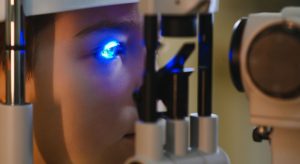
For patients with thin corneas, traditional LASIK may not always be safe due to the risk of weakening the cornea. Fortunately, modern laser techniques and alternative treatments offer safe, effective options that preserve corneal structure while providing excellent visual outcomes.
1. LASEK (Laser-Assisted Subepithelial Keratectomy)
LASEK is one of the most common alternatives for thin corneas. It combines the safety of PRK with a gentler approach to the corneal surface. LASEK is especially useful if your corneal thickness is borderline or if flap-based surgery would leave too little tissue behind.
How LASEK works: Instead of creating a deep corneal flap, LASEK lifts only the thin epithelial layer. The laser then reshapes the corneal surface beneath. Finally, the epithelium is either repositioned or allowed to heal naturally, preserving corneal integrity.
Why LASEK is safer for thin corneas: LASEK offers several benefits for patients with thinner corneas. No deep flap is created, less tissue is removed, and the corneal structure remains stronger, reducing the risk of ectasia. It is especially suitable for corneas that fall below the thickness thresholds typically required for LASIK.
2. PRK (Photorefractive Keratectomy)
PRK is the oldest form of laser vision correction but remains highly relevant for thin corneas. PRK has a longer recovery time than LASIK because the epithelial surface needs to regenerate, but the long-term results are excellent.
What makes PRK safe: LASEK is ideal for patients with irregular or biomechanically weak corneas. It involves no corneal flap, uses very conservative tissue removal, and provides strong long-term stability, making it a safer alternative to LASIK for high-risk eyes.
3. TransPRK (No-Touch Laser Treatment)
TransPRK is a newer, more comfortable variation of PRK where the laser removes both the epithelium and reshapes the cornea in a single step. Many thin-corneal patients prefer TransPRK because it offers the stability of PRK with slightly easier recovery.
Benefits for thin corneas: Modern PRK offers several improvements over traditional methods. It involves no flap, provides a smooth treatment surface, causes reduced discomfort, and allows for faster healing compared to older PRK techniques.
4. SMILE (Small Incision Lenticule Extraction)
SMILE doesn’t create a flap. Instead, it uses a laser to remove a small disc-shaped piece of tissue (a lenticule) through a tiny incision. However, SMILE isn’t suitable for extremely thin corneas or cases with irregular shape. It’s best for moderate myopia with good corneal stability.
Why SMILE can be useful for thin corneas: LASEK provides several benefits compared to LASIK: it involves no flap, has less impact on corneal nerves, reduces the risk of dry eye, causes less biomechanical disruption, and requires a smaller incision, making it a safer option for many patients.
5. Topography-Guided PRK
This approach is ideal if your thin corneas also have irregularities. It is often combined with corneal cross-linking for extra stability.
Topography-guided PRK: PRK offers several key benefits: it smooths irregular corneal patterns, improves overall quality of vision, preserves more tissue than LASIK, and can help patients who were previously considered “not eligible” for laser eye surgery.
6. Combined PRK + Corneal Cross-Linking (CXL)
If your cornea is thin but also weaker structurally, combining PRK with CXL is one of the most advanced and effective solutions. This combination is especially popular for people with mild keratoconus or borderline corneal biomechanics.
Benefits include: Combining PRK with corneal cross-linking offers multiple advantages. It reshapes the cornea safely, strengthens the cornea afterward, reduces long-term risks, and improves long-term refractive stability, making it an effective solution for patients with thin or irregular corneas.
7. Implantable Collamer Lenses (ICLs)
What ICLs offer: ICLs offer several advantages for patients with thin corneas. They correct moderate to high myopia, preserve all corneal tissue, avoid biomechanical weakening, are reversible if needed, and provide high-definition vision for sharp, stable results.
Understanding Corneal Thickness Requirements
Corneal thickness plays a crucial role in determining which vision correction procedures are safe. Thinner corneas limit how much tissue can be safely removed, which is why some techniques are preferred over others.
Typical LASIK requires: For LASEK to be safe, the cornea typically needs to be at least 500–520 microns thick. There must also be enough leftover tissue after reshaping and stable biomechanical strength to ensure long-term safety and effectiveness.
Procedures better suited for thin corneas:
LASIK: Usually requires at least 500–520 microns, with enough residual tissue to maintain biomechanical stability.
LASEK: Suitable for corneas around 450–500 microns.
PRK / TransPRK: Safe for 430–500 microns.
SMILE: Typically needs 480–500 microns.
PRK + CXL: Depends on both thickness and corneal stability.
ICL (Implantable Collamer Lens): Not dependent on corneal thickness, making it a flexible option for very thin corneas.
What Results Can You Expect with Thin Cornea Treatments?
For patients with thin corneas, careful planning and the right procedure can lead to outstanding visual outcomes. While the approach is more conservative to preserve corneal strength, most people achieve significant improvements in clarity and independence from glasses.
You can expect:
Clearer, sharper vision: Achieves more precise and focused eyesight.
Reduced reliance on spectacles or contact lenses: Less need for glasses or contact lenses in daily life.
Improved overall quality of vision: Enhances visual clarity, contrast, and comfort.
Safe night-driving performance: Minimises glare, halos, and other nighttime vision issues.
Long-term stability: Maintains visual improvements over the years.
Some temporary effects are normal, such as slightly longer healing times (especially with PRK or LASEK), mild dryness, and gradual improvement over several weeks.
Why Choosing the Right Clinic Matters
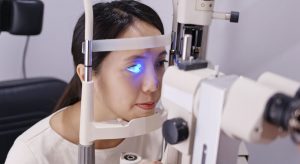
Successfully treating thin corneas isn’t just about the procedure it’s about the expertise, technology, and personalised planning behind it.
The safest outcomes require:
Advanced diagnostics: Cutting-edge tests help accurately assess corneal shape and health.
Experienced surgeons: Skilled surgeons improve safety and visual outcomes.
Access to newer techniques: Modern procedures allow treatment of irregular corneas previously considered untreatable.
Careful biomechanical analysis: Detailed evaluation of corneal strength ensures safe and effective surgery.
Personalised treatment planning: Customised surgical plans are tailored to each patient’s unique eye structure.
FAQs:
- Can people with thin corneas have laser eye surgery?
Yes, having thin corneas does not automatically rule out laser eye surgery. Modern technology has made it possible to safely treat many patients with thinner corneas using surface-based procedures like LASEK, PRK, or TransPRK. These treatments avoid creating a deep flap, which preserves the structural integrity of the cornea. In some cases, implantable lenses can also be used when laser reshaping would remove too much tissue. The key is a thorough assessment of corneal thickness, stability, and overall eye health to determine which approach is safest and most effective. - Why isn’t LASIK always recommended for thin corneas?
LASIK is less suitable for thin corneas because it requires creating a flap and removing a significant amount of tissue. This can weaken the cornea and increase the risk of long-term complications such as ectasia, where the cornea progressively bulges and distorts vision. Thin corneas may not have enough residual tissue after LASIK, which is why surface-based procedures like LASEK or PRK are often preferred. These alternatives allow surgeons to correct vision while maintaining the cornea’s strength and long-term stability. - How do surgeons determine which procedure is best for thin corneas?
Surgeons use a combination of advanced diagnostic tests to determine the most suitable procedure. Corneal topography and tomography map the shape and thickness of the cornea, identifying any irregularities or weak areas. Pachymetry precisely measures corneal thickness, while biomechanics testing assesses the cornea’s strength and elasticity. Wavefront analysis evaluates how light passes through the eye, highlighting higher-order aberrations. By integrating all this information, the surgeon can personalise a treatment plan that balances vision correction with safety. - What is LASEK and why is it safer for thin corneas?
LASEK, or Laser-Assisted Subepithelial Keratectomy, is a surface-based laser procedure that only lifts the very thin outer layer of the cornea instead of creating a deep flap. The laser then reshapes the underlying tissue, and the epithelium is repositioned or allowed to heal naturally. Because LASEK removes less tissue and avoids a deep flap, it preserves corneal strength and reduces the risk of long-term weakening. It is particularly useful for patients whose corneal thickness is borderline for LASIK. - How does PRK differ from LASEK for thin corneas?
PRK is a traditional surface-based procedure that removes the corneal epithelium entirely before using a laser to reshape the underlying cornea. Unlike LASIK, it does not involve flap creation, which reduces the risk of biomechanical instability. PRK is highly effective for thin or structurally weak corneas and can also treat irregular patterns that might otherwise disqualify a patient. The healing process is slightly longer than LASEK because the epithelium needs to regenerate, but the long-term visual outcomes are excellent and safe for thin corneas. - What is TransPRK, and why is it beneficial?
TransPRK is a modern variation of PRK in which the laser removes both the epithelium and reshapes the cornea in a single step. This “no-touch” technique reduces mechanical manipulation of the eye, which can improve comfort during treatment and accelerate healing. TransPRK is particularly suitable for patients with thin corneas who want a conservative, flap-free approach while benefiting from faster recovery compared to traditional PRK. - Can SMILE be used for thin corneas?
SMILE, or Small Incision Lenticule Extraction, avoids creating a flap by removing a small lenticule of corneal tissue through a tiny incision. While SMILE has the advantage of preserving corneal nerves and reducing dry eye, it generally requires slightly thicker corneas and may not be suitable for extremely thin or irregular corneas. It is best for moderate myopia with stable corneal biomechanics. Surgeons may recommend other surface-based procedures if corneal thickness is borderline or irregularities are present. - What are implantable collamer lenses (ICLs) and when are they recommended?
ICLs are corrective lenses implanted behind the iris without removing any corneal tissue. They provide a safe alternative for patients whose corneas are too thin or structurally weak for laser surgery. ICLs can correct moderate to high myopia and offer excellent long-term vision while avoiding the risk of weakening the cornea. They are reversible if necessary and are often considered when surface-based laser treatments are not sufficient to safely achieve the desired correction. - How do patients recover after surgery on thin corneas?
Recovery depends on the procedure chosen. Surface-based treatments like LASEK or PRK may involve a few days to a week of discomfort, temporary blurry vision, and protective measures to allow the epithelium to heal. TransPRK offers a similar but slightly quicker recovery. Vision usually improves gradually over several weeks, and long-term results are stable and predictable when the procedure is tailored to the patient’s corneal characteristics. ICLs have faster visual recovery and less surface healing compared to laser procedures. - What results can patients expect with thin cornea treatments?
Patients with thin corneas can achieve clear, stable vision and reduced dependence on glasses or contact lenses when treatment is carefully customised. Surface-based procedures and implantable lenses preserve corneal strength while improving visual quality, including night driving and daily tasks. While healing may take slightly longer than LASIK, long-term outcomes are highly rewarding. Patients should have realistic expectations, understanding that careful planning and the right technique are essential for both safety and optimal vision correction.
Final Thought: Choosing the Right Treatment for Thin Corneas
If you have thin corneas, it’s important to remember that laser eye surgery is not automatically off the table. Modern techniques such as LASEK, PRK, TransPRK, SMILE, and implantable lenses allow for safe, customised vision correction while preserving corneal strength. Choosing the right clinic is essential, as advanced diagnostics and experienced surgeons ensure the safest and most effective approach.
If you’re considering laser surgery in London, you can contact us at Eye Clinic London to discuss whether this treatment is the right choice for your vision goals and to understand what results you can realistically expect. A thorough assessment will help identify the procedure best suited to your corneal thickness and long-term eye health, giving you confidence in your path to clearer vision.
References:
- Hashemi, H., et al. (2015) ‘Photorefractive keratectomy results in myopic patients with corneal thickness < 500 µm’, BMC Ophthalmology, 15:119. Available at: https://www.ncbi.nlm.nih.gov/pmc/articles/PMC4333538/
- Naderi, M., et al. (2016) ‘Photorefractive Keratectomy (PRK) is safe and effective for treatment of myopic patients with <500‑µm‐thick corneas’, Clinical Ophthalmology, 10, pp. 877‑884. Available at: https://www.ncbi.nlm.nih.gov/pmc/articles/PMC5347191/
- Ambrosio, R. Jr & McBrien, N.A. (2003) ‘LASIK vs LASEK vs PRK: advantages and indications’, Journal of Refractive Surgery, 19(5), pp. S558‑63. doi:10.3928/1081‑597X‑20030901‑17. Available at: https://pubmed.ncbi.nlm.nih.gov/12759854/
- Zhao, Y.; Zhu, Y.; Wang, Y.; Yang, H.; He, X.; Alvarez‑Arenas, T. G.; Li, Y.; Huang, G. (2023) ‘Quantitative Evaluation of In Vivo Corneal Biomechanical Properties after SMILE and FLEx Surgery by Acoustic Radiation Force Optical Coherence Elastography’, Sensors, 23(1), 181. Available at: https://www.mdpi.com/1424-8220/23/1/181
- Janiszewska‑Bil, D.; Grabarek, B. O.; Lyssek‑Boroń, A.; Kiełbasińska, A.; Kuraszewska, B.; Wylęgała, E.; Krysik, K. (2024) ‘Comparative Analysis of Corneal Wound Healing: Differential Molecular Responses in Tears Following PRK, FS‑LASIK, and SMILE Procedures’, Biomedicines, 12(10), 2289. Available at: https://www.mdpi.com/2227-9059/12/10/2289