 Message Us
Tear Biomarkers
Get in Touch
Looking Beyond Symptoms to Discover What's Driving Your Dry Eye
Have you been told you have dry eye, yet still don't feel you fully understand why your eyes are uncomfortable? Have you tried different treatments with little improvement, or wondered whether inflammation, allergy or another underlying problem could be causing your symptoms?
Dry eye disease is far more complex than simply having a lack of tears. Two people may experience exactly the same symptoms, yet the underlying causes can be completely different. Without understanding what is driving your condition, treatment can become a process of trial and error rather than being tailored to your individual needs.
At Eye Clinic London, Tear Biomarker Testing adds another important layer to our comprehensive dry eye assessment. By analysing naturally occurring proteins within your tears, it helps us understand the biological processes behind your symptoms and supports a more personalised treatment plan.
Why Is Tear Biomarker Testing Important?
Think of it as adding another piece to the puzzle.
While your symptoms, examination and advanced imaging tell us how your eyes look, tear biomarkers help us understand what is happening at a molecular level.
Tear Biomarker Testing can help us:
- Identify active ocular surface inflammation
- Differentiate between different types of dry eye disease
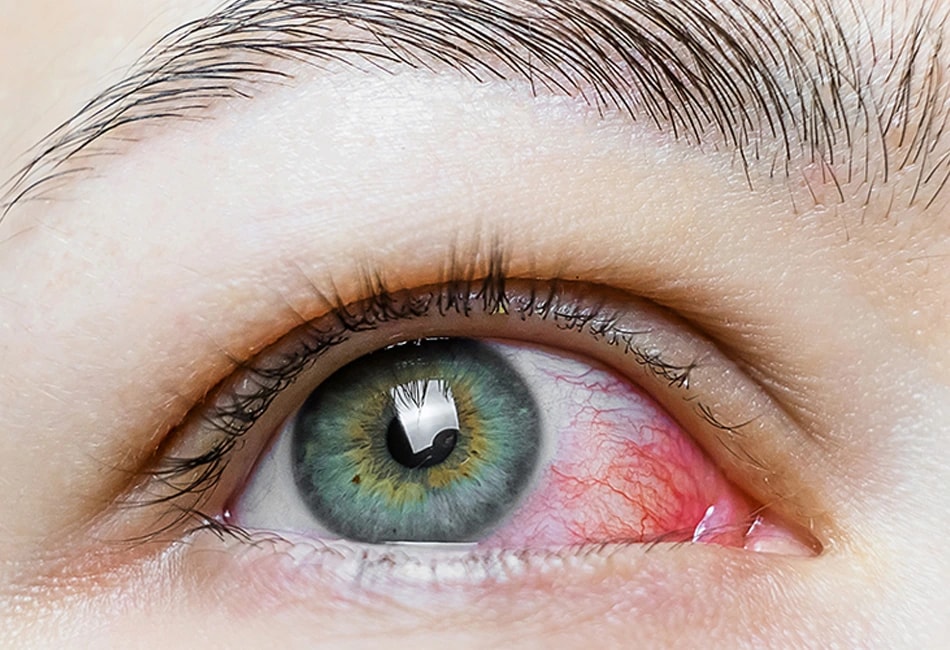
- Detect allergy that may mimic or coexist with dry eye
- Guide more personalised treatment selection
- Monitor how your eyes respond to treatment over time
Rather than treating every patient in the same way, we can make decisions based on a more complete understanding of your eyes.
Looking Beneath the Surface of Your Dry Eye
Every tear biomarker tells us something different about the health of your eyes. Rather than relying on a single test, we can measure different biological processes that may be contributing to your symptoms.
Together, these biomarkers help us build a more complete understanding of your dry eye disease and guide a more personalised treatment plan.
| Biomarker | What does it tell us? |
|---|---|
| MMP-9 | Is inflammation damaging the surface of your eye? |
| LTA | What biological process is driving your dry eye? |
| IgE | Is allergy contributing to your symptoms? |
No single biomarker provides all the answers, but together they help us move beyond treating symptoms alone and towards understanding the underlying cause of your dry eye.
The Three Biomarkers We Test
Every patient's dry eye is different. Depending on your symptoms and examination findings, we may recommend one or more tear biomarker tests as part of your assessment.
MMP-9 – Measuring Ocular Surface Inflammation
The MMP-9 test helps us identify:
- Elevated levels of Matrix Metalloproteinase-9 (MMP-9), a naturally occurring inflammatory protein.
- Whether inflammation is affecting the surface of your eye.
- Whether the corneal epithelial barrier – the eye’s natural protective surface – has become damaged.
- Whether inflammation is contributing to your symptoms, even when your eyes appear relatively normal during a routine examination.
Why is this important?
Inflammation is one of the main drivers of dry eye disease. If left untreated, it can continue to damage the ocular surface, reduce tear film stability and make symptoms more persistent. By identifying inflammation early, we can treat the underlying disease rather than simply managing the symptoms.
This information helps us to:
- Personalise your treatment plan
- Decide whether anti-inflammatory treatment is appropriate
- Monitor your response to treatment over time
- Optimise the ocular surface before cataract or laser vision correction surgery
LTA – Understanding Your Type of Dry Eye
The LTA test helps us identify whether your dry eye is caused by:
- Goblet cell (mucin) deficiency, where the eye produces less of the protective mucin layer that helps tears spread evenly across the surface of the eye, making the tear film less stable and allowing the eyes to dry out more quickly.
- T-cell activation, where the body's immune system becomes overactive and continues to trigger inflammation and irritation of the ocular surface.
- A combination of both processes, which is common in more complex dry eye disease.
Why is this important?
Different biological causes can produce very similar symptoms, but they often require different treatments. Understanding the underlying mechanism helps us choose treatments that are better matched to your individual condition.
This information helps us to:
- Personalise your treatment plan
- Select therapies that target the underlying cause
- Avoid treatments that may be less effective
- Monitor your improvement over time
IgE – Is It Dry Eye, Allergy or Both?
The IgE test helps us identify:
- Elevated levels of Immunoglobulin E (IgE), an antibody produced by the immune system in response to allergens such as pollen, dust mites, animal dander or mould.
- Whether an allergic response is contributing to inflammation of the ocular surface and your symptoms.
- Whether allergy and dry eye are occurring together, which is more common than many people realise and often makes symptoms more difficult to control.
Why is this important?
Dry eye disease and allergic eye disease often cause similar symptoms, including redness, watering, irritation and itching, but they require different treatments. Identifying allergy allows us to treat both conditions appropriately and improve the accuracy of your diagnosis.
This information helps us to:
- Personalise your treatment plan
- Select the most appropriate treatment
- Avoid unnecessary or ineffective medication
- Improve long-term symptom control
Pricing
Tear Biomarker Testing
Following your examination, your consultant will recommend only the biomarker tests that are most relevant to your condition.
What Happens During Tear Biomarker Testing?
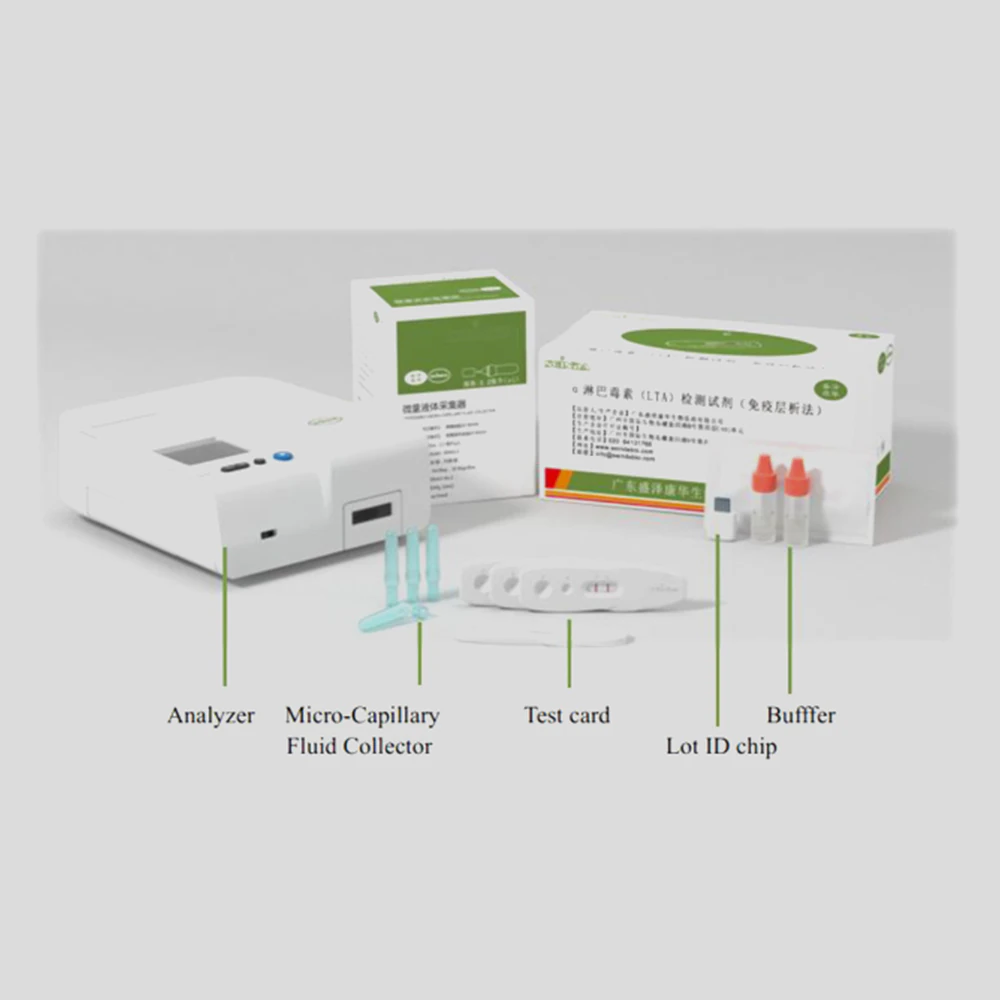
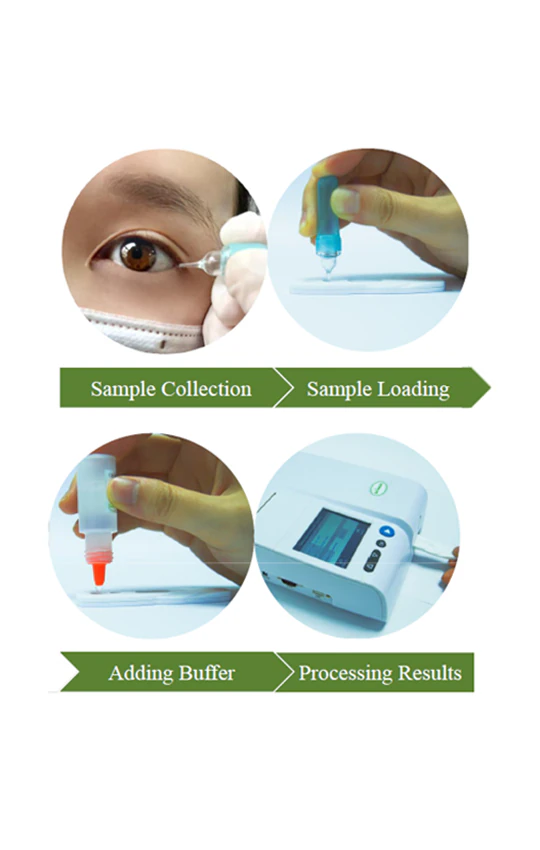
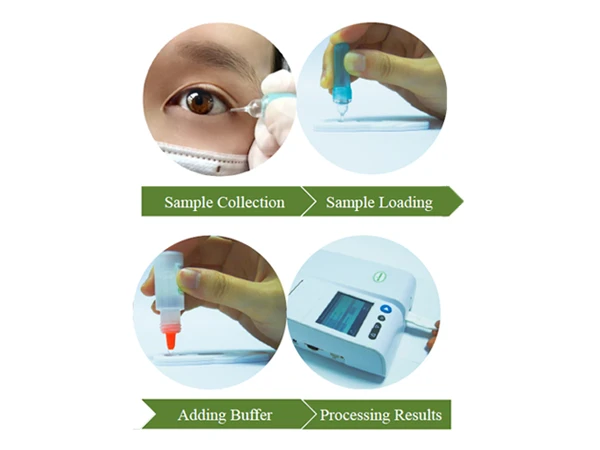
At Eye Clinic London, Tear Biomarker Testing is performed using the SEINDA i-IMMUNODX® point-of-care diagnostic platform, providing rapid results during your consultation.
The test is quick, comfortable and performed during your consultation.
What to expect:
- A tiny sample of your natural tears is collected from the surface of your eye.
- The sample is analysed using advanced point-of-care technology.
- No injections, blood tests or special preparation are required.
- Results are available during your appointment.
- Your consultant will explain the findings and discuss how they may influence your personalised treatment plan.
Understanding Your Dry Eye from Every Angle
No single test can explain every patient's symptoms.
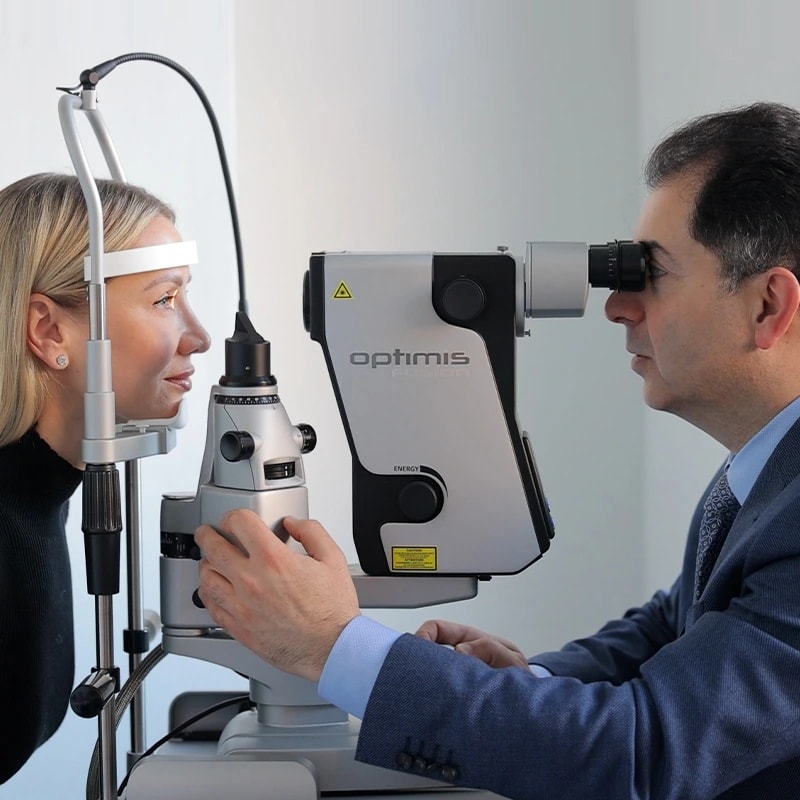
At Eye Clinic London, we combine three complementary diagnostic approaches to understand not only what we can see, but also what is happening beneath the surface.
What we can see
C.Diag Advanced Dry Eye
Diagnostics
Assessing:
- Tear film quality
- Meibomian glands
- Blink dynamics
- Ocular surface health
What is happening biologically
Tear Biomarker Testing
Performed using the SEINDA i-IMMUNODX® diagnostic platform.
Measuring:
- Inflammation (MMP-9)
- The biological mechanism driving your dry eye (LTA)
- Allergy (IgE)
How your corneal nerves are functioning
BRILL Corneal Sensitivity Testing
Assessing:
- Corneal nerve health
- Corneal sensitivity
- Neuropathic eye pain
Bringing Everything Together
By combining:
- Structural imaging (C.Diag)
- Molecular diagnostics- tear biomarkers (SEINDA i-IMMUNODX®)
- Functional nerve assessment (BRILL)
we can develop a far more complete understanding of your dry eye than any single test can provide.
The result is a more accurate diagnosis, a more personalised treatment plan and, ultimately, a better chance of long-term symptom relief.

Why Choose Eye Clinic London?
You deserve more than a diagnosis of "dry eye."
Our advanced diagnostic approach helps us move beyond symptoms alone, giving you the best opportunity for a more accurate diagnosis and personalised treatment.
Take the Next Step
Stop guessing what's causing your symptoms.
Book your comprehensive dry eye assessment today and let us discover what's really driving your dry eye, so we can recommend the treatment that's right for you.
Finance & Insurance
Accessible top-tier eye treatment is our promise. Explore our adaptable payment options and let our team manage the finances while you focus on your health. Don’t hesitate to contact us for extra information.






Our Location
Strategically located in Devonshire Street, Harley Medical District, Marylebone, in the heart of London, our clinic is easily accessible, ensuring that your journey to exceptional eye care is as convenient as possible. Our central position ensures that you can easily reach us from various parts of the city.
Devonshire street in Marylebone is not just an address; it’s a hub of convenience and accessibility. With excellent transport links and a wealth of amenities nearby, your visit to Eye Clinic London will be convenient and hassle-free experience.
Whether you are a local resident or visiting from other parts of the UK or abroad, our location will provide you with seamless connection to the private eye doctor in London.
When choosing to travel by public transport please alight at Bond Street Station and walk for 7 mins, alternatively exit at Oxford Circus station or Baker Street Station and walk for 10 mins.
Street parking is available.
Eye Clinic London7 Devonshire StreetLondon, W1W 5DY
The McIndoe CentreHoltye Road EastGrinstead RH19 3EB