
 Message Us
Congenital Cataracts Clinic London

Get in Touch
The Leading Private Congenital Cataract Treatment Clinic in London
Are your child’s eyes showing signs of unusual clouding or opacity? Do you feel uneasy about changes in your child’s eye colour or clarity? Trust your instincts – these can be signs of congenital cataracts. Early detection of congenital cataracts is crucial for affective treatment. Learn about our comprehensive eye assessments.
Featured in








About the Expert
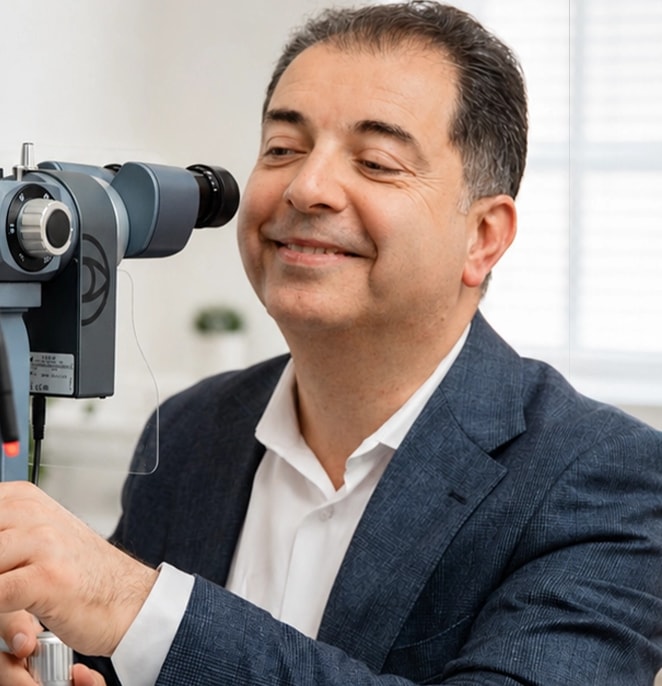
Mr. Hamada, our Consultant Ophthalmologist and Corneal Surgeon, stands as a true expert in cataract surgery, bringing an exceptional level of skill and precision to each procedure. His extensive education, culminating in over 25 years of dedicated practice, has cemented his status as an expert in the complexities of eye health. Mr Hamada’s proficiency in advanced cataract removal techniques—such as phacoemulsification and intraocular lens implantation—has led to a remarkable achievement: a 0% posterior capsule rupture rate, underscoring the highest safety record. This exemplary index of safety and success is a testament to Mr Hamada’s relentless pursuit of excellence and commitment to providing patients with the utmost care and outstanding surgical outcomes.
Recognised Excellence & Patient Trust




Congenital Cataract Causes
As time goes on and lens proteins clump together, it causes cloudiness and interferes with the passage of the light. This clouding effect progresses slowly, leading to a gradual decline in vision.
You might notice your vision becoming blurred, especially at night. You may find it more difficult to see clearly, especially at night, experience a yellowish or browning effect in your vision, increased sensitivity to glare, and a need for brighter light when reading.
Affiliations and Memberships
We are proud to be associated with the following organisations







Prevalence and Incidence
Cataracts can affect one or both eyes, and their development might be influenced by lifestyle factors such as smoking, excessive sun exposure, or a poor diet. Left untreated, cataracts can significantly impact your daily activities, including driving and reading.
Types of congenital cataracts
Syndromic
Syndromic congenital cataracts are cataracts that occur as part of a larger genetic syndrome. These cataracts may be accompanied by other symptoms or problems, such as developmental delays, intellectual disability, hearing loss or heart defects. They can be caused by a variety of genetic mutations or chromosomal abnormalities.
Non-syndromic
Non-syndromic congenital cataracts occur as an isolated eye abnormality without any accompanying medical conditions or symptoms. Non-syndromic cataracts may be inherited or they may be caused by spontaneous mutations. They can also be associated with maternal infections, such as rubella, or environmental factors, such as exposure to radiation or toxins.
More about congenital cataracts
Congenital cataract symptoms
Congenital cataracts can affect one or both eyes and can vary in severity. Some children may have small cataracts that do not significantly impact their vision, while others may have larger cataracts that cause significant vision loss.
Symptoms of congenital cataracts can include:
- Cloudy or blurry vision
- Poor visual acuity
- Nystagmus (involuntary eye movements)
- Strabismus (crossed or misaligned eyes)
- Sensitivity to light
- Abnormal red reflex (a red glow seen when light is shone into the eye)
Congenital cataracts can sometimes be difficult to detect, especially in infants who cannot communicate their vision problems.
However, there are certain signs that parents can look for, such as:
- A white or greyish-white pupil (instead of black) in flash photographs
- Lack of eye contact or poor visual tracking
- Delayed developmental milestones related to vision, such as reaching for objects or crawling
Congenital cataract causes
There are many different causes of congenital cataracts. The most common causes include:
- Genetic factors. Some congenital cataracts are caused by inherited genetic mutations.
- Infections during pregnancy. Certain infections contracted by the mother during pregnancy can lead to congenital cataracts in the baby.
- Metabolic disorders. Certain metabolic disorders such as galactosaemia and Lowe syndrome have been associated with congenital cataracts.
- Trauma during pregnancy or childbirth. Physical trauma to the mother’s abdomen or head during pregnancy or childbirth can increase the risk of congenital cataracts in the baby.
Sometimes, the cause of congenital cataracts will remain unknown — but that does not mean they can’t be treated.
Congenital cataracts prognosis
Congenital cataracts that are mild and do not significantly impact vision may not require treatment, particularly if they occur in both eyes. In such cases, the doctor may simply monitor the cataract to ensure that it does not worsen over time.
However, moderate to severe congenital cataracts that affect vision or cataracts that only occur in one eye will require treatment.
Cataract removal surgeryis the most common treatment for these types of cataracts. The procedure involves removing the cloudy lens and replacing it with an intraocular lens implant to restore vision.
In some cases, the surgery may need to be performed shortly after birth, especially if the cataract is large or if it affects the development of the eye. However, in most cases, surgery is performed when a child is a few months old or older.
The type of artificial lens used in the surgery depends on various factors such as the child’s age, the size of the cataract and the health of the eye.
Congenital cataract complications
If congenital cataracts are not corrected, they can lead to various complications that can affect a child’s visual development and cause permanent visual impairment.
Some of the potential complications of not correcting congenital cataracts include:
- Amblyopia,also known as lazy eye, a condition where the brain suppresses the vision in the affected eye
- Nystagmus, where the eyes move involuntarily, resulting in reduced visual perception
- Strabismus,where the eyes do not align properly
- Delayed visual development – this can affect the child’s ability to learn and perform daily activities
The most serious complication of not correcting congenital cataracts is permanent visual impairment. This can occur due to a phenomenon known as ‘deprivation amblyopia’.
This condition prevents the brain from learning how to interpret visual information because the cataract blocks the visual signals.
It is possible for the brain to become incapable of seeing correctly even after later removal of the cataract if the cataract is not removed early enough. This can lead to permanent vision loss.
Congenital cataract treatment
Most babies with congenital cataracts will need surgery to remove the cloudy lens and restore their vision. At Eye Clinic London, we offer two different types of treatment for congenital cataracts.
Phacoemulsification
This is a minimally invasive surgical technique used to remove the cataract. A small incision is made in the cornea and an ultrasound probe is inserted to break up the cloudy lens. The fragments are then suctioned out and an intraocular lens implant (IOL) is placed in the eye.
Extracapsular cataract extraction
This treatment is used when the lens needs to be removed in one piece. A larger incision of around 10-12mm is required. Stitches are needed, so recovery can take longer.
How is congenital cataract surgery performed on babies?
The surgical procedure for congenital cataracts in babies is performed under general anaesthesia.
The baby’s eye is first numbed with local anaesthetic drops and a small incision is made in the eye. The surgeon then removes the cloudy lens and replaces it with an artificial lens. The surgery typically takes less than an hour and the baby can usually go home the same day.
After surgery, the baby will need to wear an eye patch for a few days or weeks to help the eye heal and prevent infection. The baby will also need to have eye drops applied to prevent inflammation and promote healing.
Finance & Insurance
Eye Clinic London offers accessible eye care with flexible financial solutions and insurance options. Our team supports you financially, so you can concentrate on your well-being. Contact our experts for more information.






Our Location
Strategically located in Devonshire Street, Harley Medical District, Marylebone, in the heart of London, our clinic is easily accessible, ensuring that your journey to exceptional eye care is as convenient as possible. Our central position ensures that you can easily reach us from various parts of the city.
Devonshire street in Marylebone is not just an address; it’s a hub of convenience and accessibility. With excellent transport links and a wealth of amenities nearby, your visit to Eye Clinic London will be convenient and hassle-free experience.
Whether you are a local resident or visiting from other parts of the UK or abroad, our location will provide you with seamless connection to the private eye doctor in London.
When choosing to travel by public transport please alight at Bond Street Station and walk for 7 mins, alternatively exit at Oxford Circus station or Baker Street Station and walk for 10 mins.
Street parking is available.
Eye Clinic London7 Devonshire StreetLondon, W1W 5DY
The McIndoe CentreHoltye Road EastGrinstead RH19 3EB